Differential ex vivo susceptibility of Plasmodium malariae and Plasmodium falciparum clinical isolates from Ghana and Mali to current and lead discovery candidate antimalarial drugs
Alamissa Soulama, Fanta Sogore, Felix Ansah, Ousmaila Diakite, Jersley D. Chirawurah, Fatoumata O. Maiga, Mohamed Maiga, Harry A. Danwonno, Brice Campo, Abdoulaye A. Djimde, Gordon A. Awandare, Lucas N. Amenga-Etego, Laurent Dembele, Yaw Aniweh

TL;DR
This study compares how well different malaria drugs work against Plasmodium malariae and Plasmodium falciparum in Ghana and Mali, highlighting differences in drug susceptibility.
Contribution
The study provides new ex vivo drug susceptibility data for P. malariae and P. falciparum isolates from two African countries, revealing species-specific and regional drug response patterns.
Findings
In Ghana, P. malariae showed lower susceptibility to artemether, sulfadoxine, and atovaquone compared to P. falciparum.
In Mali, quinine was more effective against P. malariae than P. falciparum, while tafenoquine was less effective.
Candidate drugs (except INE963) inhibited P. malariae more than P. falciparum.
Abstract
Non-falciparum species causing malaria in humans are considered neglected in the fight toward malaria elimination. Recent data highlight the increasing contribution of Plasmodium malariae to malaria morbidity and mortality. In this study, the susceptibility of P. malariae and Plasmodium falciparum to current antimalarial drugs was compared to advanced lead candidate drugs using field isolates. The blood samples were collected from the Central region of Ghana and Faladje and Kati in Mali. Following this, an ex vivo drug efficacy assay was conducted by screening mono-infected isolates against a panel of antimalarials. In Ghana, the susceptibility of the two species to most of the current antimalarial drugs was comparable, except for artemether, sulfadoxine, and atovaquone, for which the drugs were less potent against P. malariae than P. falciparum (7.12 vs 2.15 nM, 25.72 vs 7.86 nM, and…
Genes, proteins, chemicals, diseases, species, mutations and cell lines named across the full text — each resolved to its canonical identifier and authoritative record.
Click any figure to enlarge with its caption.
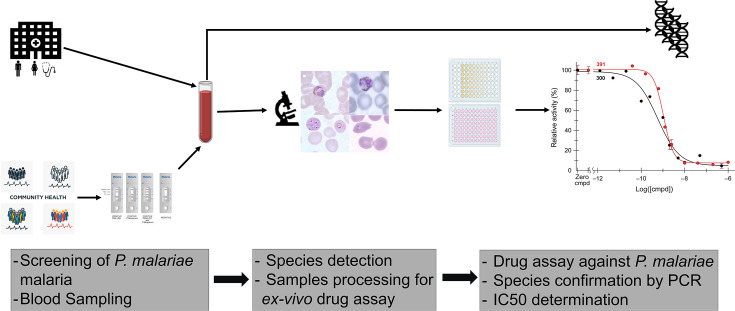 Figure 1
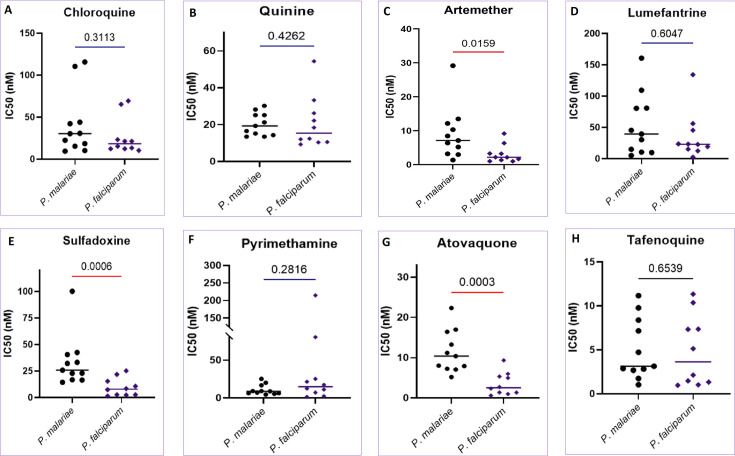 Figure 2
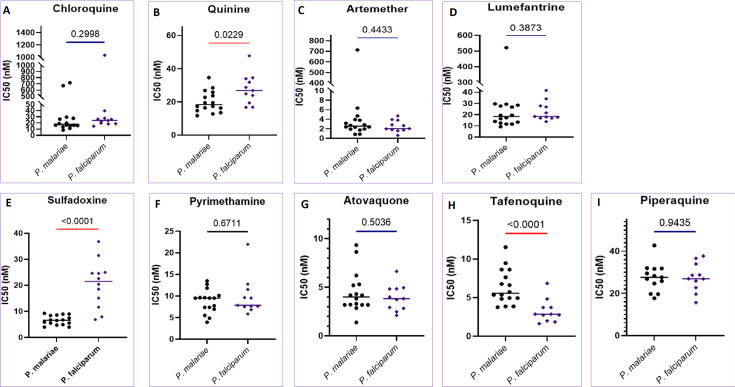 Figure 3
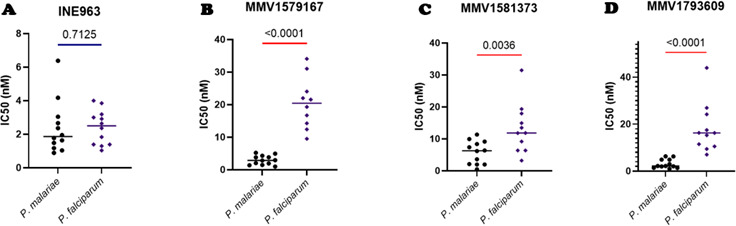 Figure 4
Peer Reviews
No public reviews on file for this paper yet. If you reviewed it on a platform where reviews are public (OpenReview, ICLR, NeurIPS, ICML), you can paste yours below so the community can read it here.
Videos
No videos yet. Explain this paper in a talk, walkthrough, or lecture? Add one.
Taxonomy
TopicsMalaria Research and Control · Computational Drug Discovery Methods · Drug-Induced Hepatotoxicity and Protection