Pathological characterization of female reproductive organs prior to miscarriage induced by Zika virus infection in the pregnant common marmoset
Toshifumi Imagawa, Kazuo Tanaka, Masahiko Ito, Mami Matsuda, Tadaki Suzuki, Tsuyoshi Ando, Chizuko Yaguchi, Kazuyoshi Miyamoto, Shuji Takabayashi, Ryosuke Suzuki, Tomohiko Takasaki, Hiroaki Itoh, Isao Kosugi, Tetsuro Suzuki

TL;DR
This study investigates how Zika virus causes miscarriage in pregnant marmosets by analyzing tissue degeneration and hormone levels before pregnancy loss.
Contribution
The study presents a novel method for predicting and analyzing miscarriage by monitoring progesterone levels and performing pathological analysis just before pregnancy loss.
Findings
Significant degeneration of trophoblast cells at the maternal-fetal interface was observed prior to miscarriage.
ZIKV NS1 protein was detected in the endometrium and ovaries, suggesting viral impact on reproductive tissues.
Elevated TNFα levels in amniotic fluid and cleaved-caspase indicate apoptosis contributing to miscarriage.
Abstract
While Zika virus (ZIKV) infection in pregnant women is known to increase the risk of miscarriage and stillbirth, the mechanism by which ZIKV infection leads to the inability to continue a pregnancy is not clear. In our common marmoset models of ZIKV infection in pregnant individuals, miscarriage was observed in dams infected in the first or second trimester, and preterm delivery was observed in a dam infected in the third trimester. Serum progesterone levels were significantly lower prior to miscarriage or preterm delivery in the infected marmosets. To elucidate the pathology of the placental region just before the onset of ZIKV-induced miscarriage, we newly prepared an infected marmoset in the first trimester of pregnancy and euthanized it when the serum progesterone concentration was markedly reduced. Pathological analysis revealed significant degeneration in cells at the…
Genes, proteins, chemicals, diseases, species, mutations and cell lines named across the full text — each resolved to its canonical identifier and authoritative record.
Click any figure to enlarge with its caption.
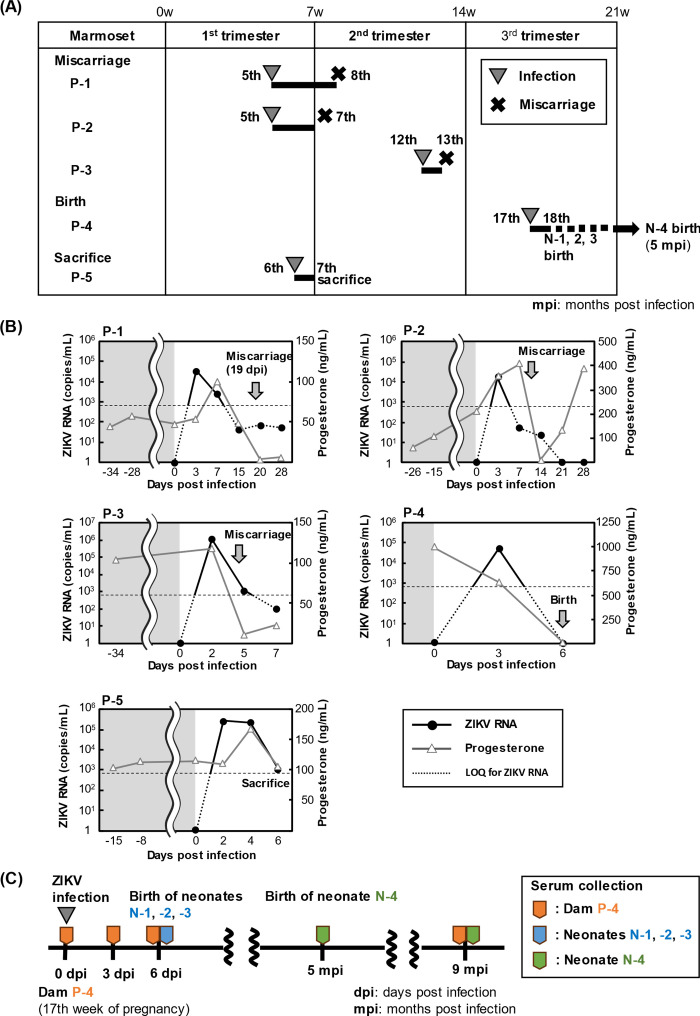 Figure 1
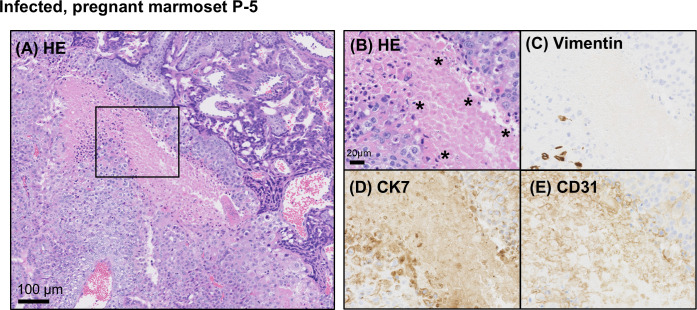 Figure 2
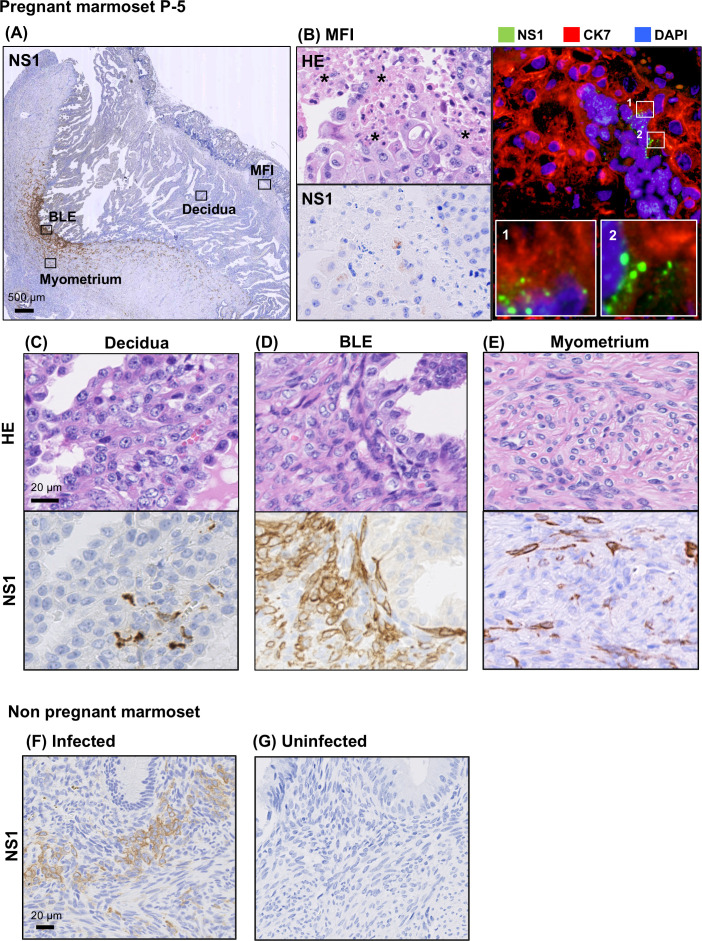 Figure 3
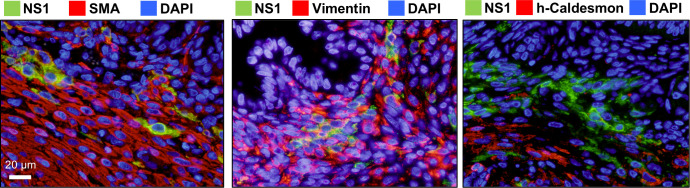 Figure 4
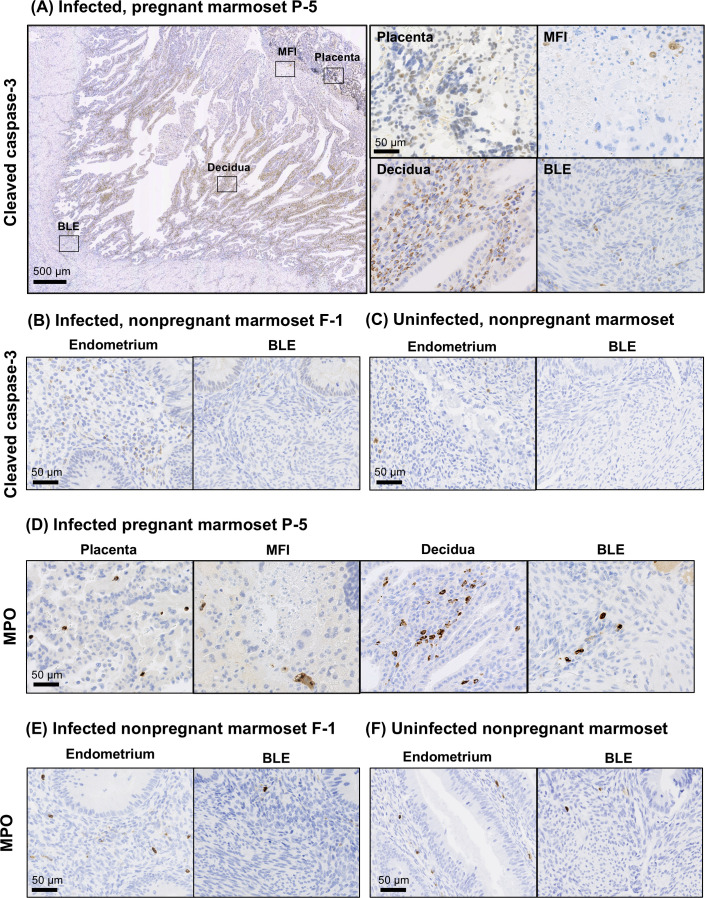 Figure 5
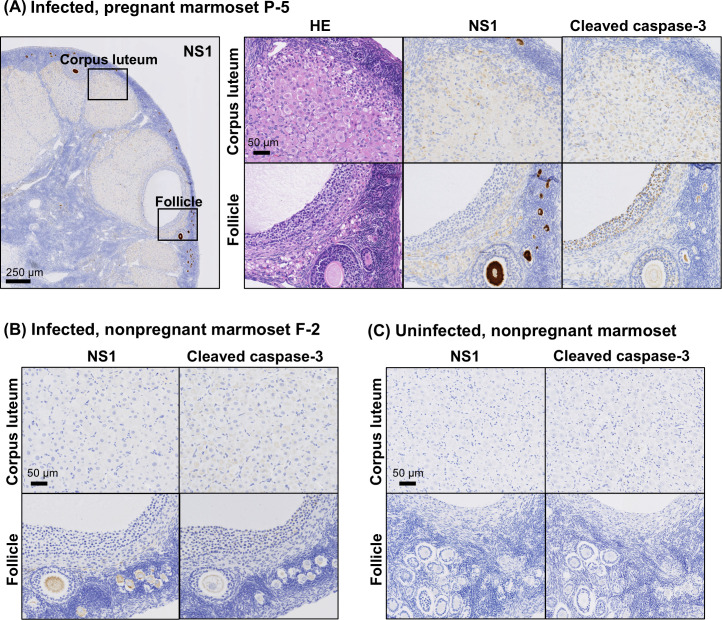 Figure 6
Peer Reviews
No public reviews on file for this paper yet. If you reviewed it on a platform where reviews are public (OpenReview, ICLR, NeurIPS, ICML), you can paste yours below so the community can read it here.
Videos
No videos yet. Explain this paper in a talk, walkthrough, or lecture? Add one.
Taxonomy
TopicsMosquito-borne diseases and control · COVID-19 Impact on Reproduction · Virology and Viral Diseases