Long-term labelling and tracing of endodermal cells using a perpetual cycling Gal4-UAS system
Yanfeng Li, You Li, Bangzhuo Huang, Ruhao Zhang, Jianbo He, Lingfei Luo, Yun Yang

TL;DR
A new system allows long-term tracking of endodermal cells in zebrafish, from embryos to adults, using continuous fluorescent labeling.
Contribution
A perpetual cycling Gal4-UAS system with a novel Gal4 fusion protein enables long-term cell labeling and tracing.
Findings
The perpetual cycling Gal4-UAS system ensures sustained reporter gene expression with minimal cytotoxicity.
Zebrafish transgenic lines demonstrate effective long-term endoderm tracing from embryos to adults.
The system visualizes endodermal differentiation from progenitor cells to mature tissues.
Abstract
Cell labelling and lineage tracing are indispensable tools in developmental biology, offering powerful means with which to visualise and understand the complex dynamics of cell populations during embryogenesis. Traditional cell labelling relies heavily on signal stability, promoter strength and stage specificity, limiting its application in long-term tracing. In this report, we optimise and reconfigure a perpetual cycling Gal4-UAS system employing a previously unreported Gal4 fusion protein and the autoregulatory Gal4 expression loop. As validated through heat-shock induction, this configuration ensures sustained transcription of reporter genes in target cells and their descendant cells while minimising cytotoxicity, thereby achieving long-term labelling and tracing. Further exploiting this system, we generate zebrafish transgenic lines with continuous fluorescent labelling specific to…
Genes, proteins, chemicals, diseases, species, mutations and cell lines named across the full text — each resolved to its canonical identifier and authoritative record.
Click any figure to enlarge with its caption.
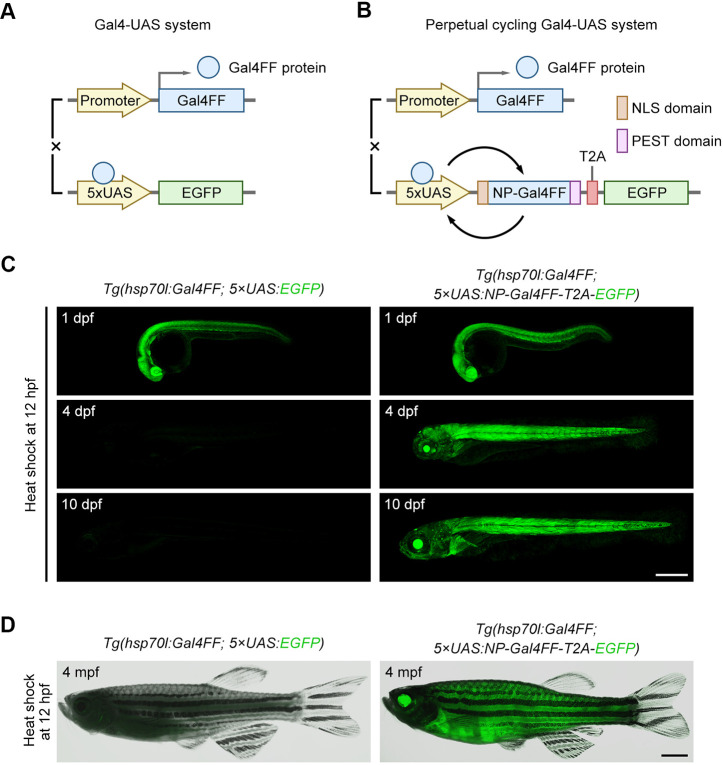 Figure 1
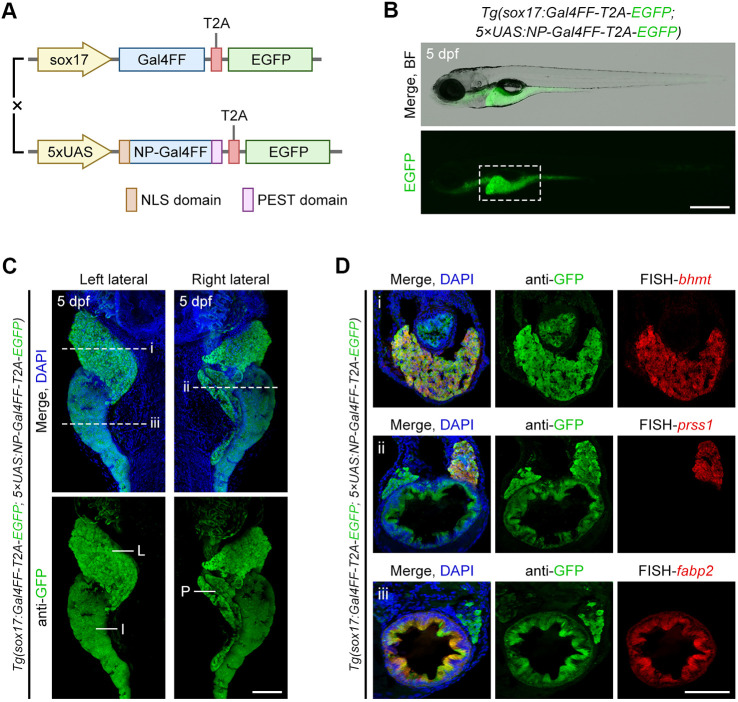 Figure 2
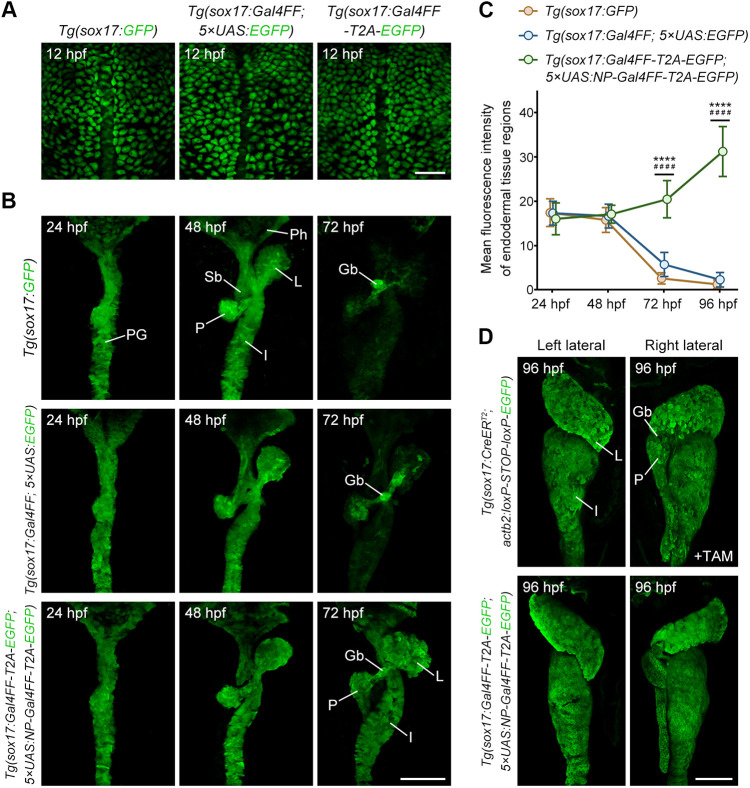 Figure 3
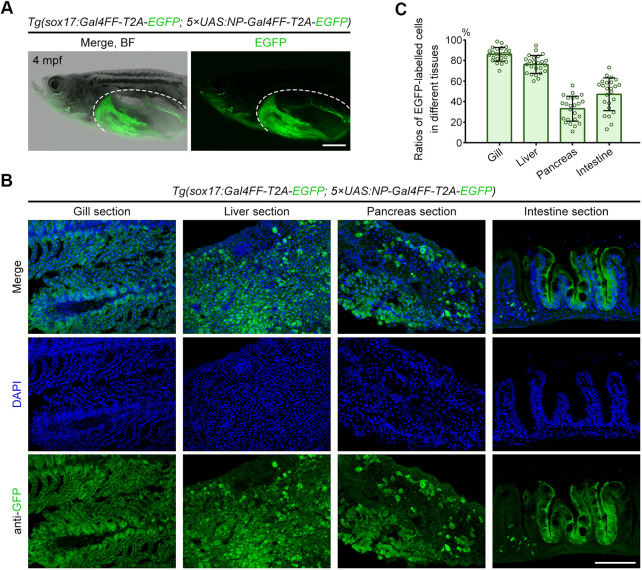 Figure 4
Peer Reviews
No public reviews on file for this paper yet. If you reviewed it on a platform where reviews are public (OpenReview, ICLR, NeurIPS, ICML), you can paste yours below so the community can read it here.
Videos
No videos yet. Explain this paper in a talk, walkthrough, or lecture? Add one.
Taxonomy
Topics3D Printing in Biomedical Research · Pluripotent Stem Cells Research · Cancer Cells and Metastasis