Efficient and Selective Biosynthesis of a Precursor-Directed FK506 Analogue: Paving the Way for Click Chemistry
Dušan Goranovič, Branko Jenko, Barbara Ramšak, Ajda Podgoršek Berke, Leon Bedrač, Jaka Horvat, Martin Šala, Damjan Makuc, Guilhermina M. Carriche, Luana Silva, Aleksandra Lopez Krol, Alen Pšeničnik, María Beatriz Durán Alonso, Martina Avbelj, Stojan Stavber, Janez Plavec

TL;DR
Scientists created a new version of the drug FK506 with a chemical group that allows for easier chemical modifications, which could help improve drug development.
Contribution
A new chemobiosynthetic method to produce an FK506 analogue with a propargyl group for click chemistry.
Findings
The new FK506 analogue has a propargyl group at carbon 21 for click chemistry compatibility.
The analogue shows reduced immunosuppression and cytotoxicity compared to FK506.
The method may be applicable to other polyketide-derived drugs.
Abstract
The medically important immunosuppressant FK506 is a structurally complex macrolactone biosynthesized by a combined polyketide synthase and a nonribosomal peptide synthetase enzyme complex. Its acyltransferase domain 4 (AT4) selects an unusual extender unit, resulting in an allyl moiety on carbon 21 of the macrolactone backbone. Based on the AT4 domain, chemobiosynthetic processes have been developed that enable the introduction of diverse moieties at the carbon 21 position. However, the novel moieties that were introduced into the polyketide backbone are chemically inert. Reported here is a novel and efficient chemobiosynthetic approach that ensures high titer of an FK506 analogue containing a propargyl moiety. The novel FK506 analogue displays lower immunosuppression activity than FK506 with significantly reduced cytotoxicity. More importantly, the propargyl moiety contains a terminal…
Genes, proteins, chemicals, diseases, species, mutations and cell lines named across the full text — each resolved to its canonical identifier and authoritative record.
Click any figure to enlarge with its caption.
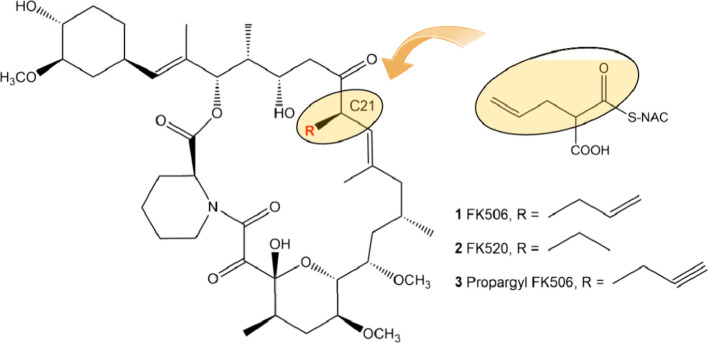 Figure 1
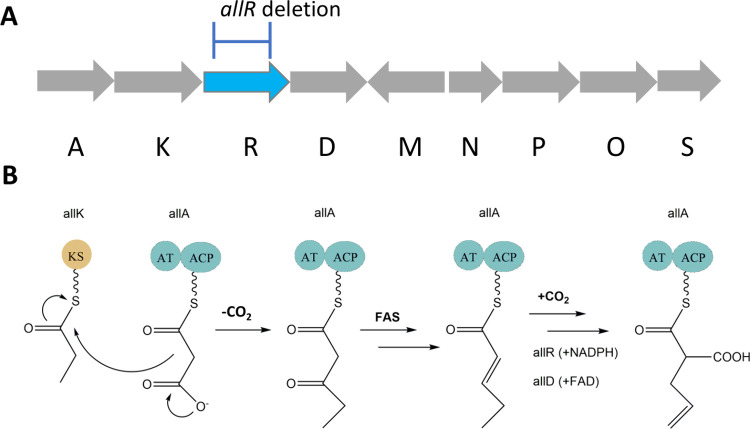 Figure 2
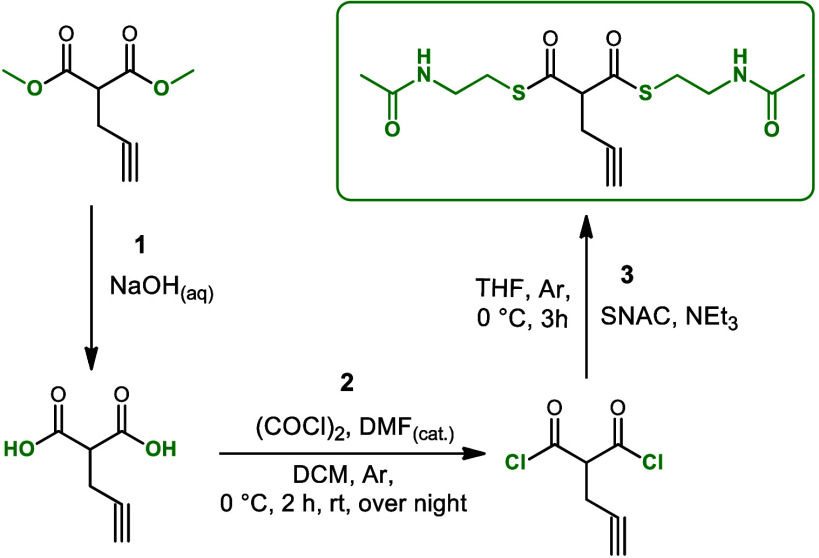 Figure 3
 Figure 4
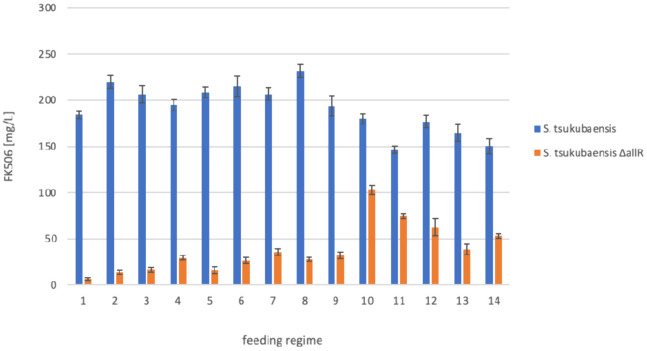 Figure 5
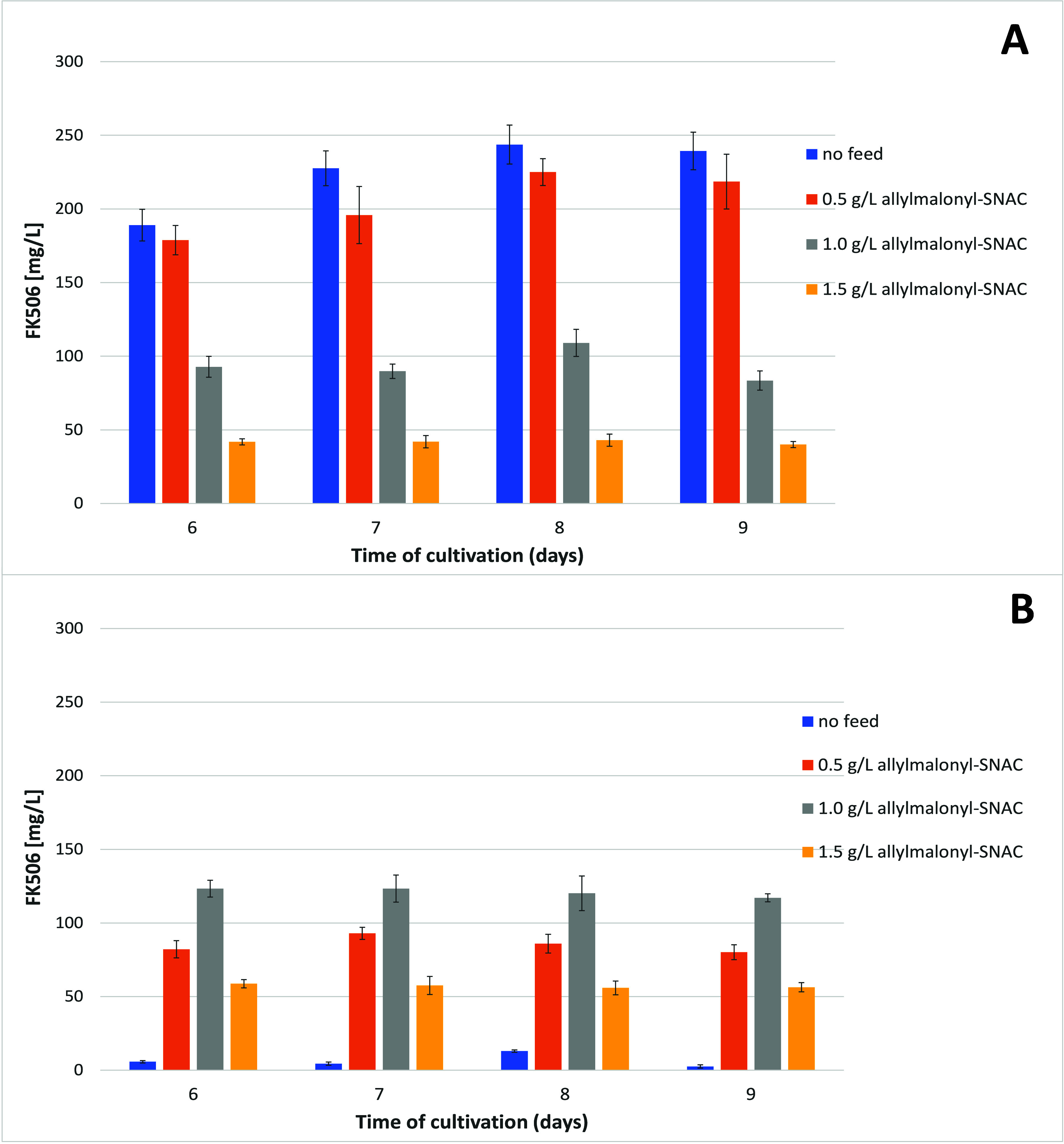 Figure 6
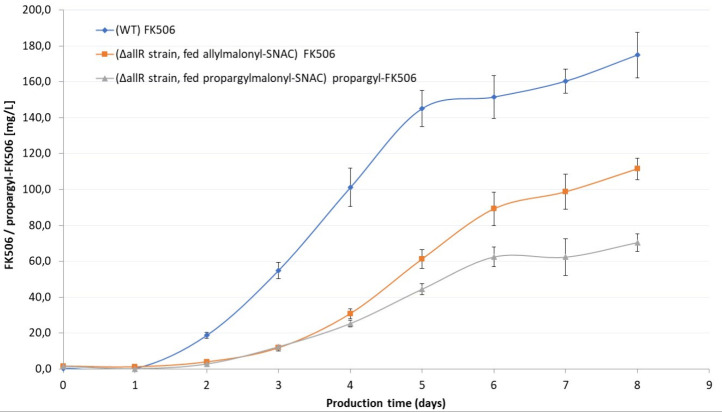 Figure 7
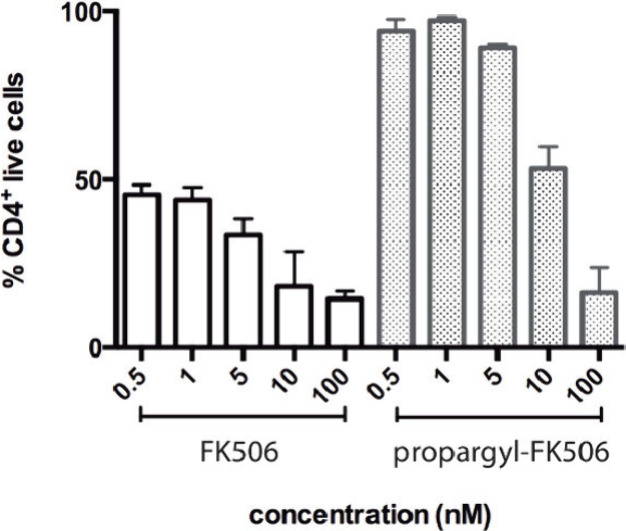 Figure 8
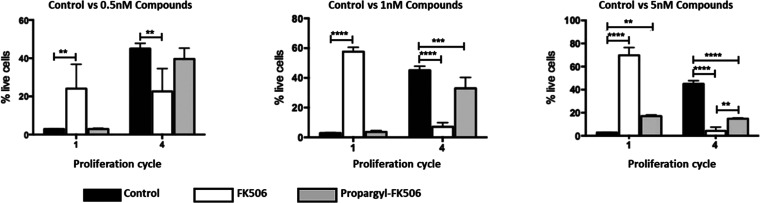 Figure 9
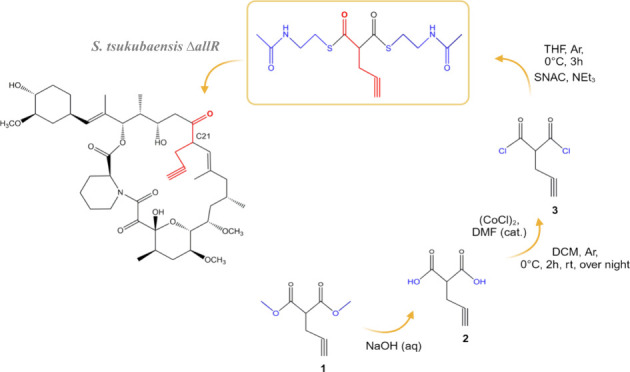 Figure 10
Peer Reviews
No public reviews on file for this paper yet. If you reviewed it on a platform where reviews are public (OpenReview, ICLR, NeurIPS, ICML), you can paste yours below so the community can read it here.
Videos
No videos yet. Explain this paper in a talk, walkthrough, or lecture? Add one.
Taxonomy
TopicsClick Chemistry and Applications · Advanced biosensing and bioanalysis techniques · Peptidase Inhibition and Analysis