p75 neurotrophin receptor regulates craniofacial growth and morphology in postnatal development
Byron Zhao, Jinsook Suh, Yan Zhang, Eric Yin, Chiho Kadota-Watanabe, In Won Chang, Jun Yaung, Isabelle Lao-Ngo, Nathan M. Young, Reuben H. Kim, Ophir D. Klein, Christine Hong

TL;DR
This study shows that the p75 neurotrophin receptor is important for skull development in mice, and its absence leads to craniofacial abnormalities.
Contribution
The study reveals a novel role of p75NTR in regulating postnatal craniofacial growth and morphology.
Findings
p75NTR−/− mice had reduced skull length on postnatal day 7.
By postnatal day 28, p75NTR−/− mice showed reduced calvarial bone volume and trabecular bone thickness.
Morphological changes were observed in nasal, parietal, and occipital regions of p75NTR−/− mice.
Abstract
Craniofacial abnormalities are among the most prevalent congenital defects, significantly affecting appearance, function, and quality of life. While the role of genetic mutations in craniofacial malformations is recognized, the underlying molecular mechanisms remain poorly understood. In this study, we investigate the role of p75 neurotrophin receptor (p75NTR) in craniofacial development by comparing wild-type (p75NTR+/+) mice against p75NTR-deficient (p75NTR−/−) knockout mice. We employed histology, micro-CT surface distance, volumetric analysis, and geometric morphometric analysis to assess craniofacial development and growth. On postnatal day 7 (P7), p75NTR−/− mice exhibited reduced skull length compared to wild-type controls. By P28, micro-CT analysis revealed significant reductions in calvarial bone volume and trabecular bone thickness in p75NTR−/− mice. Geometric morphometric…
Genes, proteins, chemicals, diseases, species, mutations and cell lines named across the full text — each resolved to its canonical identifier and authoritative record.
Click any figure to enlarge with its caption.
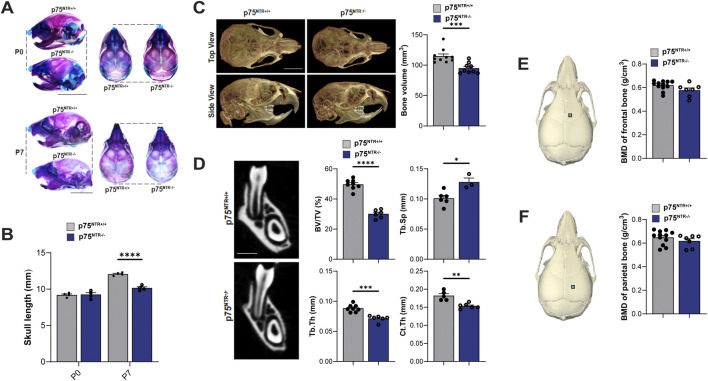 Figure 1
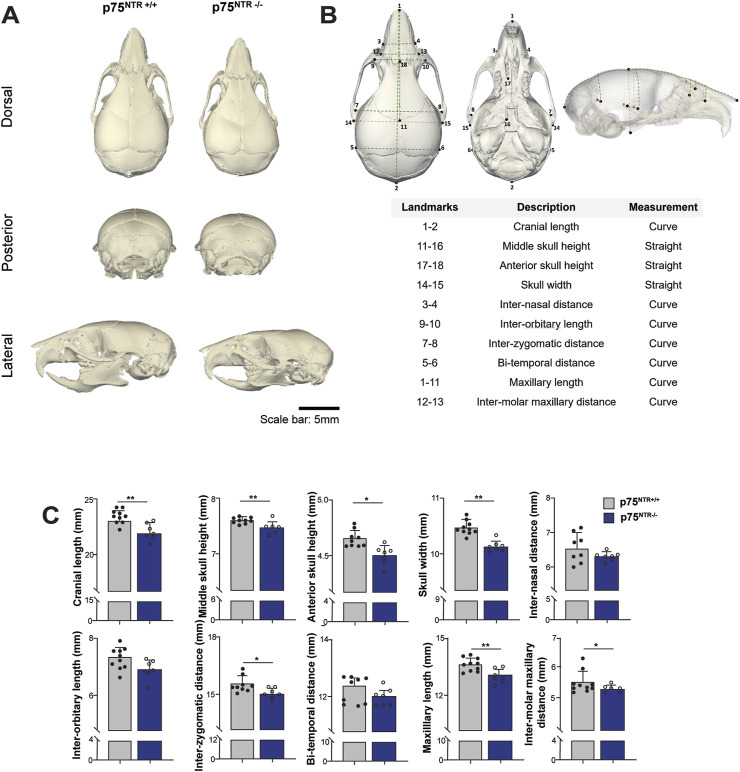 Figure 2
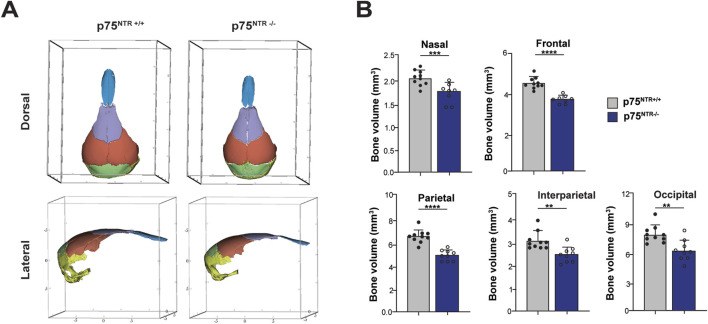 Figure 3
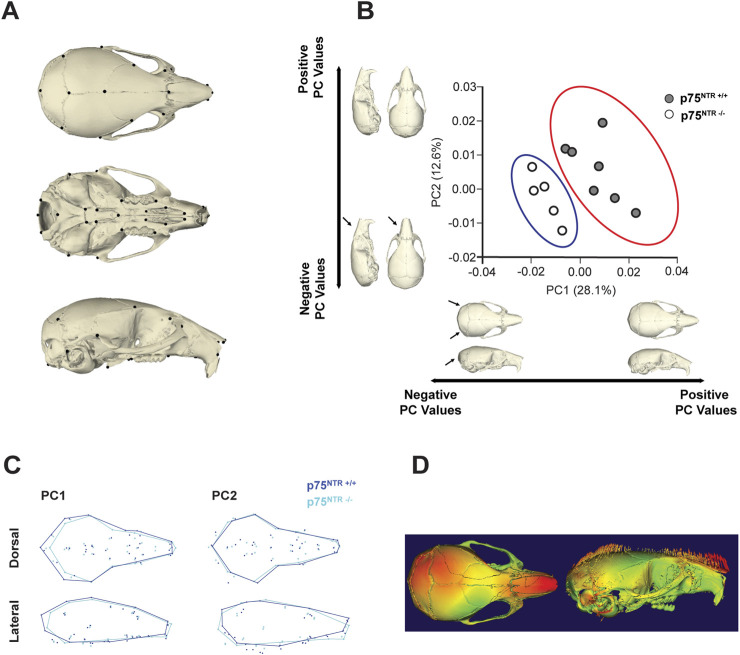 Figure 4
Peer Reviews
No public reviews on file for this paper yet. If you reviewed it on a platform where reviews are public (OpenReview, ICLR, NeurIPS, ICML), you can paste yours below so the community can read it here.
Videos
No videos yet. Explain this paper in a talk, walkthrough, or lecture? Add one.
Taxonomy
TopicsBone and Dental Protein Studies · Bone Metabolism and Diseases · Cleft Lip and Palate Research