Mitochondrial Complex I Molecular Alterations in Sapajus apella as a Human Gastric Carcinogenesis Model After MNU Exposure
Bárbara dos Santos Dias, Symara Rodrigues Antunes, Danilo do Rosário Pinheiro, Rommel Mario Rodriguez Burbano, Bárbara do Nascimento Borges

TL;DR
This study explores mitochondrial gene changes in a monkey model to understand how they contribute to gastric cancer development.
Contribution
The study identifies specific mitochondrial gene alterations linked to gastric cancer progression in an animal model.
Findings
Two synonymous alterations were found in the ND1 gene.
A non-synonymous alteration in ND3 may reduce Complex I efficiency and increase reactive oxygen species.
ND1 and ND3 alterations were observed in highly aggressive cancer cell lines.
Abstract
Gastric cancer (GC) remains among the top five global health problems. Therefore, comprehending the tumor energetic behavior is critical to understanding its progression. This study aimed to investigate mitochondrial DNA (mtDNA) alterations in GC cancer cell lines in an animal model. Four mitochondrial genes (COI, ATP8, ND1, and ND3) were analyzed in GC (AGP01, ACP02, ACP03, and PG100) and control (Walker 256 carcinosarcoma) cell lines inoculated in Sapajus apella , exposed and not exposed to N‐methyl‐N‐nitrosourea. Two synonymous alterations were identified in ND1. In ND3, a non‐synonymous alteration (A10398G ➔ Thr114Ala) may decrease the respiratory chain Complex I efficiency, enhancing cellular reactive oxygen species and contributing to mtDNA damage. As alterations in ND1 and ND3 were observed in highly aggressive cell lines, our results suggest these genes may play crucial roles…
Genes, proteins, chemicals, diseases, species, mutations and cell lines named across the full text — each resolved to its canonical identifier and authoritative record.
Click any figure to enlarge with its caption.
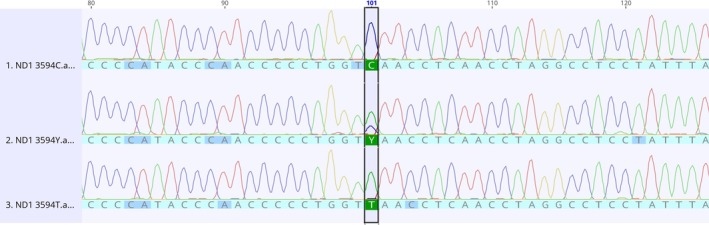 Figure 1
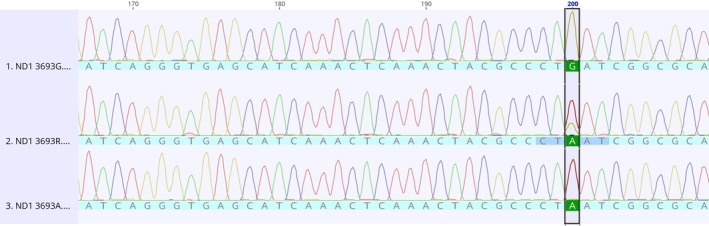 Figure 2
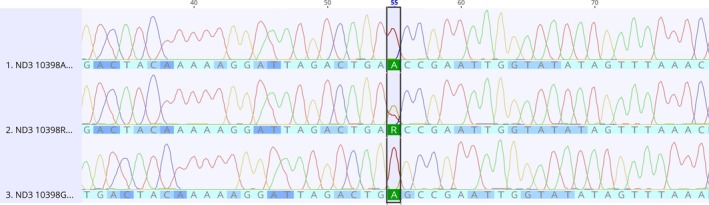 Figure 3
Peer Reviews
No public reviews on file for this paper yet. If you reviewed it on a platform where reviews are public (OpenReview, ICLR, NeurIPS, ICML), you can paste yours below so the community can read it here.
Videos
No videos yet. Explain this paper in a talk, walkthrough, or lecture? Add one.
Taxonomy
TopicsCancer, Hypoxia, and Metabolism · Mitochondrial Function and Pathology · Cancer-related molecular mechanisms research