A Precise Synthetic Toolbox: H-Bond-Assisted Quadruple Reactivity of o-Dimethylaminoaryloximes
Semyon V. Tsybulin, Stepan A. Meshalkin, Daria I. Tonkoglazova, Victor G. Bardakov, Alexander F. Pozharskii, Alexander S. Antonov

TL;DR
This paper introduces a new chemical method using hydrogen bonds to create a variety of nitrogen-containing compounds from a single starting material under mild conditions.
Contribution
The study introduces a transition-metal-free synthetic toolbox using non-covalent interactions for precise and selective chemical transformations.
Findings
Hydrogen bonding activates the reactivity of o-dimethylaminoaryloximes into nitriles and nitrogen heterocycles.
The method allows selective synthesis of fused pyrazoles, isoxazoles, and pyrroles using simple acids and solvents.
The 'buttressing effect' of substituents next to the NMe2 group enhances the reaction's precision and flexibility.
Abstract
Non-covalent interactions are a highly promising tool for the development of transition-metal-free chemospecific synthetic transformations. Here, we demonstrate the implementation of non-covalent interactions as a simple, precise, and flexible synthetic toolbox, allowing the controlled transformation of o-dimethylaminoaryloximes into nitriles and hard-to-reach nitrogen heterocycles under mild conditions. This diverse reactivity is activated via hydrogen bonding and facilitated via the “buttressing effect” of the substituents next to the NMe2 group. All transformations require only simple and easily available acids and solvents, which generally provide precise control over the direction of the reaction, allowing the selective synthesis of nitriles, fused pyrazoles, isoxazoles, and pyrroles.
Genes, proteins, chemicals, diseases, species, mutations and cell lines named across the full text — each resolved to its canonical identifier and authoritative record.
Click any figure to enlarge with its caption.
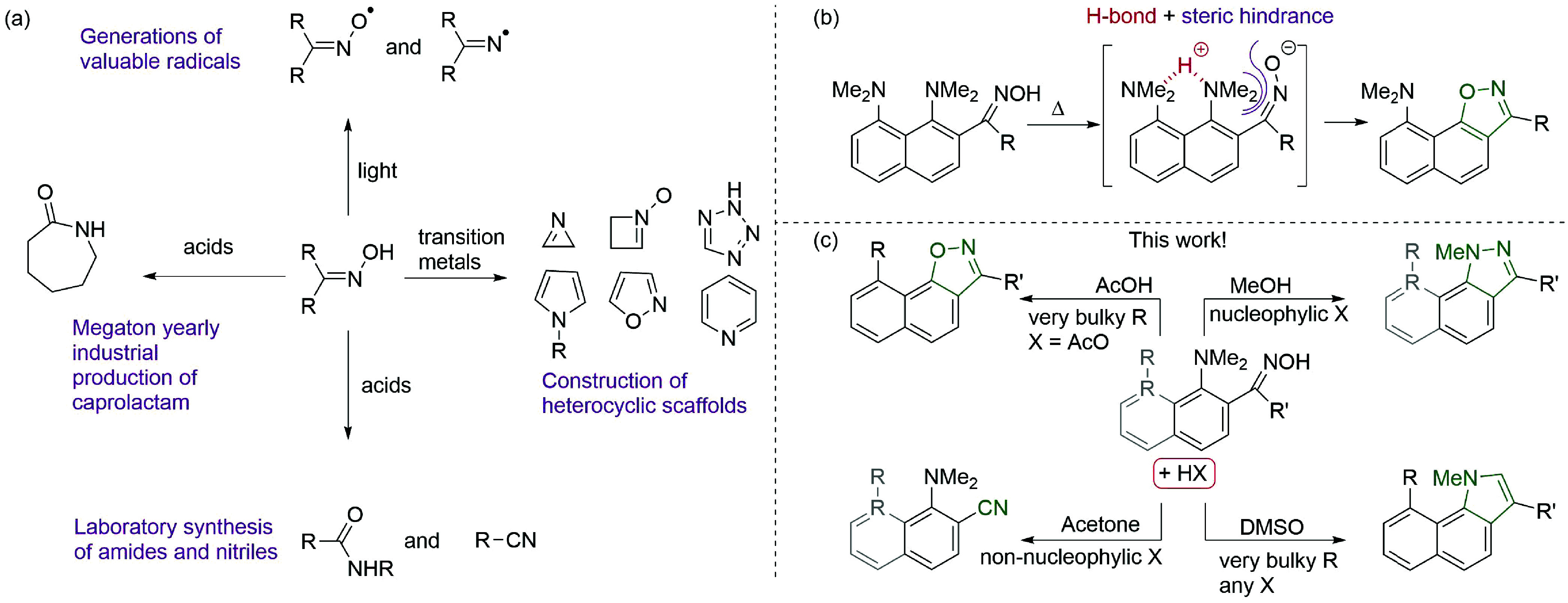 Figure 1
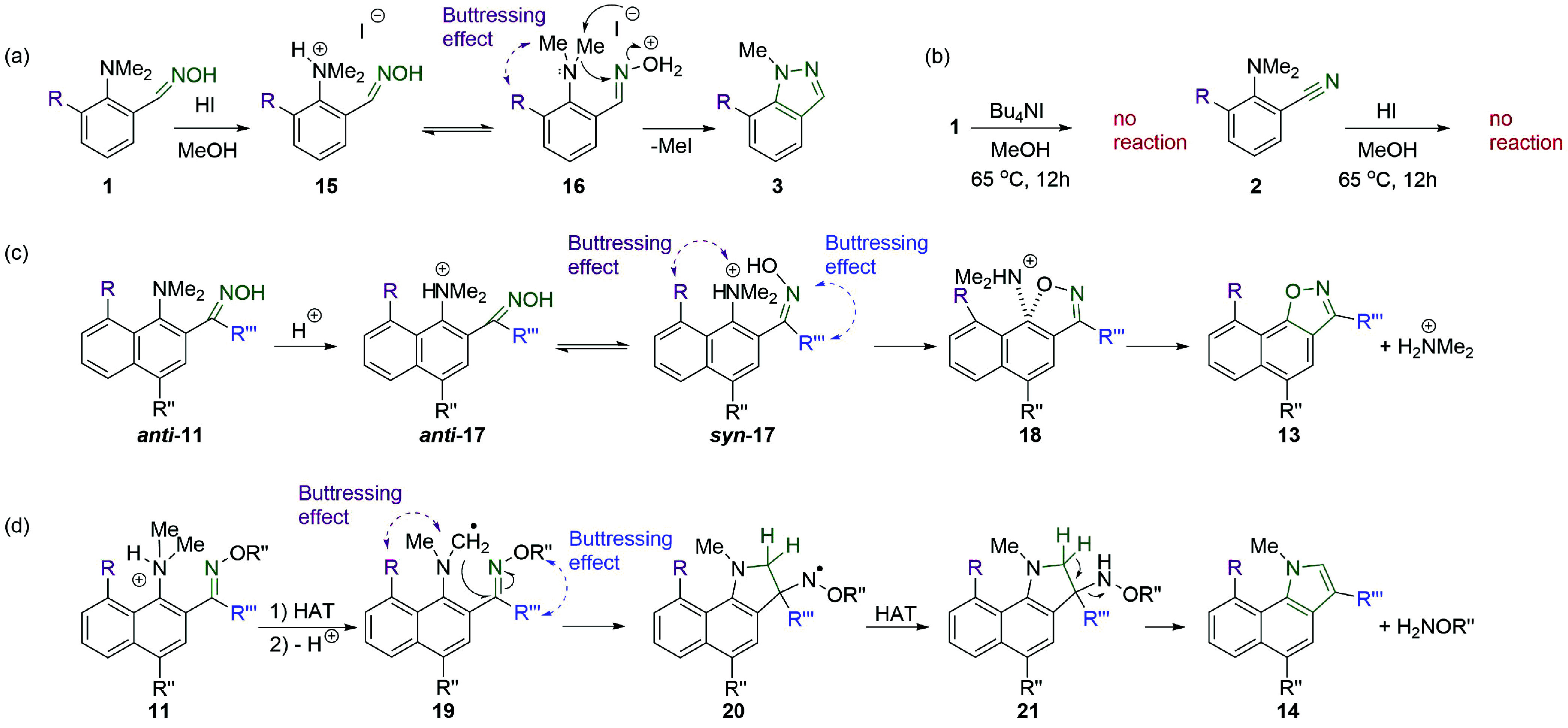 Figure 2
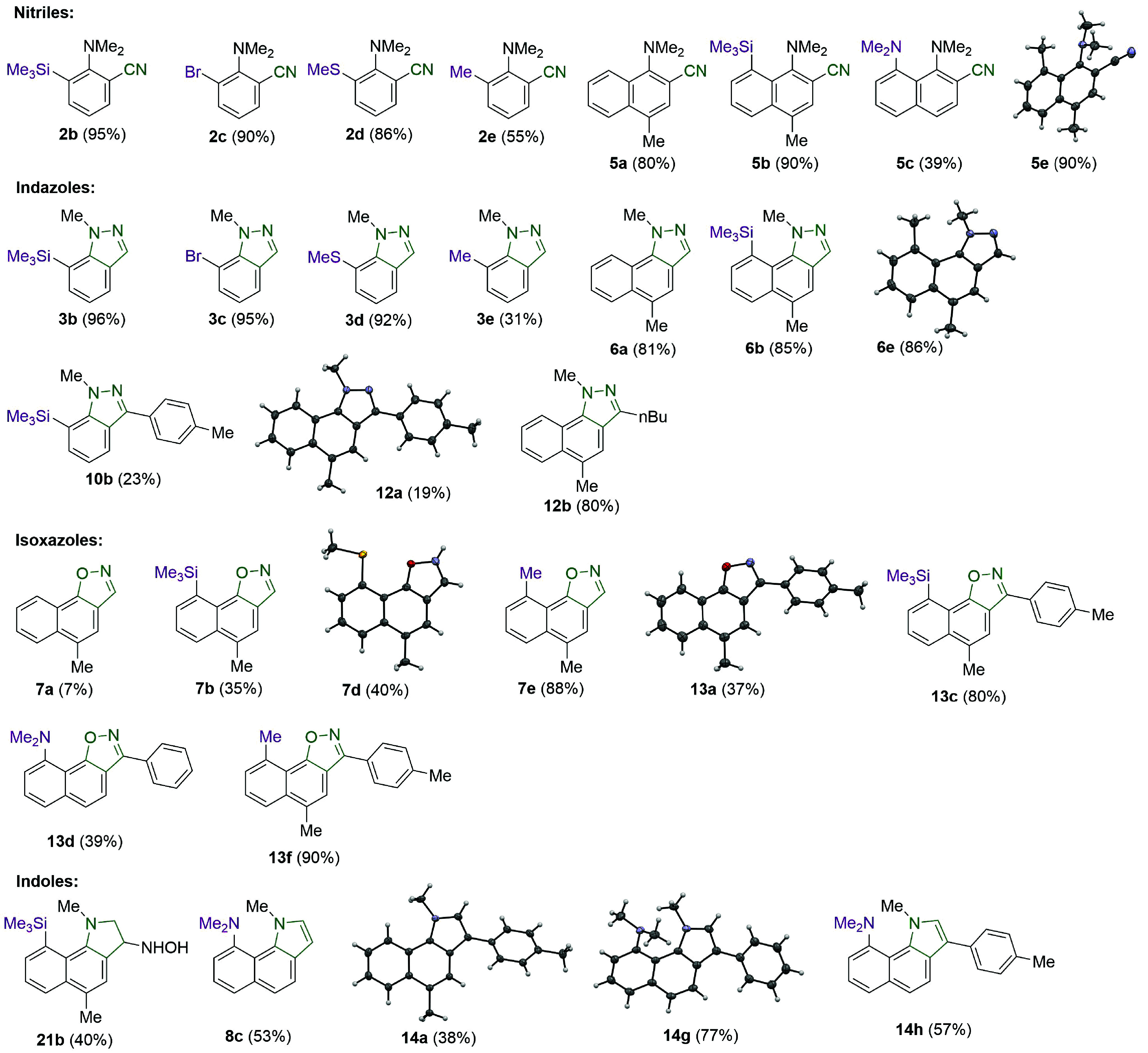 Figure 3
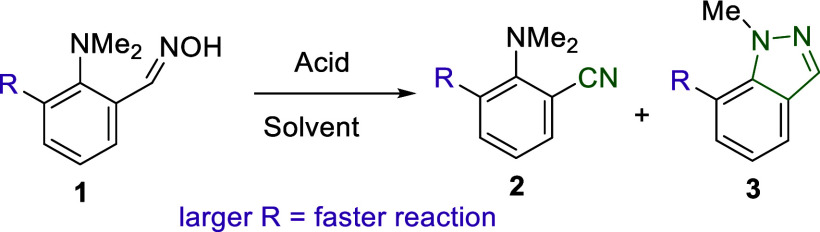 Figure 4
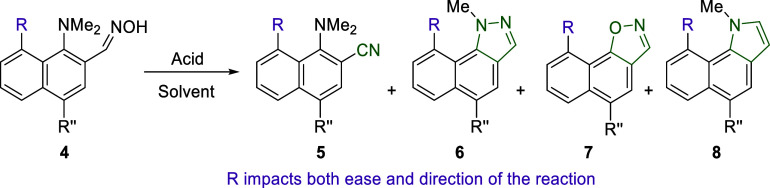 Figure 5
 Figure 6
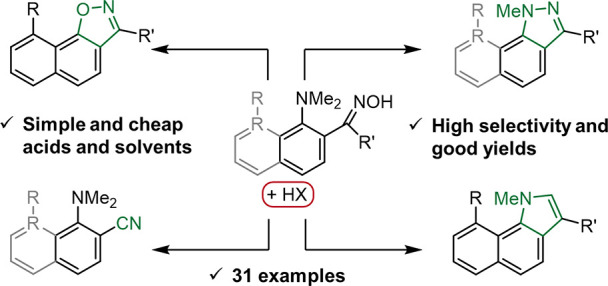 Figure 7
Peer Reviews
No public reviews on file for this paper yet. If you reviewed it on a platform where reviews are public (OpenReview, ICLR, NeurIPS, ICML), you can paste yours below so the community can read it here.
Videos
No videos yet. Explain this paper in a talk, walkthrough, or lecture? Add one.
Taxonomy
TopicsSynthesis and Catalytic Reactions · Chemical Synthesis and Analysis · Fluorine in Organic Chemistry