The lateral patellar retinaculum is thicker in paediatric and adolescent patients with patellofemoral instability: An MRI analysis
Danielle E. Chipman, Emilie Lijesen, Peter M. Cirrincione, Danielle S. Gorelick, Shae K. Simpson, Douglas N. Mintz, Daniel W. Green

TL;DR
This study found that children and teens with patellofemoral instability have a thicker lateral patellar retinaculum compared to those without the condition, based on MRI scans.
Contribution
The study identifies increased lateral patellar retinaculum thickness as a potential imaging marker for patellofemoral instability in young patients.
Findings
The lateral patellar retinaculum was significantly thicker in the MPFL reconstruction cohort.
Patellar tilt was significantly greater in the MPFL reconstruction group.
No difference was found in lateral release/lengthening procedure rates between groups.
Abstract
The purpose of this study was to examine the thickness of the lateral patellar retinaculum (LPR) and patellar tilt in paediatric and adolescent patients who undergo a medial patellofemoral ligament (MPFL) reconstruction. The authors hypothesise that patients undergoing MPFL reconstruction will have a thicker LPR and increased patellar tilt when compared to a comparison cohort. Preoperative magnetic resonance imaging (MRI) of patients ≤ 18 years old who underwent an MPFL reconstruction was retrospectively reviewed. Patients were included if they had a proton density preoperative axial MRI performed internally at our institution. Included patients were matched to a comparison cohort. LPR thickness and patellar tilt were measured on MRI. LPR thickness and patellar tilt were compared between the MPFL cohort and the comparison cohort. A total of 363 patients were identified. 145…
Genes, proteins, chemicals, diseases, species, mutations and cell lines named across the full text — each resolved to its canonical identifier and authoritative record.
Click any figure to enlarge with its caption.
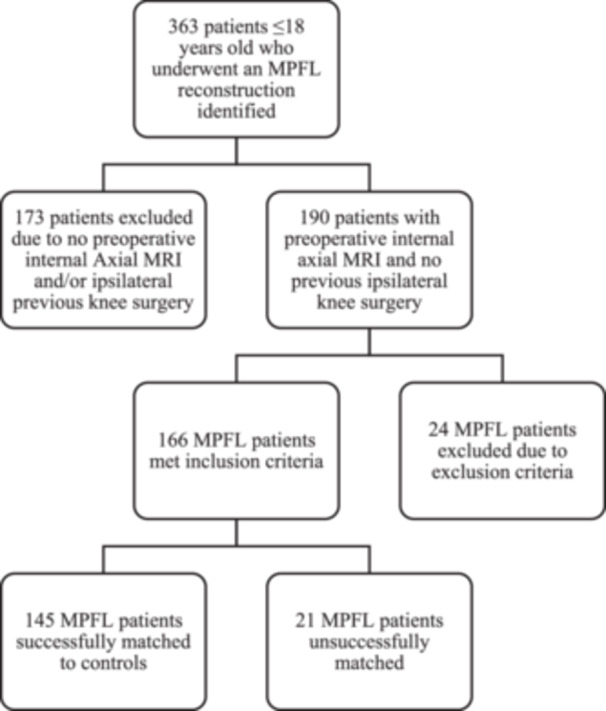 Figure 1
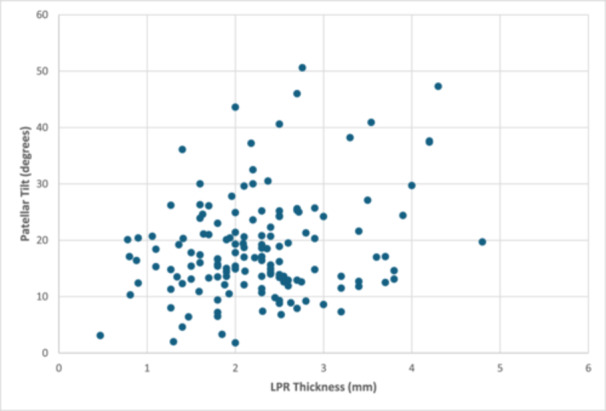 Figure 2
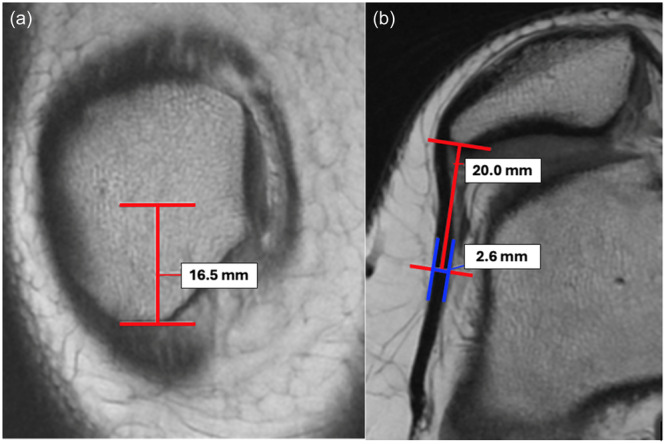 Figure 3
Peer Reviews
No public reviews on file for this paper yet. If you reviewed it on a platform where reviews are public (OpenReview, ICLR, NeurIPS, ICML), you can paste yours below so the community can read it here.
Videos
No videos yet. Explain this paper in a talk, walkthrough, or lecture? Add one.
Taxonomy
TopicsLower Extremity Biomechanics and Pathologies · Sports injuries and prevention · Occupational Health and Performance