Coronary cytoskeletal modulation of coronary blood flow in the presence and absence of type 2 diabetes: the role of cofilin
Patricia E. McCallinhart, Kathlyene R. Stone, Pamela A. Lucchesi, Aaron J. Trask

TL;DR
This study shows that changes in the actin cytoskeleton in coronary cells affect blood flow, especially in type 2 diabetes, and that these changes can be manipulated pharmacologically.
Contribution
The first demonstration that coronary cellular mechanics can acutely modulate coronary blood flow through actin cytoskeleton modulation.
Findings
T2DM CRM VSMCs show reduced F-actin and increased cofilin expression, leading to less stiff cells.
Cofilin knockdown increases F/G actin ratio and VSMC stiffness, as measured by atomic force microscopy.
Actin disruption with Latrunculin B increases coronary blood flow in isolated mouse hearts.
Abstract
Coronary resistance microvessels (CRMs) from type 2 diabetic (T2DM) mice and pigs are less stiff compared to normal, a finding that is dictated by less stiff coronary vascular smooth muscle cells (VSMCs). Cofilin is an endogenous actin regulatory protein that depolymerizes filamentous (F)-actin, and portions of F-actin bound to cofilin are less stiff compared to their unbound F-actin counterparts. In this study, we hypothesized that altering the actin cytoskeleton modifies VSMC stiffness, which contributes to changes in coronary blood flow in normal and T2DM conditions. Utilizing phalloidin staining, we found that F-actin was significantly reduced in T2DM CRM VSMCs, and we showed cofilin expression was increased in T2DM by proteomics and Western blot analysis. Cofilin knockdown in both human and mouse coronary VSMCs using siRNA significantly increased F/G actin ratio. Cofilin knockdown…
Genes, proteins, chemicals, diseases, species, mutations and cell lines named across the full text — each resolved to its canonical identifier and authoritative record.
Click any figure to enlarge with its caption.
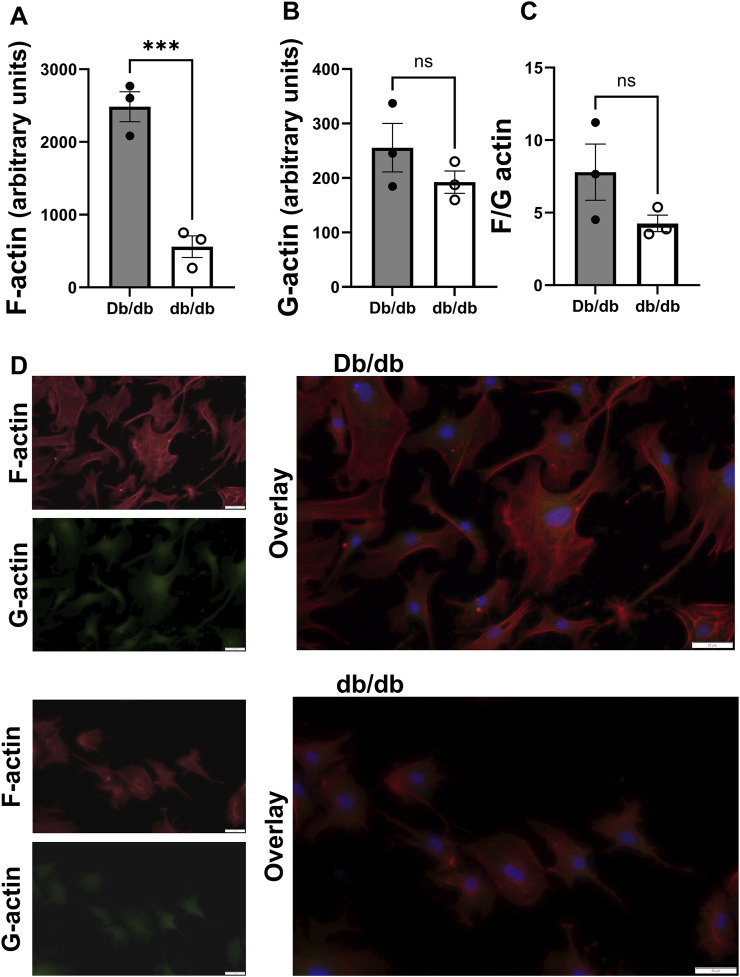 Figure 1
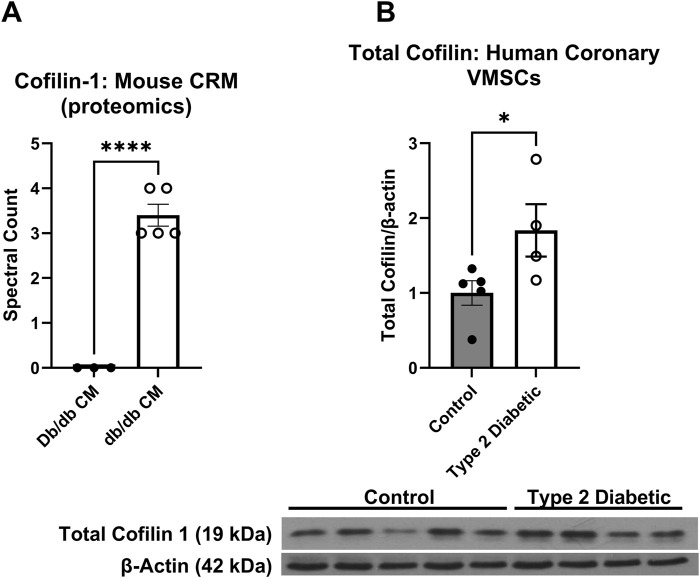 Figure 2
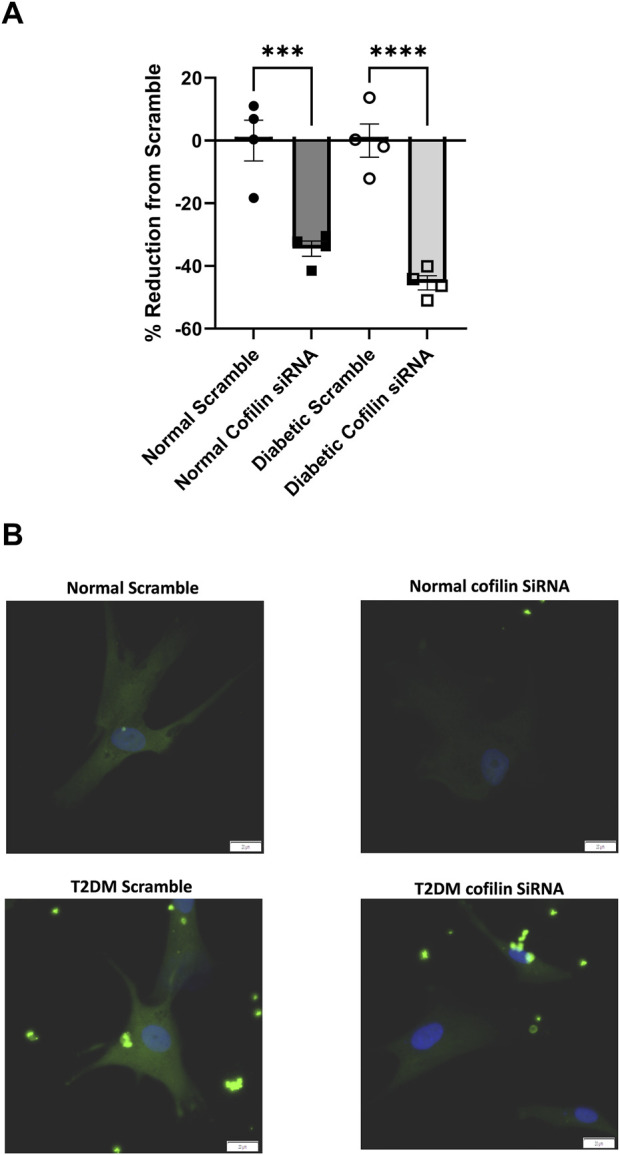 Figure 3
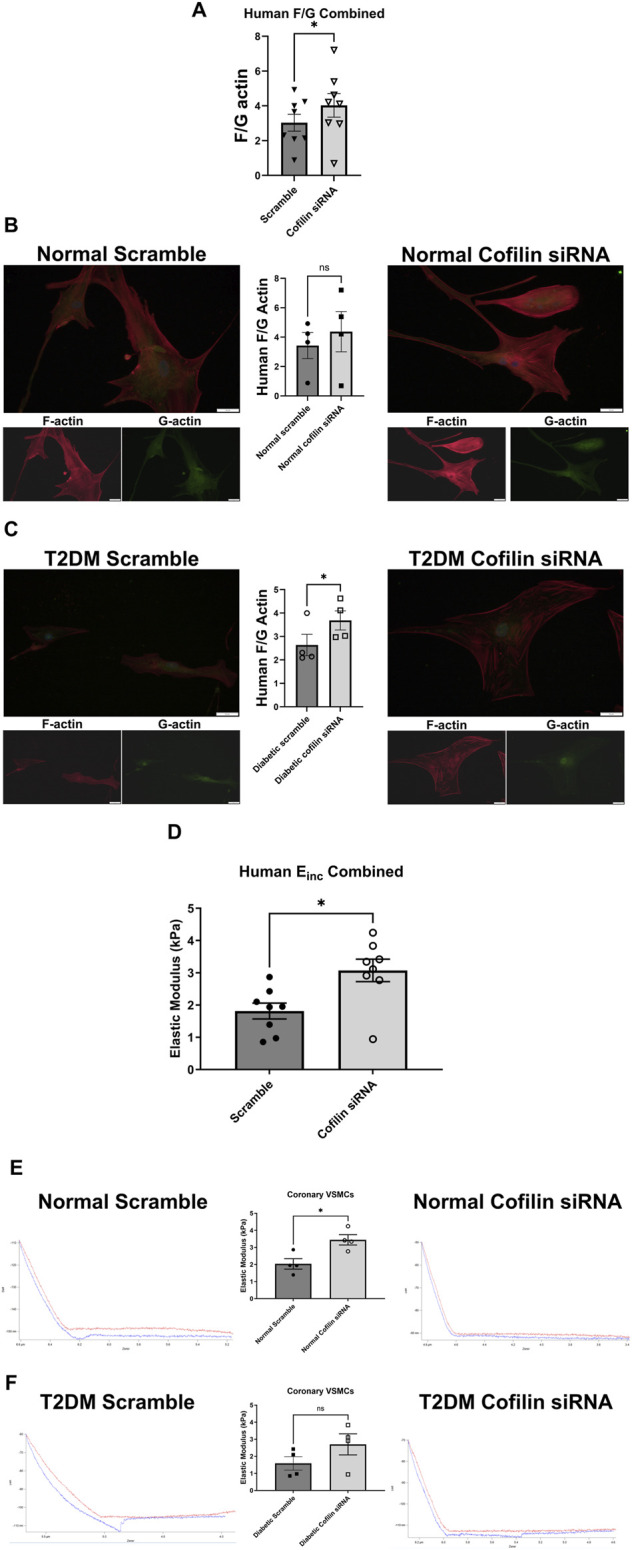 Figure 4
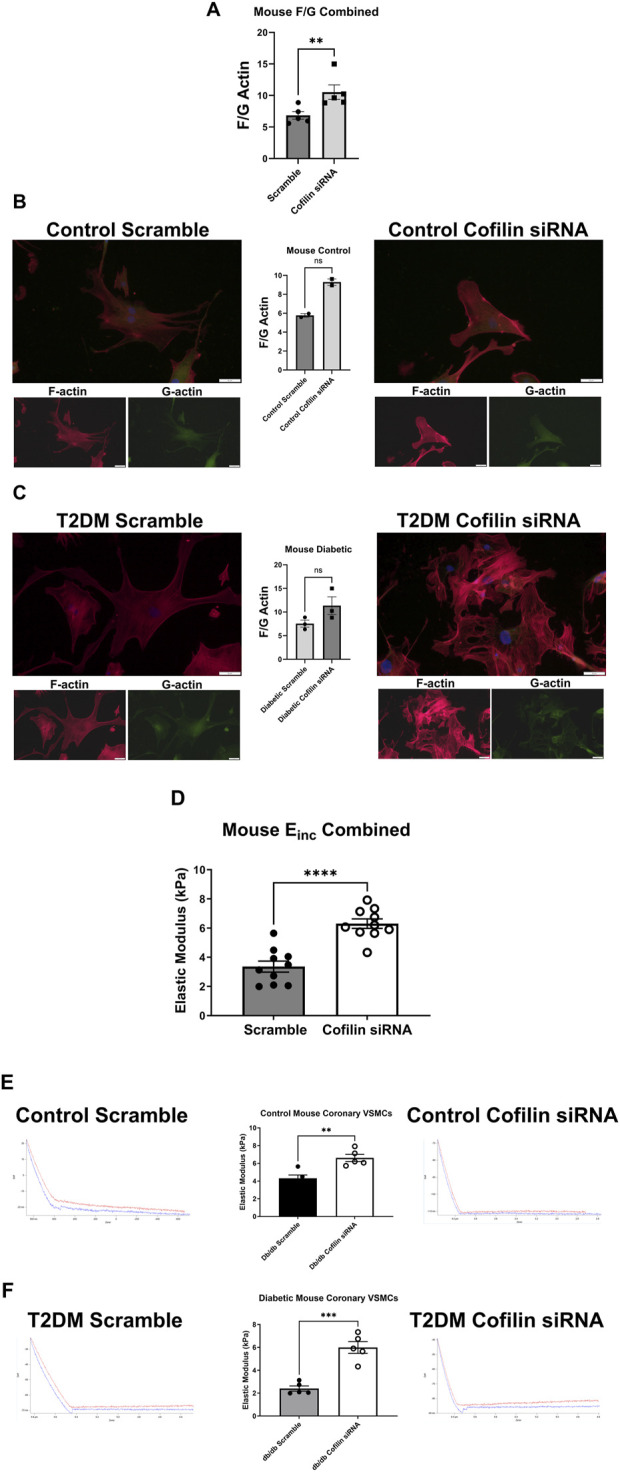 Figure 5
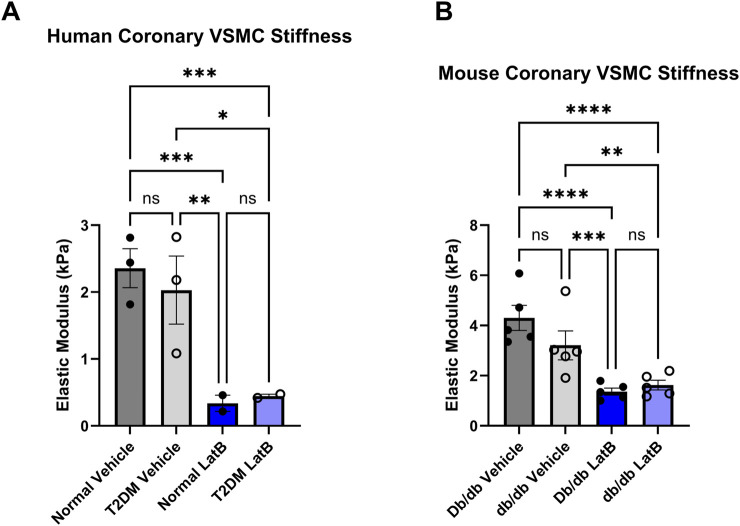 Figure 6
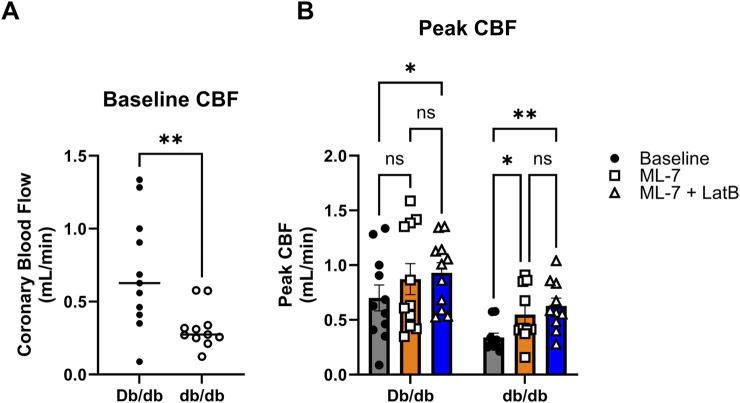 Figure 7
Peer Reviews
No public reviews on file for this paper yet. If you reviewed it on a platform where reviews are public (OpenReview, ICLR, NeurIPS, ICML), you can paste yours below so the community can read it here.
Videos
No videos yet. Explain this paper in a talk, walkthrough, or lecture? Add one.
Taxonomy
TopicsBlood properties and coagulation · Cardiovascular Function and Risk Factors · Adipokines, Inflammation, and Metabolic Diseases