Investigating the Magnitude and Persistence of COVID-19–Related Impacts on Affect and GPS-Derived Daily Mobility Patterns in Adolescence and Emerging Adulthood: Insights From a Smartphone-Based Intensive Longitudinal Study of Colorado-Based Youths From June 2016 to April 2022
Jordan D Alexander, Kelly A Duffy, Samantha M Freis, Sy-Miin Chow, Naomi P Friedman, Scott I Vrieze

TL;DR
This study shows that the pandemic significantly reduced the daily mobility and worsened the emotional well-being of Colorado youths, with effects still visible over two years later.
Contribution
The study provides longitudinal insights into the emotional and mobility impacts of the pandemic on adolescents and young adults, revealing both adaptation and lingering effects.
Findings
Daily mobility and positive affect declined sharply at the pandemic's onset and did not fully recover by April 2022.
Negative affect increased during the pandemic and remained elevated compared to pre-pandemic levels.
Local COVID-19 transmission rates were linked to reduced mobility and worsened emotional well-being, though these effects weakened over time.
Abstract
The onset of the COVID-19 pandemic in early 2020 introduced unprecedented disruptions impacting the emotional well-being and daily routines of US youths. However, the patterns and persistence of these impacts over the pandemic’s multiyear course remain less well understood. This study examined longitudinal changes in affect and daily mobility patterns observed in adolescence and young adulthood from June 2016 to April 2022. The study aimed to quantify changes in youths’ mood and daily routines following the pandemic’s onset and in response to local COVID-19 case rates as well as the persistence of these effects over the pandemic’s multiyear course. Colorado-based adolescent and young adult twins (N=887; n=479, 54% female; meanage 19.2, SDage 1.5 years on January 01, 2020) participating in the CoTwins study between June 2016 and April 2022 were followed via a smartphone app, which…
Genes, proteins, chemicals, diseases, species, mutations and cell lines named across the full text — each resolved to its canonical identifier and authoritative record.
Click any figure to enlarge with its caption.
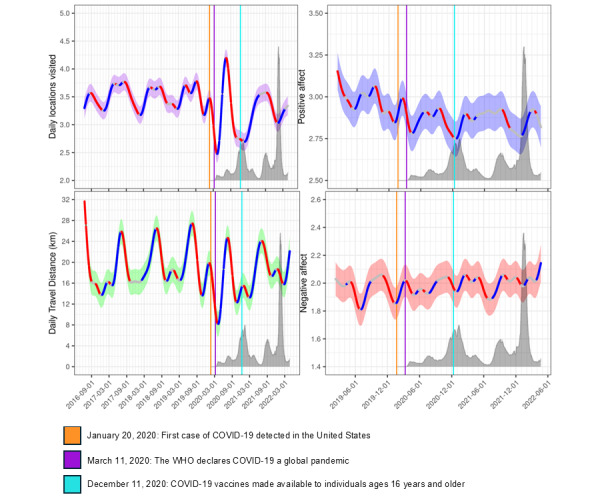 Figure 1
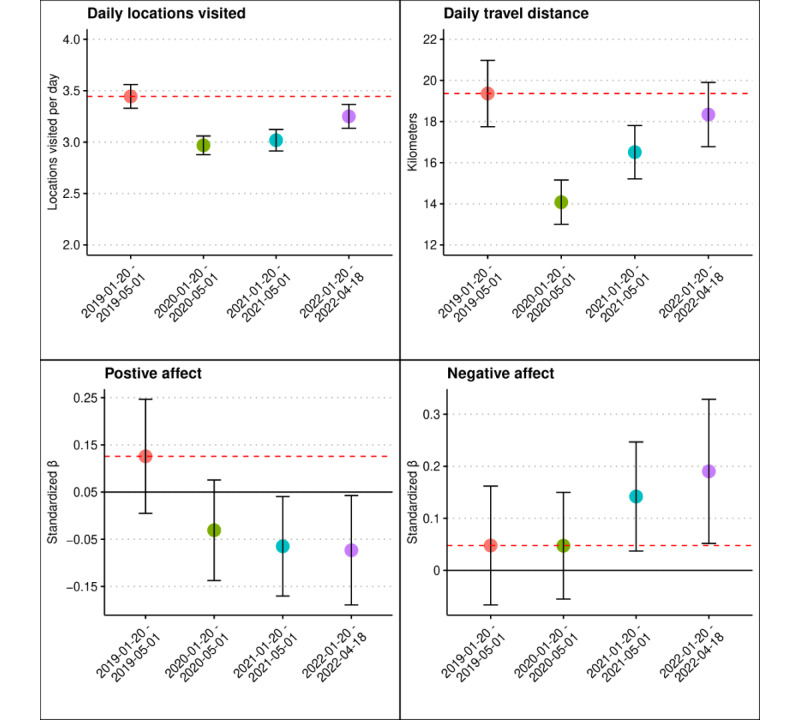 Figure 2
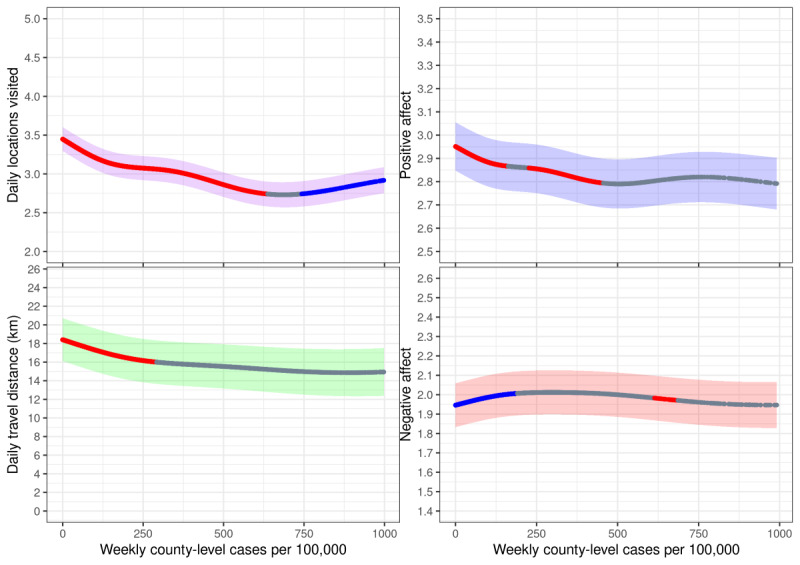 Figure 3
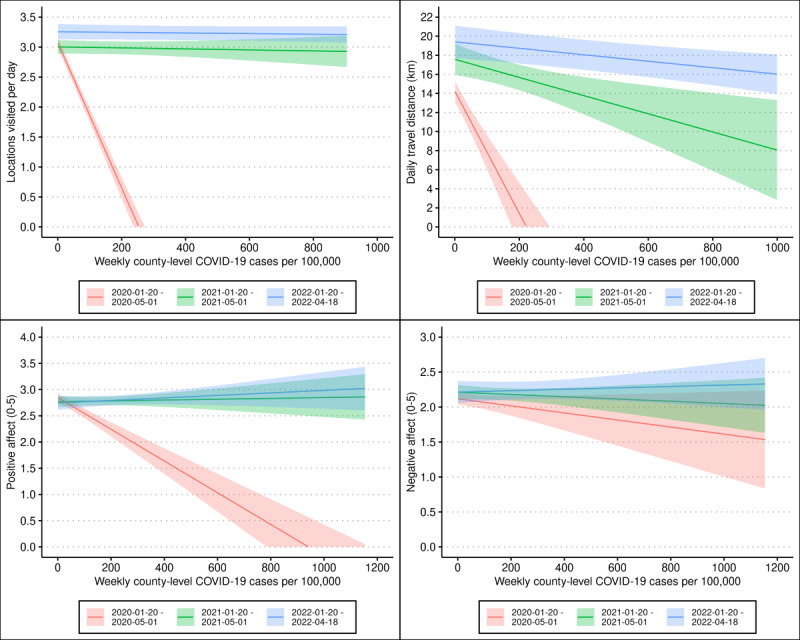 Figure 4
Peer Reviews
No public reviews on file for this paper yet. If you reviewed it on a platform where reviews are public (OpenReview, ICLR, NeurIPS, ICML), you can paste yours below so the community can read it here.
Videos
No videos yet. Explain this paper in a talk, walkthrough, or lecture? Add one.
Taxonomy
TopicsHealth disparities and outcomes · Human Mobility and Location-Based Analysis · COVID-19 epidemiological studies