Low Intrahepatic Distant Recurrence Rate Following RFA Using Linear Mode in Patients With Hepatocellular Carcinoma
Hiroaki Takaya, Tadashi Namisaki, Yusuke Komeda, Hiroki Kinoshita, Naoki Nishimura, Yuki Tsuji, Shinya Sato, Norihisa Nishimura, Ko Saito, Shigeyuki Aizawa, Chie Morioka, Ryuichi Noguchi, Motoyuki Yoshida, Kosuke Kaji, Hitoshi Yoshiji

TL;DR
Using a linear mode during radiofrequency ablation for liver cancer reduces the chance of cancer returning in other parts of the liver.
Contribution
The study identifies the linear RFA mode as a novel factor associated with reduced intrahepatic distant recurrence in hepatocellular carcinoma.
Findings
The linear RFA mode was associated with a lower intrahepatic distant recurrence rate compared to the nonlinear mode.
High platelet count and low AFP-L3 levels were also linked to reduced recurrence in the linear mode group.
Survival rates and complication rates were similar between the two RFA modes.
Abstract
Hepatocellular carcinoma (HCC) is one of the most common cancers worldwide. Radiofrequency ablation (RFA) can be utilized in elderly patients and those with cirrhosis with reduced functional liver reserve as it is less invasive. The arfa RFA system is the first system to offer a linear mode. However, the differences in performance between the linear and existing (nonlinear) modes remain unknown. This retrospective observational study compared the performance of the linear (linear group) and nonlinear RFA modes (nonlinear group) in HCC. Data of 425 patients with one to three HCC tumors measuring ≤ 3 cm who underwent RFA were analyzed. Recurrence (local and distant), survival, and complication rates between the linear and nonlinear groups were determined. The intrahepatic distant recurrence rate was lower in the linear group than in the nonlinear group (p < 0.05). Multivariate analysis…
Genes, proteins, chemicals, diseases, species, mutations and cell lines named across the full text — each resolved to its canonical identifier and authoritative record.
Click any figure to enlarge with its caption.
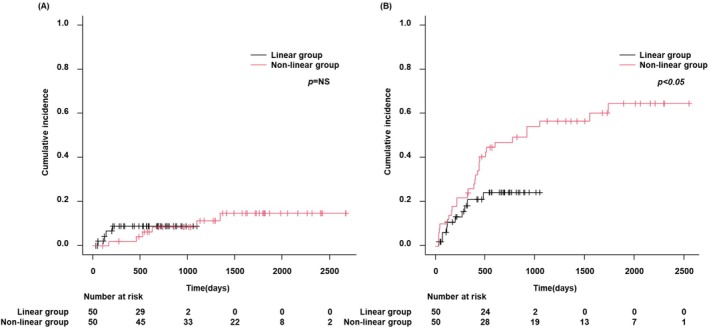 Figure 1
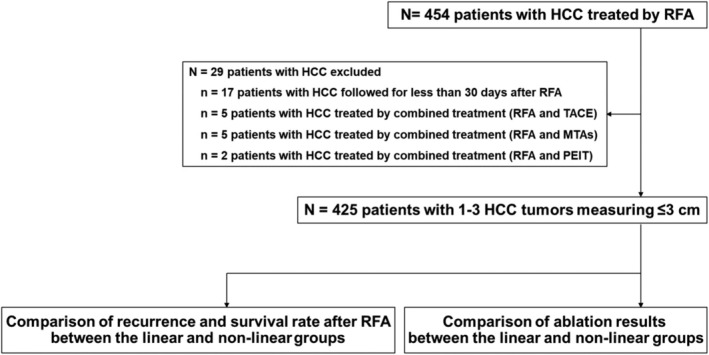 Figure 2
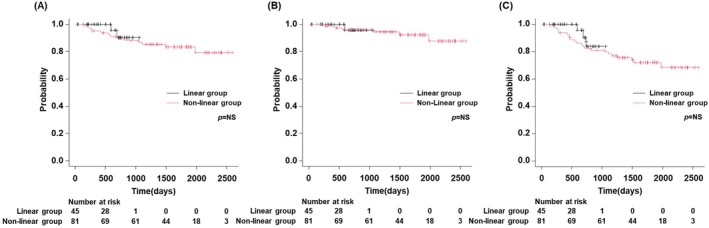 Figure 3
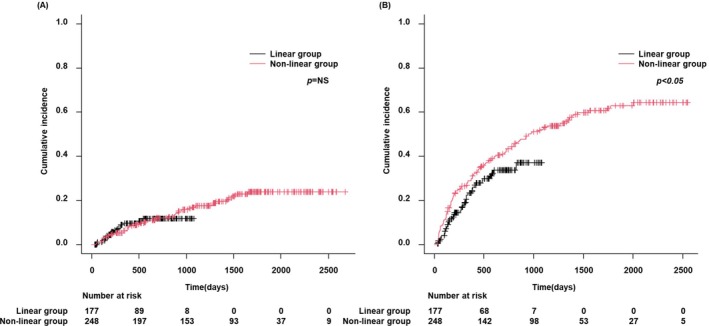 Figure 4
Peer Reviews
No public reviews on file for this paper yet. If you reviewed it on a platform where reviews are public (OpenReview, ICLR, NeurIPS, ICML), you can paste yours below so the community can read it here.
Videos
No videos yet. Explain this paper in a talk, walkthrough, or lecture? Add one.
Taxonomy
TopicsHepatocellular Carcinoma Treatment and Prognosis · Liver Disease Diagnosis and Treatment · Liver Disease and Transplantation