Testing an inverse modeling approach with gradient boosting regression for stroke volume estimation using patient thermodilution data
Vasiliki (Vicky) Bikia, Dionysios Adamopoulos, Marco Roffi, Georgios Rovas, Stéphane Noble, François Mach, Nikolaos Stergiopulos

TL;DR
This paper introduces a new method for estimating stroke volume using machine learning and a 1-D circulation model, showing promising accuracy and faster computation for real-time clinical use.
Contribution
A novel inverse modeling approach using gradient boosting regression for accurate and efficient stroke volume estimation.
Findings
The method achieved a mean absolute error of 16 mL and a normalized RMSE of 21% compared to thermodilution.
Predicted stroke volume was slightly underestimated but showed a strong correlation (r = 0.7) with reference values.
The approach significantly reduced computational time, making it suitable for real-time clinical applications.
Abstract
Stroke volume (SV) is a major indicator of cardiovascular function, providing essential information about heart performance and blood flow adequacy. Accurate SV measurement is particularly important for assessing patients with heart failure, managing patients undergoing major surgeries, and delivering optimal care in critical settings. Traditional methods for estimating SV, such as thermodilution, are invasive and unsuitable for routine diagnostics. Non-invasive techniques, although safer and more accessible, often lack the precision and user-friendliness needed for continuous bedside monitoring. We developed a modified method for SV estimation that combines a validated 1-D model of the systemic circulation with machine learning. Our approach replaces the traditional optimization process developed in our previous work, with a regression method, utilizing an in silico-generated dataset…
Genes, proteins, chemicals, diseases, species, mutations and cell lines named across the full text — each resolved to its canonical identifier and authoritative record.
Click any figure to enlarge with its caption.
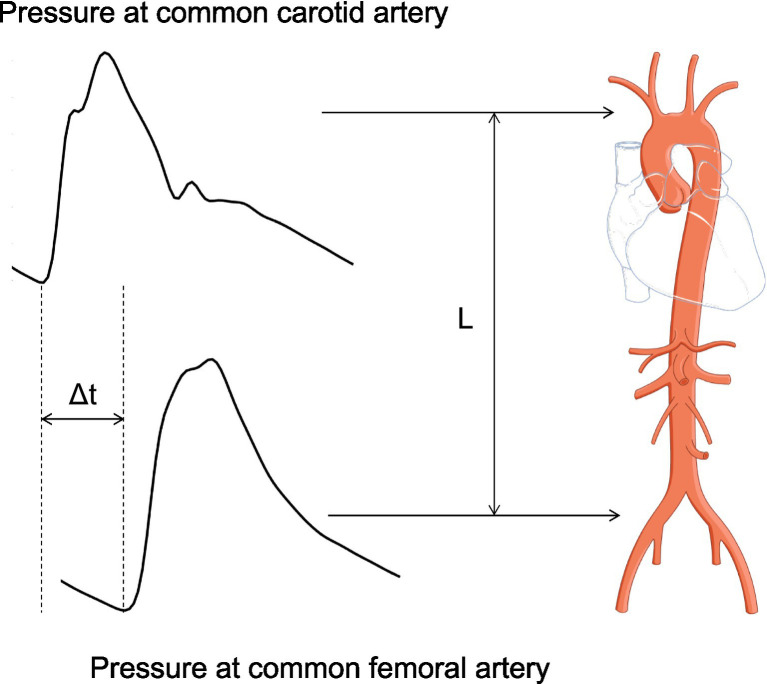 Figure 1
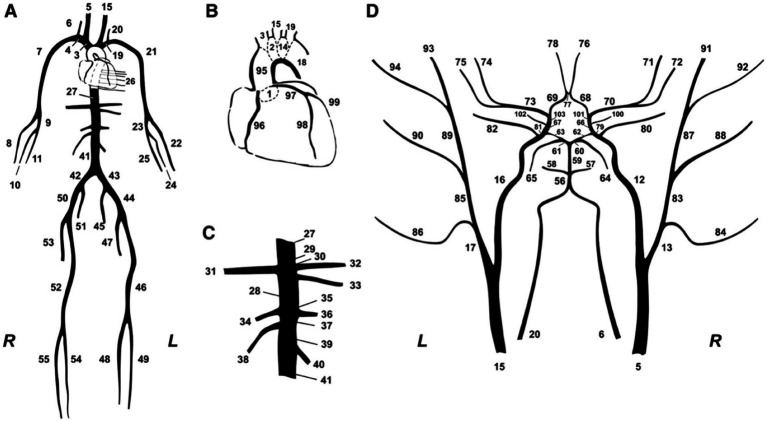 Figure 2
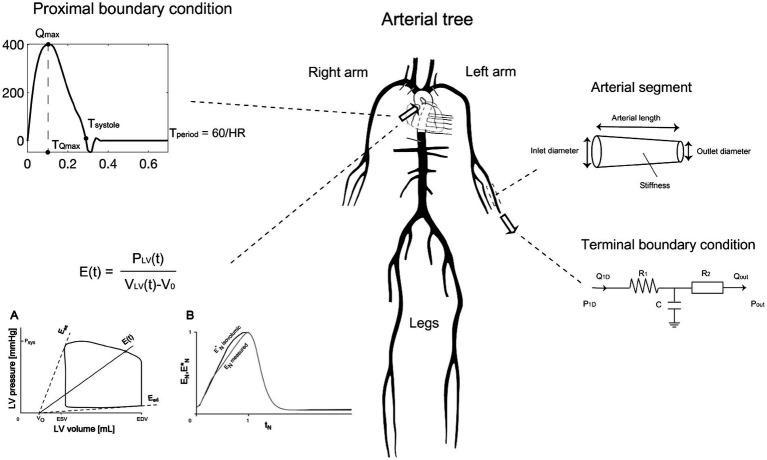 Figure 3
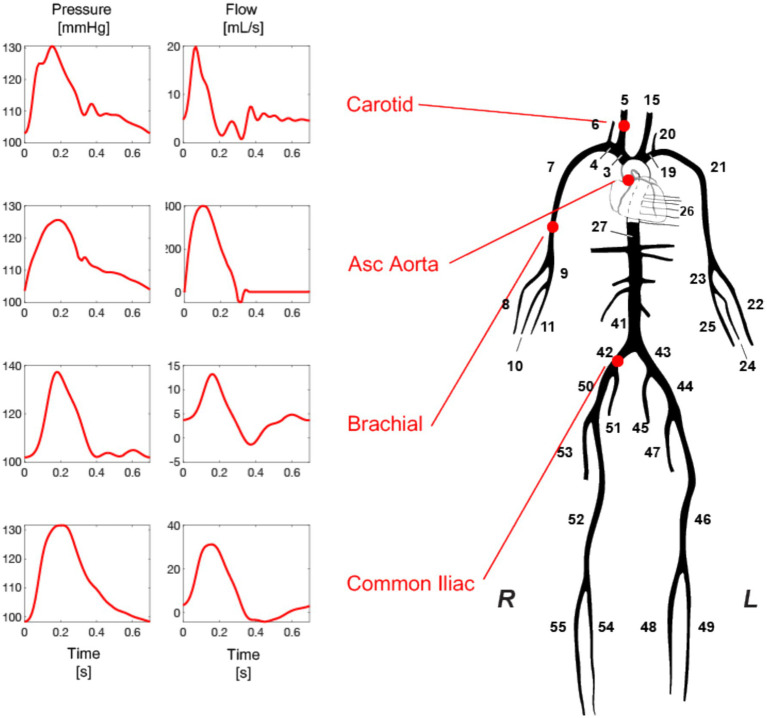 Figure 4
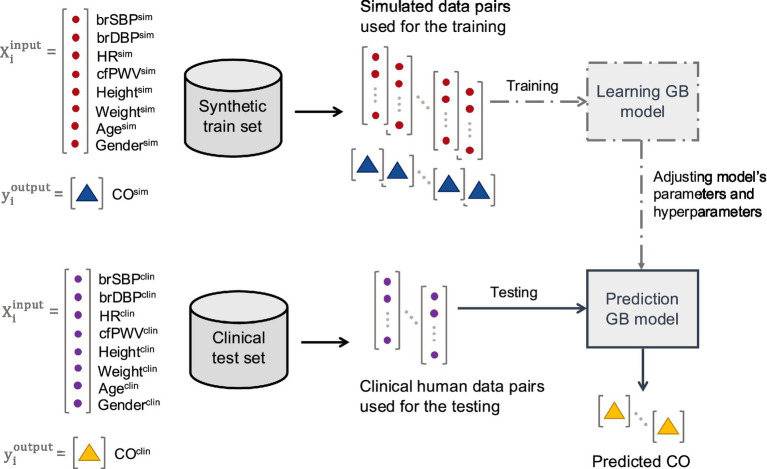 Figure 5
 Figure 6
 Figure 7
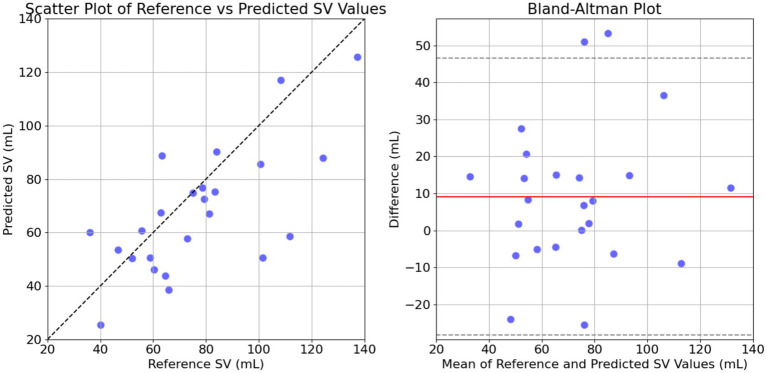 Figure 8
Peer Reviews
No public reviews on file for this paper yet. If you reviewed it on a platform where reviews are public (OpenReview, ICLR, NeurIPS, ICML), you can paste yours below so the community can read it here.
Videos
No videos yet. Explain this paper in a talk, walkthrough, or lecture? Add one.
Taxonomy
TopicsHemodynamic Monitoring and Therapy · Optical Imaging and Spectroscopy Techniques · Cardiovascular Health and Disease Prevention