Modulation of CREB3L2-ATF4 heterodimerization via proteasome inhibition and HRI activation in Alzheimer’s disease pathology
Krystal Herline-Killian, Michaela M. Pauers, Jessica E. Lipponen, Michael A. Zrzavy, Cláudio Gouveia Roque, Ethan P. McCurdy, Kyung Min Chung, Ulrich Hengst

TL;DR
This study explores how protein interactions in neurons change during Alzheimer's disease and suggests a potential way to restore normal gene activity.
Contribution
The study reveals how proteasome inhibition and HRI activation modulate CREB3L2-ATF4 heterodimerization in Alzheimer’s disease.
Findings
HRI activation reduces CREB3L2 and CREB3L2-ATF4 levels in neurons.
Proteasome inhibition increases nuclear levels of CREB3L2 and ATF4.
HRI activation prevents transcriptional dysregulation of SNX3.
Abstract
Alzheimer’s disease (AD) pathology includes transcriptional changes in the neurons, which are in part caused by the heterodimerization of two stress response transcription factors, CREB3L2 and ATF4. We investigated the role of proteasome inhibition and the eIF2α-kinase HRI in the formation of CREB3L2-ATF4 in neurons exposed to soluble oligomeric Aβ42. While HRI activation increased ATF4 expression, it decreased CREB3L2 and CREB3L2-ATF4 levels. Proteasome inhibition, induced by Aβ42, leads to increased levels of both transcription factors in the nucleus. These findings suggest that CREB3L2 levels are normally kept low due to rapid degradation, but proteasome inhibition in response to Aβ42 disrupts this balance, increasing CREB3L2 and heterodimer levels. Activation of HRI not only reduced CREB3L2 and heterodimer levels but also prevented the transcriptional dysregulation of a CREB3L2-ATF4…
Genes, proteins, chemicals, diseases, species, mutations and cell lines named across the full text — each resolved to its canonical identifier and authoritative record.
Click any figure to enlarge with its caption.
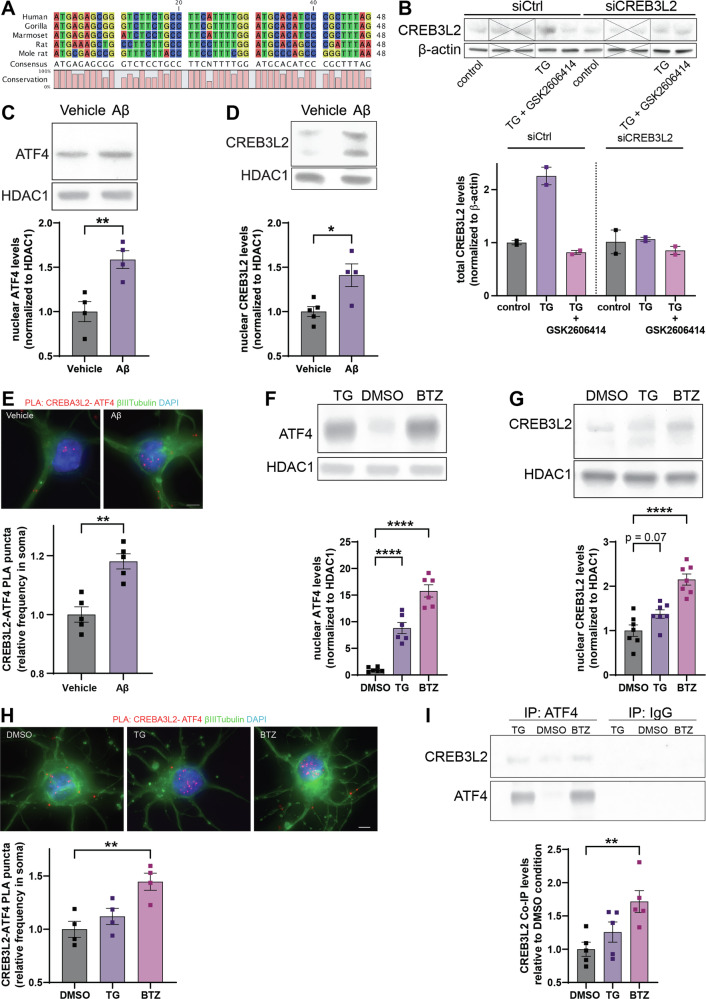 Figure 1
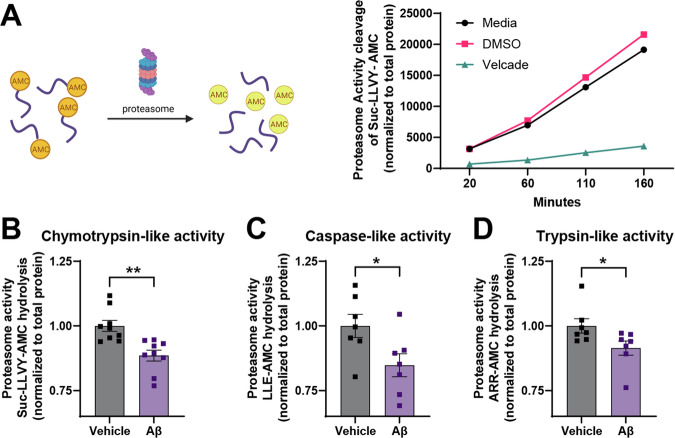 Figure 2
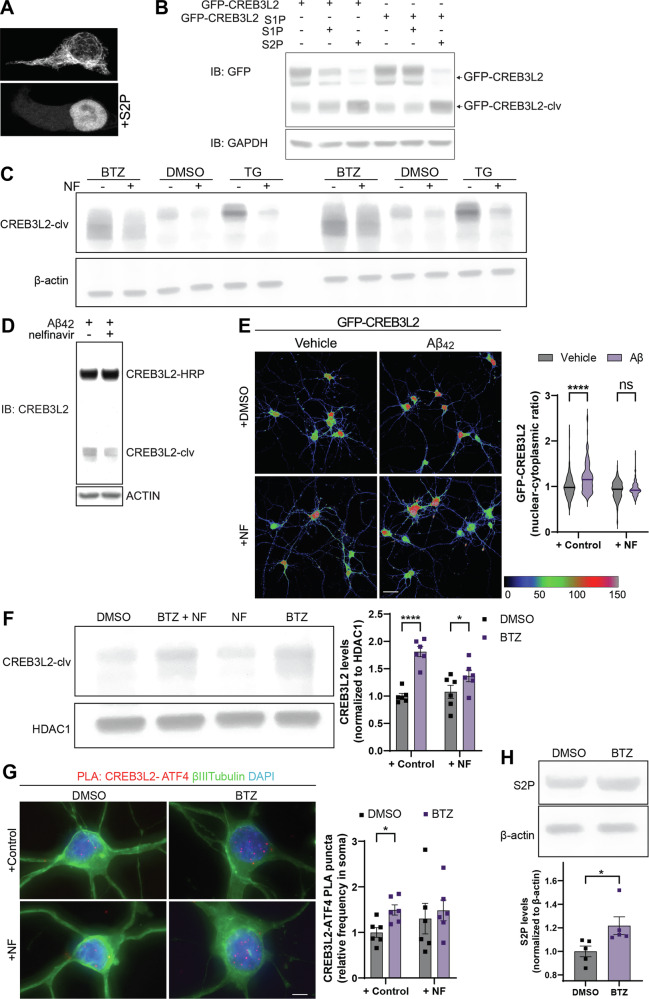 Figure 3
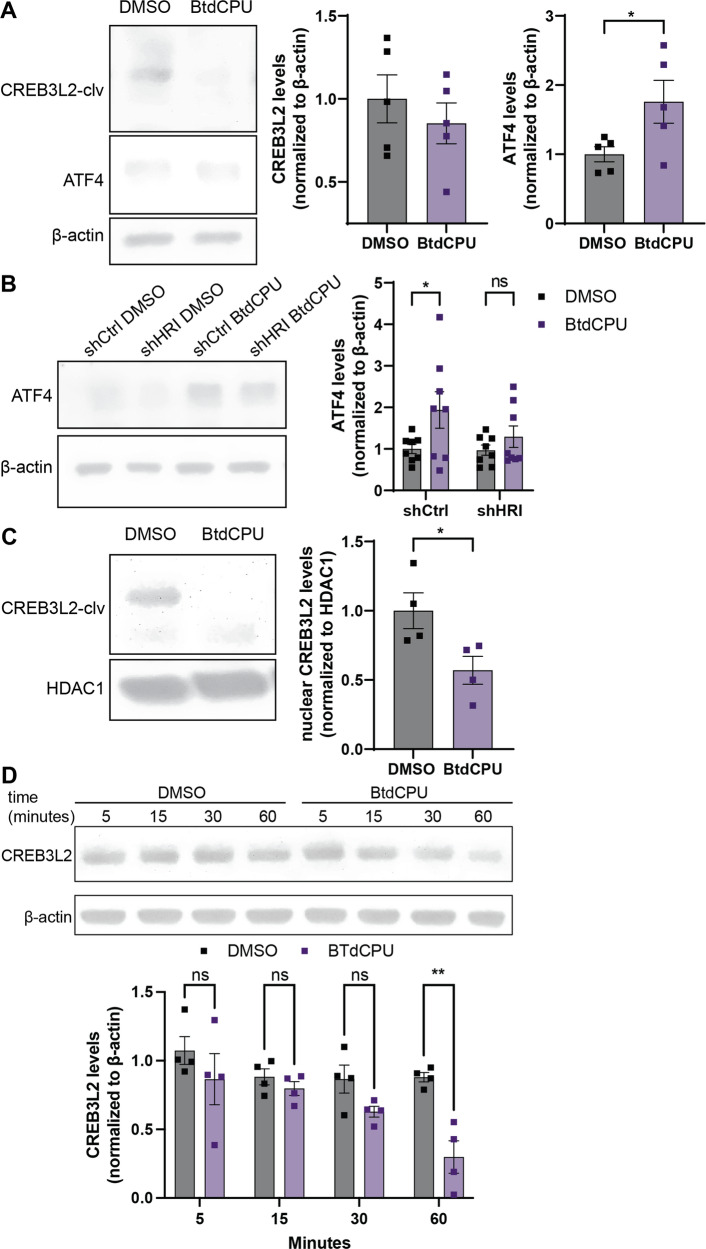 Figure 4
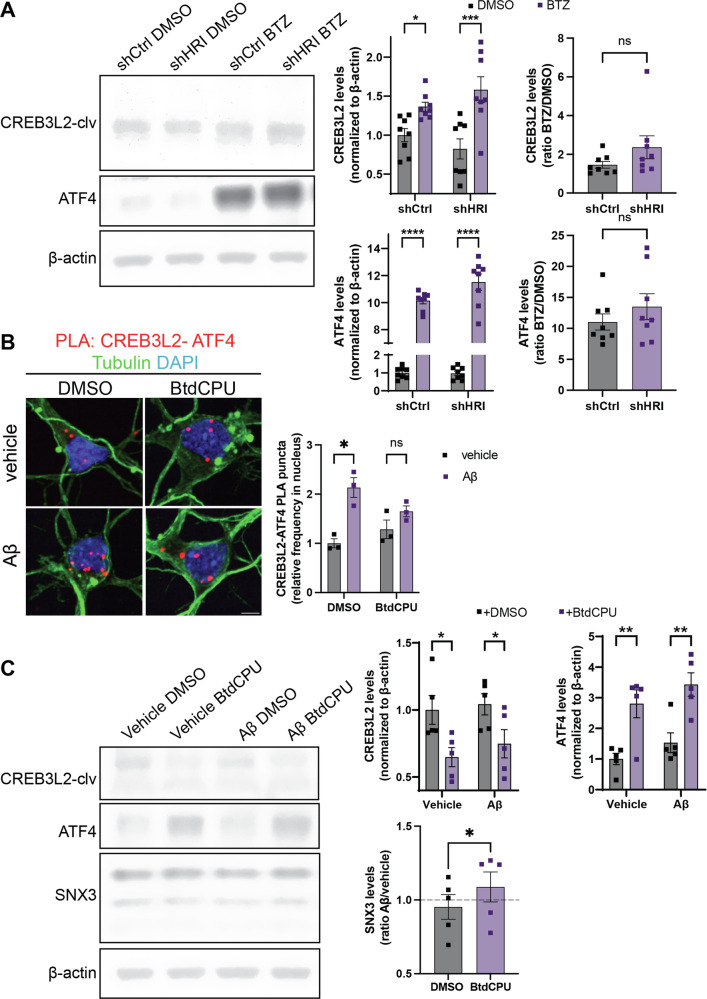 Figure 5
Peer Reviews
No public reviews on file for this paper yet. If you reviewed it on a platform where reviews are public (OpenReview, ICLR, NeurIPS, ICML), you can paste yours below so the community can read it here.
Videos
No videos yet. Explain this paper in a talk, walkthrough, or lecture? Add one.
Taxonomy
TopicsEndoplasmic Reticulum Stress and Disease · RNA regulation and disease · Nuclear Receptors and Signaling