859 The Selection Through Burn Injury Hypothesis: How Burn Injuries Shaped Human Evolution
Josh Cuddihy, Yuemin Li, Matteo Fumagalli, Marcela Vizcaychipi, Declan Collins, Dominic Friston, Istvan Nagy

TL;DR
This paper proposes that burn injuries acted as an evolutionary pressure in human development, shaping genes related to wound healing and immune response.
Contribution
The paper introduces a novel evolutionary hypothesis linking burn injuries to human genetic adaptation and presents supporting genetic evidence.
Findings
Ten genes showed signs of positive selection in humans compared to chimpanzees, related to burn injury healing.
Non-neutral selection was observed in burn-related genes across modern human populations.
Genes linked to inflammation, wound closure, and immune response were identified as key in burn healing.
Abstract
The mastery of fire was crucial in human evolution but likely increased the risk of skin burn injuries in hominins more than other species. Our “selection through burn injury hypothesis” suggests that these injuries became a significant evolutionary selective pressure throughout human development. To explore the genetic implications, we compared the post-burn and non-burned transcriptomes of rats and humans using publicly available microarray data. Matched human and rat ortholog pairs (21,597 genes) were analyzed to identify differentially expressed human genes (DEGs) with a log fold change of > 1.5 or < -1.5, resulting in 94 DEGs. These DEGs were compared using dN/dS analysis between publicly available orthologous human and chimpanzee sequences to find evidence of non-neutral selection. Population genetic analysis (Tajima’s D and population branch statistics) was performed on the same…
Genes, proteins, chemicals, diseases, species, mutations and cell lines named across the full text — each resolved to its canonical identifier and authoritative record.
Click any figure to enlarge with its caption.
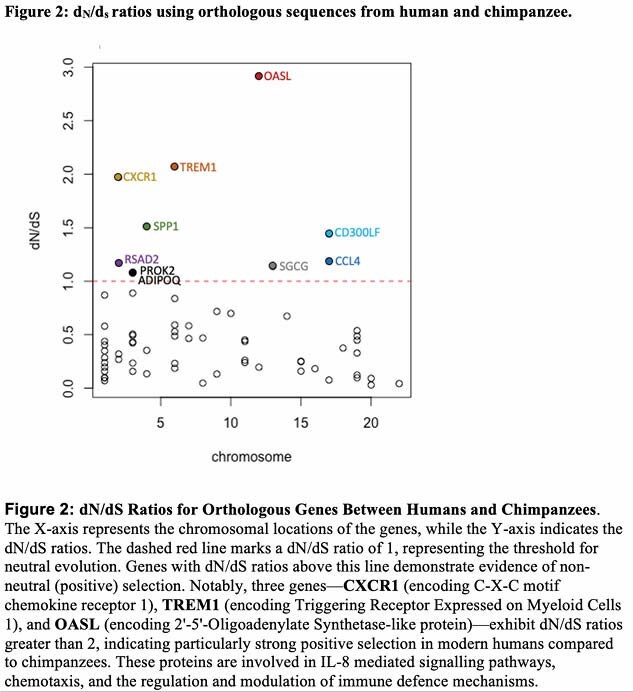 Figure 1
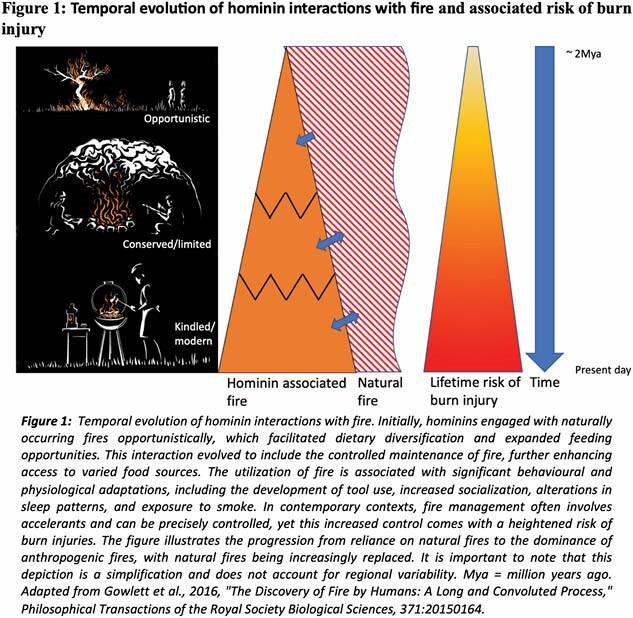 Figure 2
Peer Reviews
No public reviews on file for this paper yet. If you reviewed it on a platform where reviews are public (OpenReview, ICLR, NeurIPS, ICML), you can paste yours below so the community can read it here.
Videos
No videos yet. Explain this paper in a talk, walkthrough, or lecture? Add one.
Taxonomy
TopicsBurn Injury Management and Outcomes