90 Individual and Injury Characteristics of Response to Thrombolytic Therapy Following Severe Frostbite Injury
Rachel Nygaard, Emily Colonna, Rediat Tilahun, Charly Vang, Alexandra Lacey, Kyle Schmitz, Derek Lumbard

TL;DR
This study examines how patients with severe frostbite respond to tPA treatment, finding that early administration improves outcomes and that imaging can help predict amputation risks.
Contribution
The study introduces a novel method to assess tPA efficacy using perfusion imaging and stratifies patients into response categories.
Findings
71.4% of patients were full responders to tPA, with significantly smaller initial perfusion deficits.
Early tPA administration (within 5–7 hours of warming) was associated with the best outcomes.
Imaging outcomes showed that 37.7% of partial responders and 40% of non-responders had amputations.
Abstract
Approximately 30% of severe frostbite injuries result in amputation. Thrombolytic therapy (tPA) is used to reduce tissue loss following severe frostbite injury. This study evaluates factors impacting the tPA effectiveness using post-tPA perfusion imaging and amputation level as outcome measures. We hypothesize that stratifying tPA-treated patients into full, partial, and non-responders will allow for a more nuanced assessment of treatment efficacy. We reviewed a prospectively maintained frostbite database (2013–2020) for patients with post-rewarming perfusion deficits measured by Tc99 scan who were treated with IV tPA. Descriptive statistics and multinomial logistic regression assessed differences in responder categories (full, partial, non-responders), adjusting for time to tPA, pre-treatment tissue perfusion deficits, and infection. Of 133 patients, 71.4% were full responders, 23.3%…
Genes, proteins, chemicals, diseases, species, mutations and cell lines named across the full text — each resolved to its canonical identifier and authoritative record.
Click any figure to enlarge with its caption.
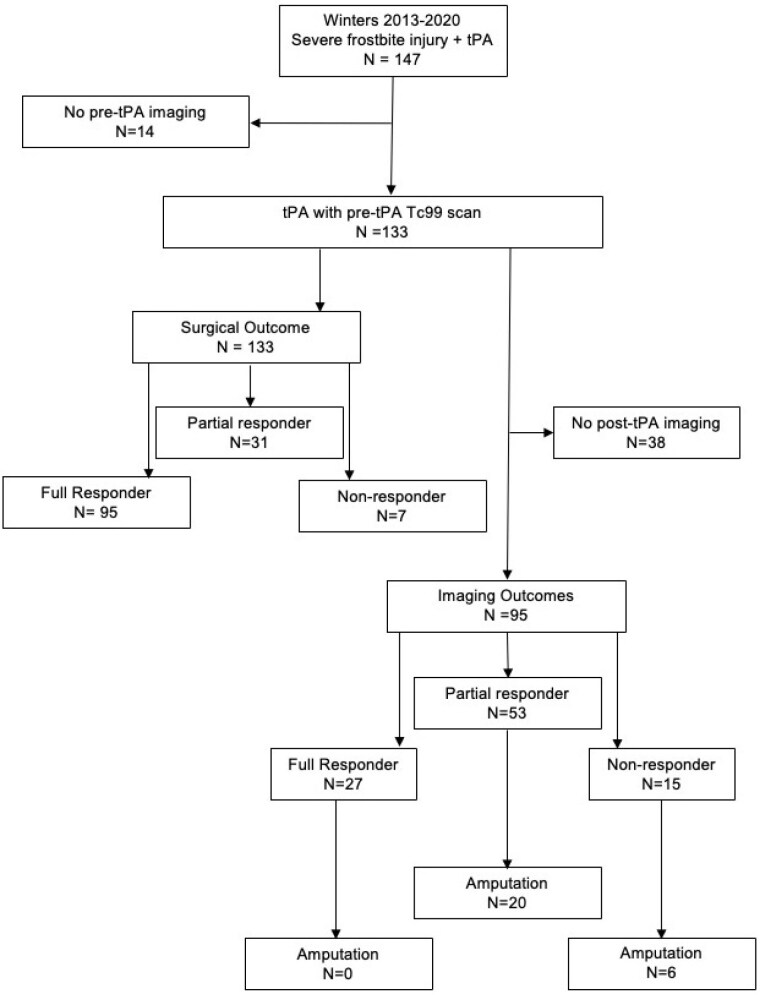 Figure 1
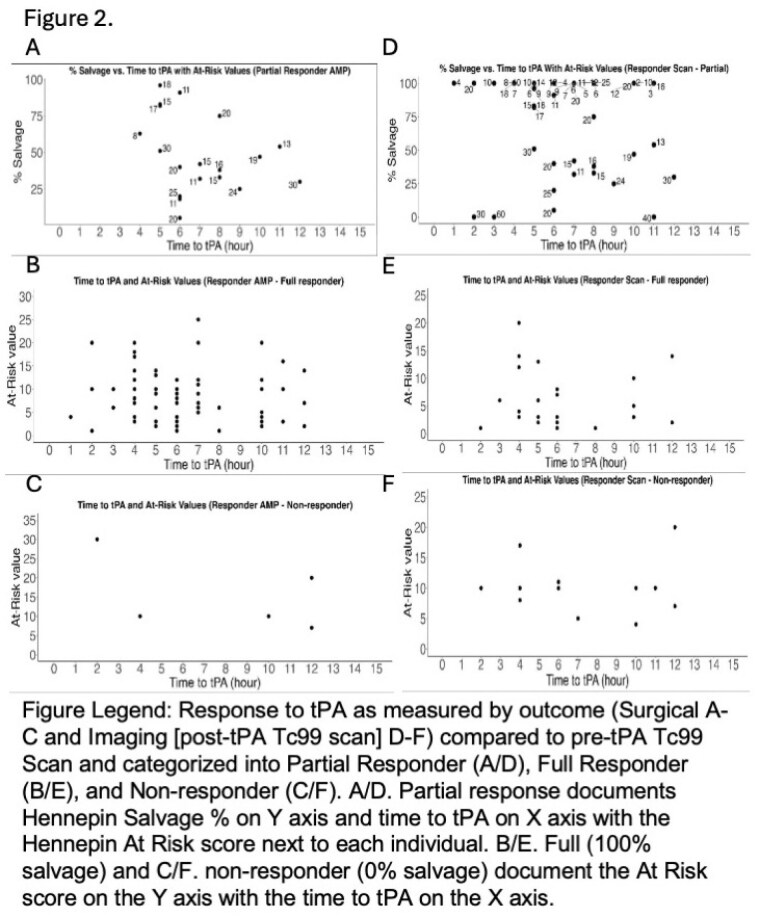 Figure 2
Peer Reviews
No public reviews on file for this paper yet. If you reviewed it on a platform where reviews are public (OpenReview, ICLR, NeurIPS, ICML), you can paste yours below so the community can read it here.
Videos
No videos yet. Explain this paper in a talk, walkthrough, or lecture? Add one.
Taxonomy
TopicsBurn Injury Management and Outcomes