Craniofacial integration and modularity in untreated cleft lip and palate
Sariesendy Sumardi, Anne Marie Kuijpers-Jagtman, Benny S. Latief, Hans L. L. Wellens, Piotr S. Fudalej

TL;DR
This study examines how untreated cleft lip and palate affect craniofacial structure and organization in adults, revealing differences in shape and modularity compared to unaffected individuals.
Contribution
The study provides new insights into craniofacial integration and modularity in untreated cleft lip and palate patients using geometric morphometrics.
Findings
Craniofacial shape varies significantly between unaffected controls and cleft groups, with the largest differences seen between NORM and UCLAP.
Cleft-affected individuals show distinct modularity patterns, with anterior and posterior modules separated by the pterygomaxillary plane.
PCA results indicate vertical and sagittal shape variations as primary sources of craniofacial variability.
Abstract
To quantify craniofacial variation, integration, and modularity in untreated adults with orofacial clefts who had not undergone surgery, as well as in unaffected controls. Fourteen cephalometric landmarks depicting the skull base, maxilla, and mandible were identified on lateral cephalograms of 295 adult Proto-Malayid individuals. The sample included 243 individuals with unoperated clefts—179 with complete unilateral cleft lip and alveolus (UCLA, mean age 23.7 years) and 66 with complete unilateral cleft lip, alveolus, and palate (UCLAP, mean age 24.5 years)—and 50 unaffected controls (NORM, mean age 21.2 years). Geometric morphometrics were used to analyze craniofacial shape variability, integration, and modularity. Principal component analysis (PCA) was used to assess shape variability, while canonical variates analysis (CVA) was used to evaluate group differences by calculating…
Genes, proteins, chemicals, diseases, species, mutations and cell lines named across the full text — each resolved to its canonical identifier and authoritative record.
Click any figure to enlarge with its caption.
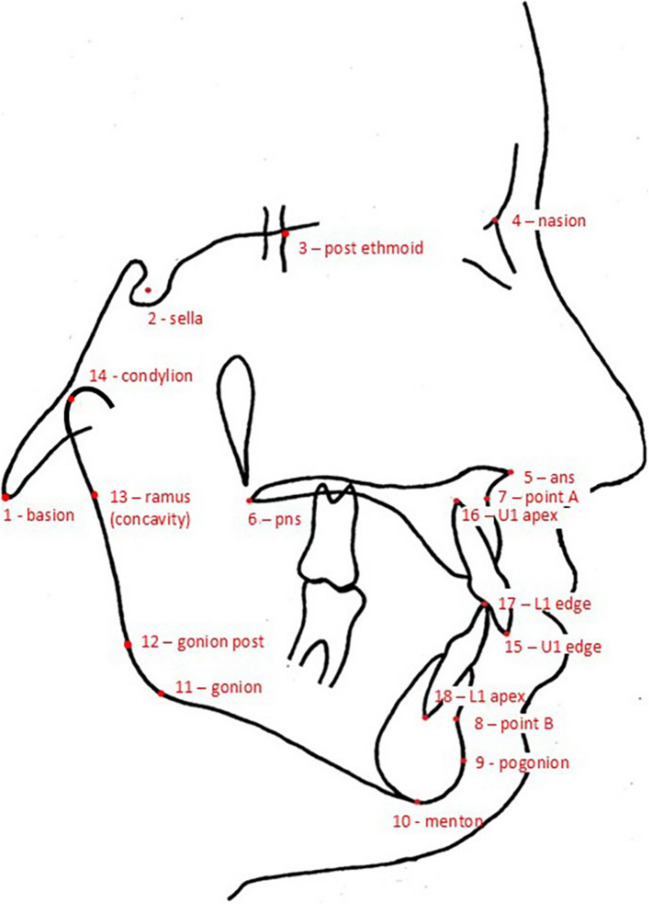 Figure 1
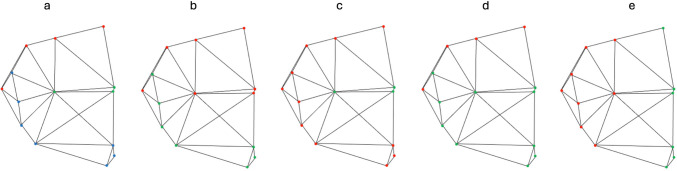 Figure 2
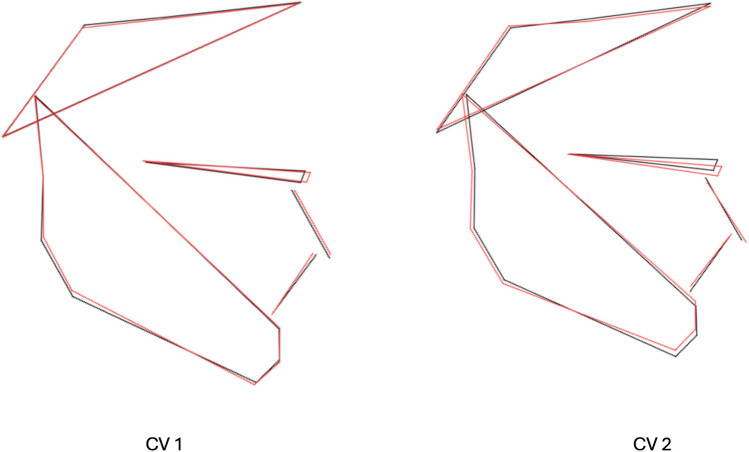 Figure 3
Peer Reviews
No public reviews on file for this paper yet. If you reviewed it on a platform where reviews are public (OpenReview, ICLR, NeurIPS, ICML), you can paste yours below so the community can read it here.
Videos
No videos yet. Explain this paper in a talk, walkthrough, or lecture? Add one.
Taxonomy
TopicsMorphological variations and asymmetry · Cleft Lip and Palate Research · Forensic Anthropology and Bioarchaeology Studies