525 Autologous Skin Cell Suspension Provides Comparable Healing in Burn and Non-Burn Wounds
Riley Shegos, Sarah Miller, Ursula Adams, Cori Rogers, Carrie Mcgroarty, C Scott Hultman

TL;DR
This study shows that autologous skin cell suspension heals burn and non-burn wounds equally well, offering a versatile treatment option.
Contribution
Demonstrates that ASCS is equally effective for burn and non-burn wounds, filling a gap in comparative efficacy research.
Findings
Wound closure rates were similar at 4 and 8 weeks for both burn and non-burn patients.
Complication rates were 25% in both burn and non-burn groups.
ASCS showed no significant differences in efficacy between wound types.
Abstract
Burn injuries often require advanced treatments to optimize healing, but the comparative effectiveness of emerging therapies, such as autologous skin cell suspension (ASCS), between wound types remains unclear. While ASCS has shown promise in enhancing wound healing, there is a gap in understanding its relative efficacy in burn versus non-burn wounds. This study evaluates and compares the outcome of ASCS treatment in burn and non-burn patients with the hypothesis that ASCS is equally effective in promoting healing across both wound types. This retrospective cohort study analyzed 100 consecutive patients treated with ASCS for full-thickness injuries. We compared burn (n=28) with non-burn (n=72) patients, focusing on age, length of stay (LOS), time from ASCS application to discharge, ASA score, Mangled Extremity Severity Score (MESS), wound size, estimated blood loss (EBL), case time, OR…
Click any figure to enlarge with its caption.
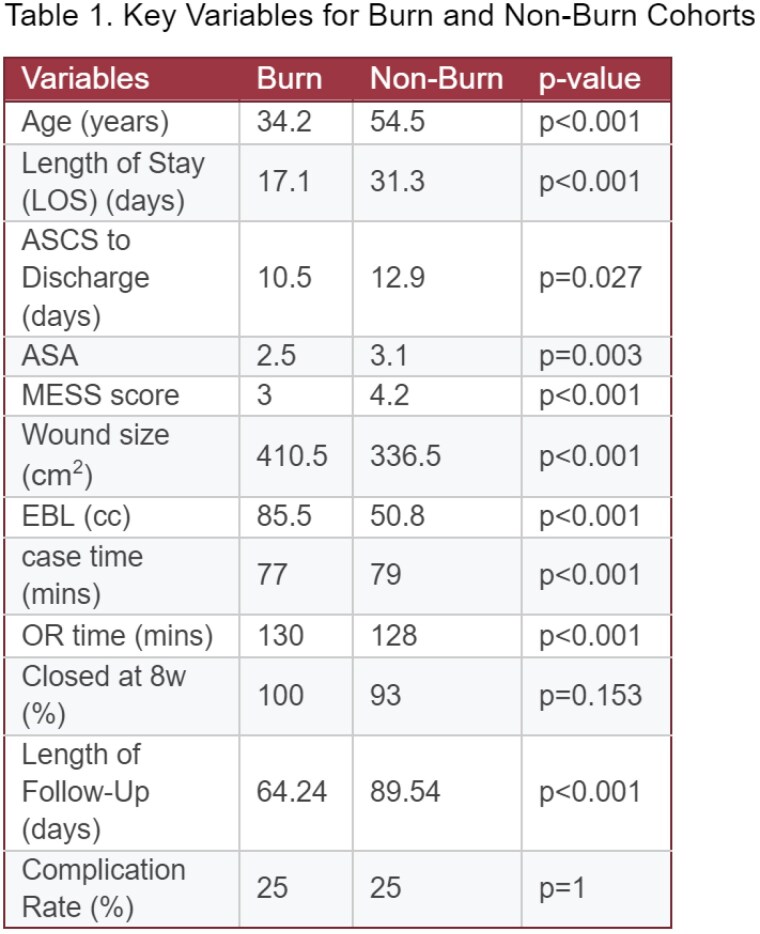 Figure 1
Peer Reviews
No public reviews on file for this paper yet. If you reviewed it on a platform where reviews are public (OpenReview, ICLR, NeurIPS, ICML), you can paste yours below so the community can read it here.
Videos
No videos yet. Explain this paper in a talk, walkthrough, or lecture? Add one.
Taxonomy
TopicsWound Healing and Treatments