49 Use of Remimazolam Besylate for Procedural Sedation During Dressing Changes in the Burn ICU
Michael Martz, Rishi Patel, Steven Kahn

TL;DR
This study explores the use of remimazolam, a new sedative, for burn wound care, showing quick recovery and safety in patients.
Contribution
The study evaluates remimazolam's feasibility and safety for procedural sedation in burn ICU settings.
Findings
Remimazolam was used 47 times with median dose of 20 mg per session.
All patients returned to baseline RASS scores within 5 minutes post-sedation.
Rapid recovery and minimal post-sedation delirium were observed.
Abstract
Acute procedural pain and tolerance of burn wound care remains a major challenge for patients and healthcare professionals alike. Anesthesia professionals are effective at providing safe sedation during dressing changes; however, daily dressings changes with anesthesia can lead to unwanted effects such as prolonged post-procedural sedation and increased levels of delirium. Remimazolam is a novel ultrashort-acting benzodiazepine that was approved by the FDA in July 2020, which produces sedation by acting as a modulator of the gamma-amino butyric acid-A (GABA-A) receptor. The purpose of this study was to determine feasibility, safety, and the time of offset when remimazolam was used for burn procedural sedation. This was a single center analysis of prospectively collected data using remimazolam for procedural sedation during “hydrotherapy” burn wound care sessions in the burn intensive…
Genes, proteins, chemicals, diseases, species, mutations and cell lines named across the full text — each resolved to its canonical identifier and authoritative record.
Click any figure to enlarge with its caption.
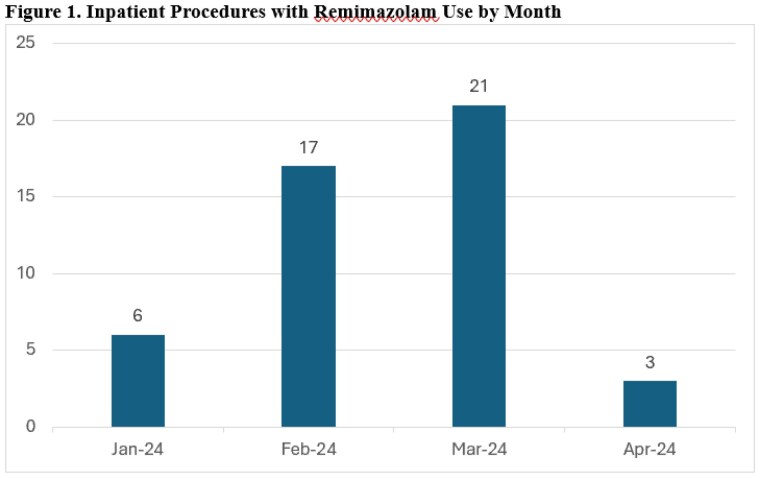 Figure 1
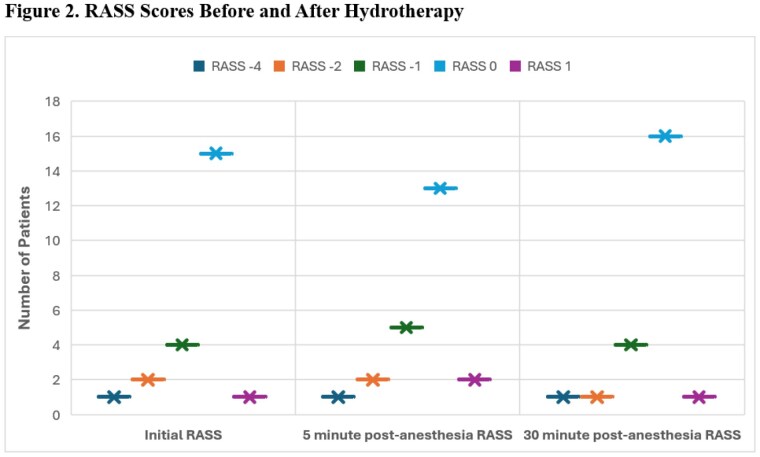 Figure 2
Peer Reviews
No public reviews on file for this paper yet. If you reviewed it on a platform where reviews are public (OpenReview, ICLR, NeurIPS, ICML), you can paste yours below so the community can read it here.
Videos
No videos yet. Explain this paper in a talk, walkthrough, or lecture? Add one.
Taxonomy
TopicsAnesthesia and Sedative Agents · Intensive Care Unit Cognitive Disorders · Anesthesia and Neurotoxicity Research