Prolonged physical isolation, agonistic behaviour, and human resilience in pandemic times
Giuseppina Marsico, Claudio Russo

TL;DR
The paper explores how prolonged isolation during the pandemic affects mental health and resilience, emphasizing the need for stronger community and individual support.
Contribution
It introduces a framework for understanding pandemic-related mental health impacts and resilience strategies.
Findings
Prolonged isolation has significant mental health consequences.
Resilience can be strengthened through community and environmental support.
Public health initiatives must address long-term pandemic effects.
Abstract
With the purpose of enhancing a comprehensive approach to healthcare, public health initiatives have moved from managing the pandemic response towards an increased understanding of the sequelae, including but not limited to mental health issues triggered by societal limitations and precautionary measures. The long-term effects of the COVID-19 pandemic lie in the health system’s capacity to promote a renewed sense of healthy communities, strengthen individual resilience, and mitigate environmental stressors in the future. Under these terms, the pandemic breakdown has been discussed in relation to the public health crisis and physical isolation resulting from SARS-CoV-2 disease.
Genes, proteins, chemicals, diseases, species, mutations and cell lines named across the full text — each resolved to its canonical identifier and authoritative record.
Click any figure to enlarge with its caption.
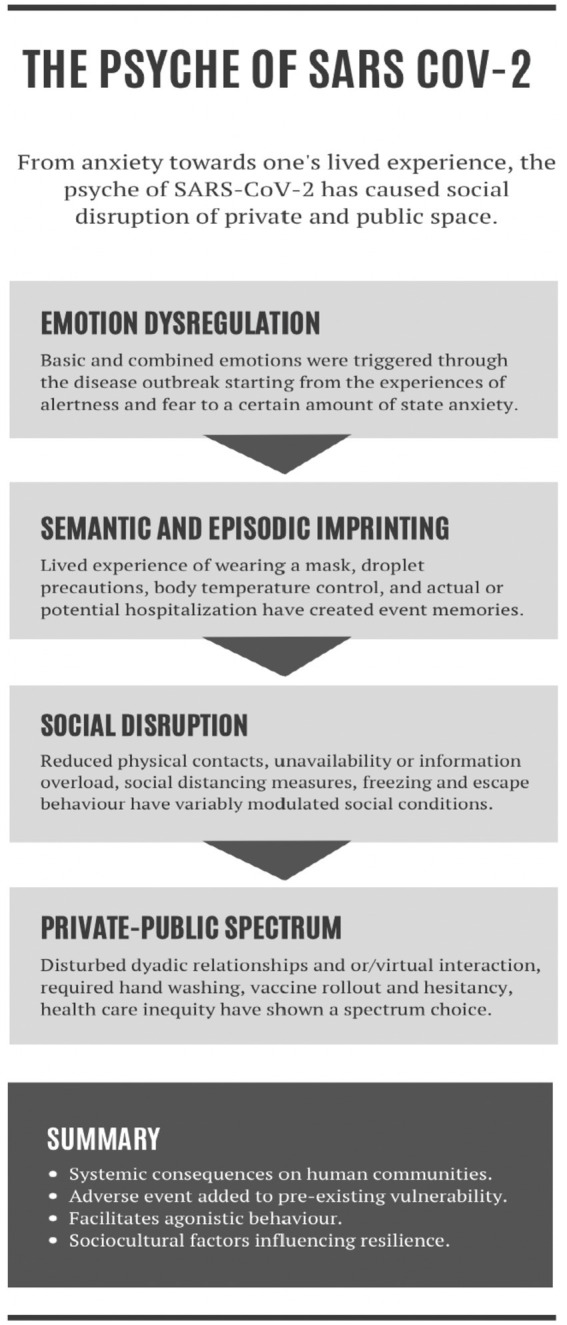 Figure 1
Peer Reviews
No public reviews on file for this paper yet. If you reviewed it on a platform where reviews are public (OpenReview, ICLR, NeurIPS, ICML), you can paste yours below so the community can read it here.
Videos
No videos yet. Explain this paper in a talk, walkthrough, or lecture? Add one.
Taxonomy
TopicsResilience and Mental Health · COVID-19 and Mental Health · Optimism, Hope, and Well-being