813 Changes in Serum Angiopoietin-2 Levels Correlate with Sepsis and Mortality After Burn Injury
Ryan Johnson, Kevin Galicia, Abigail Plum, Mary Grace Murray, Mashkoor Choudhry, John Kubasiak

TL;DR
This study shows that higher levels of Angiopoietin-2 in the blood after a severe burn are linked to a higher risk of sepsis and early death.
Contribution
The study identifies serum Angiopoietin-2 as a potential biomarker for predicting sepsis and mortality in burn patients.
Findings
Serum Angiopoietin-2 levels are significantly higher in septic burn patients compared to non-septic patients.
Higher Angiopoietin-2 levels correlate with increased early mortality in burn patients.
Angiopoietin-2 may serve as a marker for endothelial damage and guide early interventions in burn care.
Abstract
Large burns induce a systemic inflammatory response, compromising vascular endothelium and hemodynamics, resulting in the degradation of the endothelial glycocalyx (EG), a luminal barrier regulating the passage of inflammatory molecules. EG breakdown releases Angiopoietin (Ang)-1 and Ang-2, essential mediators of vascular integrity in peripheral tissues and within the bone marrow by competing for the TIE2 receptor. Ang-2 acts to increase vascular permeability. potentially worsening capillary leak, tissue edema, and hypoxia. We propose that an early elevation of Ang-2 levels after burn injury leads to increased vascular permeability and tissue edema, which in turn causes hypoxia and elevates the risk of sepsis. Patients aged 18 and older who experienced burns involving ≥10%TBSA were enrolled in the study. Blood samples were collected at several time points for analysis using ELISA kits…
Genes, proteins, chemicals, diseases, species, mutations and cell lines named across the full text — each resolved to its canonical identifier and authoritative record.
Click any figure to enlarge with its caption.
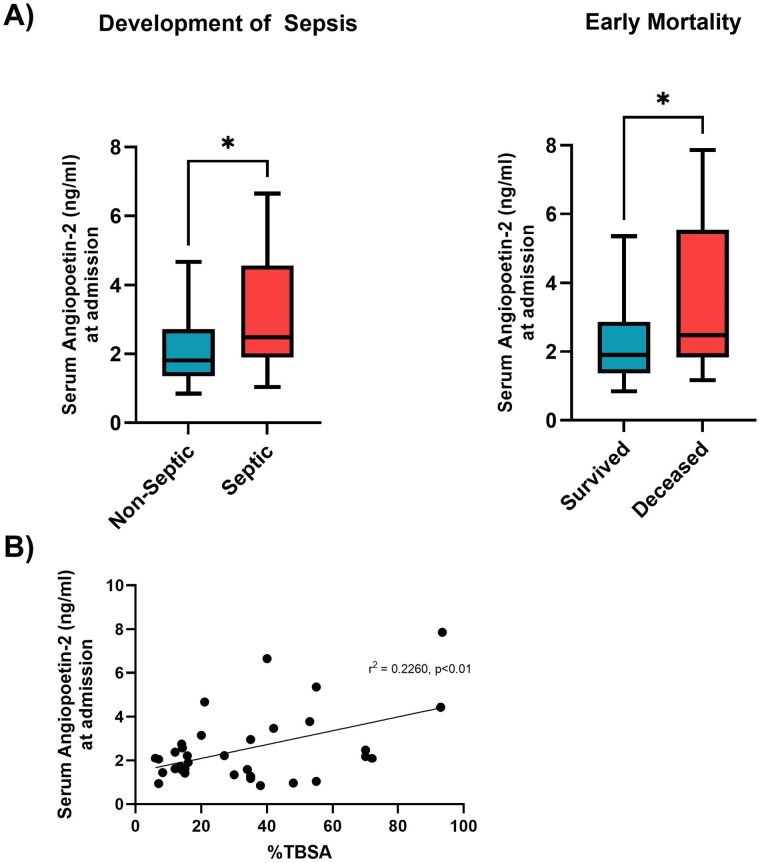 Figure 1
Peer Reviews
No public reviews on file for this paper yet. If you reviewed it on a platform where reviews are public (OpenReview, ICLR, NeurIPS, ICML), you can paste yours below so the community can read it here.
Videos
No videos yet. Explain this paper in a talk, walkthrough, or lecture? Add one.
Taxonomy
TopicsClinical practice guidelines implementation · Venous Thromboembolism Diagnosis and Management · Lipid metabolism and disorders