
TL;DR
This paper discusses how de-escalation training for staff improved safety and crisis management in a burn unit with patients prone to agitation.
Contribution
The study demonstrates the effectiveness of PMCS training in reducing crisis incidents and improving staff-patient interactions.
Findings
86% of staff reported witnessing a crisis on the burn unit.
Post-training exams showed improved crisis handling skills among staff.
Psychologists now provide weekly assessments and patient visits following the training.
Abstract
De-escalation techniques are aimed at communicating effectively with an agitated patient in order to understand, manage and resolve their concerns. These actions should help reduce the patient’s agitation and the potential for aggression or violence. When an intervention is done too late or does not work it may leave the staff needing to use coercive measures to manage an aggressive or violent patient, increasing chances of injury to staff or the patient. These methods include chemical, mechanical restraints, and seclusion that can be damaging to the therapeutic relationships between patient and the provider which can also lead to harm towards patients and staff. Training de-escalation techniques to the staff has improved the interactions during crisis between the patients and staff, increasing safety for both staff and patients. Preventing and managing crisis situations (PMCS) was…
Click any figure to enlarge with its caption.
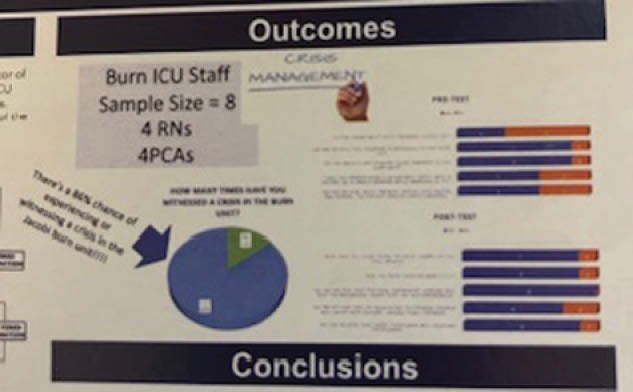 Figure 1
Peer Reviews
No public reviews on file for this paper yet. If you reviewed it on a platform where reviews are public (OpenReview, ICLR, NeurIPS, ICML), you can paste yours below so the community can read it here.
Videos
No videos yet. Explain this paper in a talk, walkthrough, or lecture? Add one.
Taxonomy
TopicsFamily and Patient Care in Intensive Care Units · Healthcare Decision-Making and Restraints · Workplace Violence and Bullying