556 Topical Application of Beta Blocker Promotes Healing of Mesh-grafted Third-Degree Burn Wounds in Sheep
Kan Nakamoto, Tsend-Ayush Batsaikhan, Naiyou Liu, W Samuel Fagg, Ryuichiro Kakizaki, Thomas Heathman, Perenlei Enkhbaatar

TL;DR
Applying the beta blocker timolol to burn wounds in sheep sped up healing, suggesting it could help treat severe burns in humans.
Contribution
Timolol, a beta blocker, was shown to accelerate epithelialization in a clinically relevant sheep model of third-degree burns.
Findings
Timolol-treated wounds had significantly higher epithelialization rates at Day 14 compared to controls.
Timolol reduced the time needed to reach 85%, 90%, and 95% epithelialization compared to the control group.
No significant differences were found in wound blood flow or RNA levels related to TGFβ, EMT, or MFA pathways.
Abstract
Beta adrenergic receptor blockers are used for hypertension, tachycardia, and glaucoma. Recently, it has been shown to promote wound epithelialization. In this study, we tested the efficacy of the beta blocker timolol in an ovine model of grafted third degree burn wound healing which closely mimics a clinical scenario. Six third degree flame burn wounds were induced on the backs of the sheep. Twenty-four hours later, the eschars were excised and meshed skin was grafted onto the wound (Day 0). In the treatment group, timolol was applied topically to the wounds. Blood flow was measured with a blood perfusion imager. Cardiovascular hemodynamics and blood glucose levels were monitored. At Day14, the epithelialization rate was measured by planimetric assay and compared by paired t-test. Survival analysis was used to compare the days when epithelialization rates exceeded 85%, 90%, and 95%…
Genes, proteins, chemicals, diseases, species, mutations and cell lines named across the full text — each resolved to its canonical identifier and authoritative record.
Click any figure to enlarge with its caption.
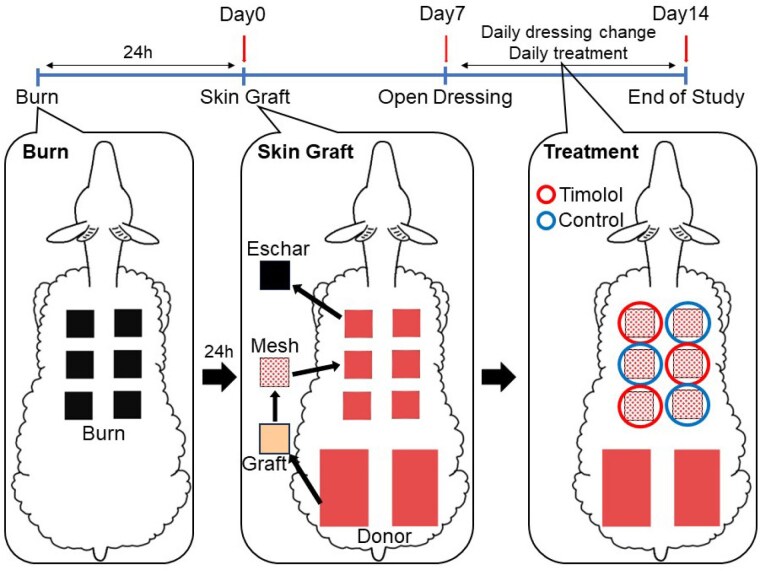 Figure 1
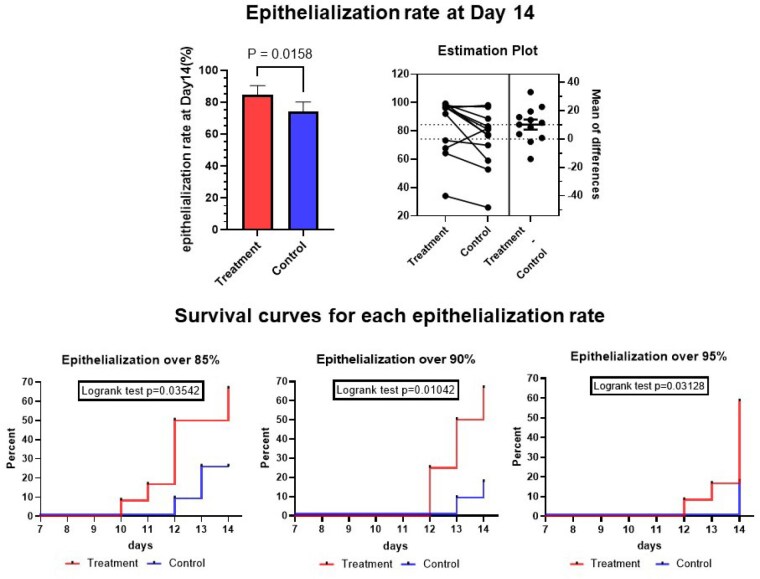 Figure 2
Peer Reviews
No public reviews on file for this paper yet. If you reviewed it on a platform where reviews are public (OpenReview, ICLR, NeurIPS, ICML), you can paste yours below so the community can read it here.
Videos
No videos yet. Explain this paper in a talk, walkthrough, or lecture? Add one.
Taxonomy
TopicsWound Healing and Treatments · Surgical Sutures and Adhesives