31 Reliability of Methicillin-Resistant Staphylococcus aureus (MRSA) Nasal Swab Screening for Predicting MRSA Burn Cellulitis
Max Silverstein, Yvonne Karanas, Clifford Sheckter

TL;DR
This study shows that a negative MRSA nasal swab reliably predicts the absence of MRSA in burn infections, supporting its use for de-escalating antibiotic treatment.
Contribution
The study is the first to evaluate the predictive value of MRSA nasal swab screening specifically for burn cellulitis.
Findings
MRSA nasal swab screening had a 97% negative predictive value for MRSA in burn wound cultures.
A positive nasal swab was strongly associated with MRSA infection in burns (odds ratio of 76.3).
Using negative nasal swabs to de-escalate MRSA coverage could improve antibiotic stewardship in burn units.
Abstract
Infection is the primary cause for death after 24 hours in patients admitted to burn centers, with cellulitis trailing only pneumonia as the most common source of sepsis. Staphylococcus aureus is the organism isolated most frequently from cellulitic burns. Over decades, methicillin-resistant Staphylococcus aureus (MRSA) has become endemic in burn units, resulting in the frequent initiation of empiric vancomycin therapy. MRSA polymerase chain reaction (PCR) nasal swab screening rapidly identifies patients who are MRSA-colonized, with the goal of predicting the presence of MRSA in any future infections. While nasal swab screening is standard-of-care for de-escalating MRSA coverage in cases of pneumonia, its predictive value has not been studied in the burn context. We hypothesized that MRSA nasal swab screening would have high negative predictive value for ruling-out the presence of MRSA…
Genes, proteins, chemicals, diseases, species, mutations and cell lines named across the full text — each resolved to its canonical identifier and authoritative record.
Click any figure to enlarge with its caption.
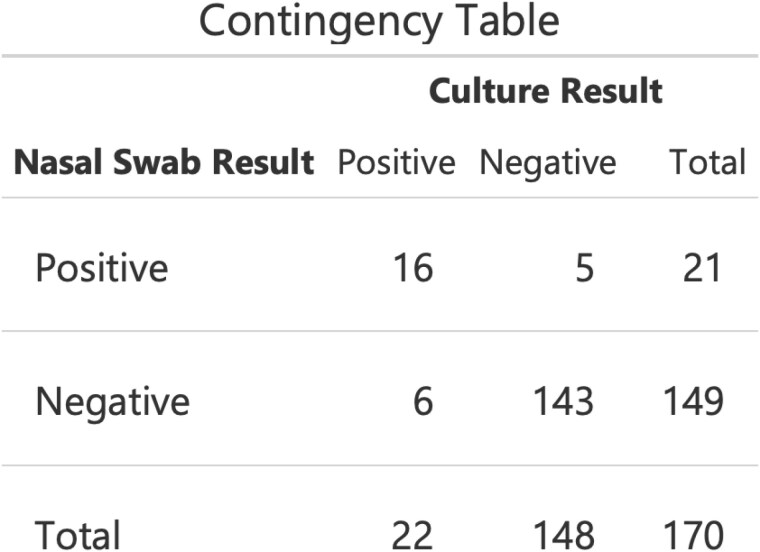 Figure 1
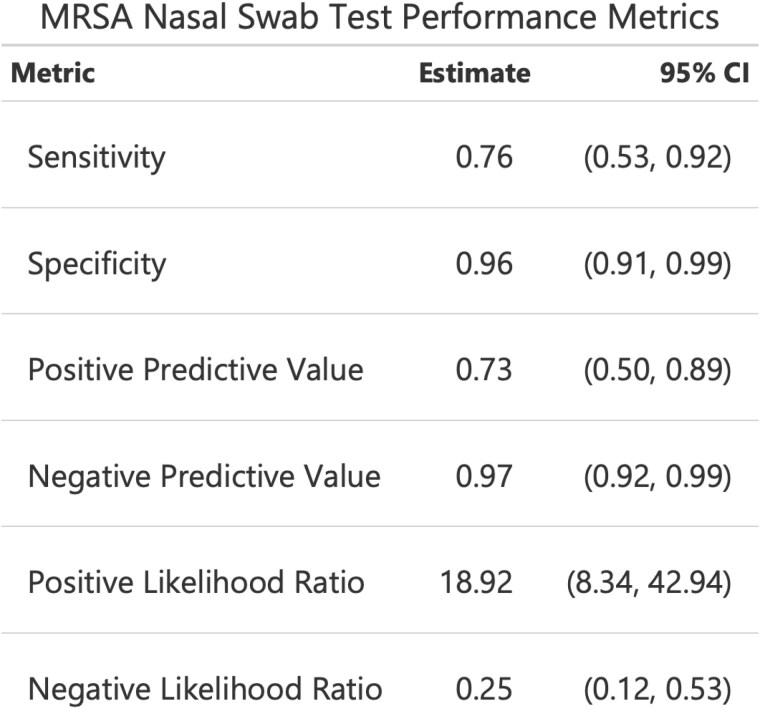 Figure 2
Peer Reviews
No public reviews on file for this paper yet. If you reviewed it on a platform where reviews are public (OpenReview, ICLR, NeurIPS, ICML), you can paste yours below so the community can read it here.
Videos
No videos yet. Explain this paper in a talk, walkthrough, or lecture? Add one.
Taxonomy
TopicsSinusitis and nasal conditions · Oral Health Pathology and Treatment · Otolaryngology and Infectious Diseases