Exploring the transmission of cognitive task information through optimal brain pathways
Zhengdong Wang, Yifeixue Yang, Ziyi Huang, Wanyun Zhao, Kaiqiang Su, Hengcheng Zhu, Dazhi Yin, Linden Parkes, Linden Parkes, Linden Parkes

TL;DR
This paper investigates how cognitive task information is transmitted through brain networks, finding that the shortest path is not always optimal and that spatial and functional factors improve predictions.
Contribution
The study introduces empirical evidence that cognitive information transmission is better modeled with direct paths and spatial-functional constraints rather than shortest paths.
Findings
Shortest path routing outperformed other communication strategies but was less accurate than direct path routing.
Incorporating spatial distance and functional asymmetry improved activity flow prediction accuracy.
Cognitive task information routing is constrained by the spatial and functional embedding of the brain network.
Abstract
Understanding the large-scale information processing that underlies complex human cognition is the central goal of cognitive neuroscience. While emerging activity flow models demonstrate that cognitive task information is transferred by interregional functional or structural connectivity, graph-theory-based models typically assume that neural communication occurs via the shortest path of brain networks. However, whether the shortest path is the optimal route for empirical cognitive information transmission remains unclear. Based on a large-scale activity flow mapping framework, we found that the performance of activity flow prediction with the shortest path was significantly lower than that with the direct path. The shortest path routing was superior to other network communication strategies, including search information, path ensembles, and navigation. Intriguingly, the shortest path…
Genes, proteins, chemicals, diseases, species, mutations and cell lines named across the full text — each resolved to its canonical identifier and authoritative record.
Click any figure to enlarge with its caption.
 Figure 1
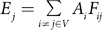 Figure 2
 Figure 3
 Figure 4
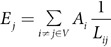 Figure 5
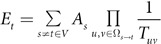 Figure 6
 Figure 7
 Figure 8
 Figure 9
 Figure 10
 Figure 11
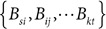 Figure 12
 Figure 13
 Figure 14
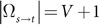 Figure 15
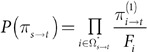 Figure 16
 Figure 17
 Figure 18
 Figure 19
 Figure 20
 Figure 21
 Figure 22
 Figure 23
 Figure 24
 Figure 25
 Figure 26
 Figure 27
 Figure 28
 Figure 29
 Figure 30
 Figure 31
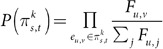 Figure 32
 Figure 33
 Figure 34
 Figure 35
 Figure 36
 Figure 37
 Figure 38
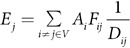 Figure 39
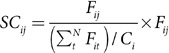 Figure 40
 Figure 41
 Figure 42
 Figure 43
 Figure 44
 Figure 45
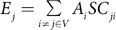 Figure 46
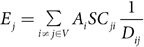 Figure 47
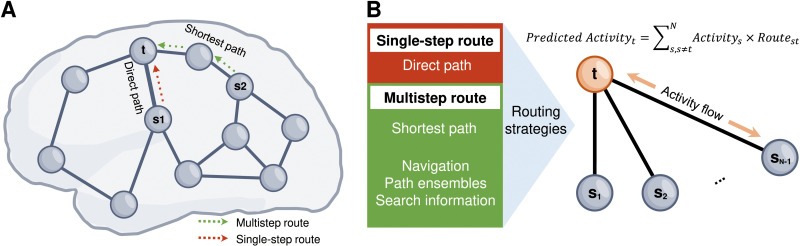 Figure 48
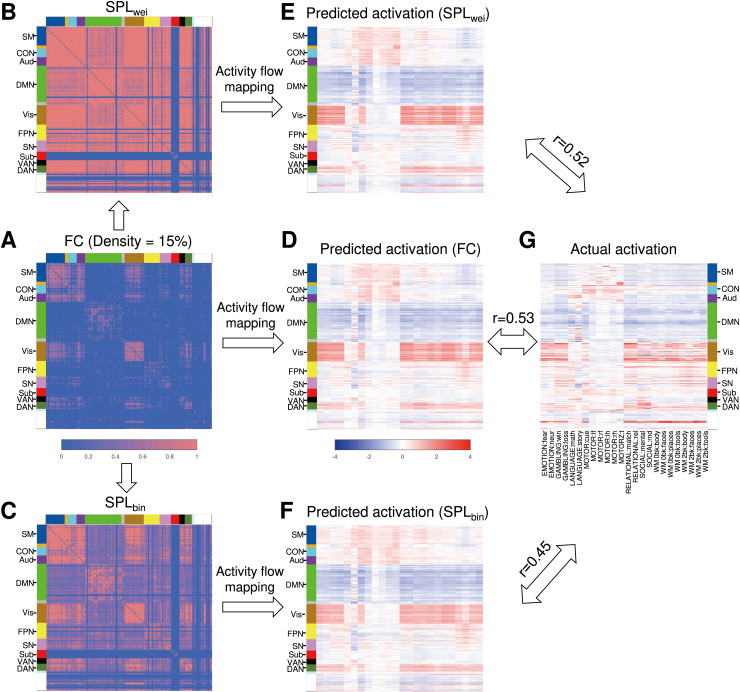 Figure 49
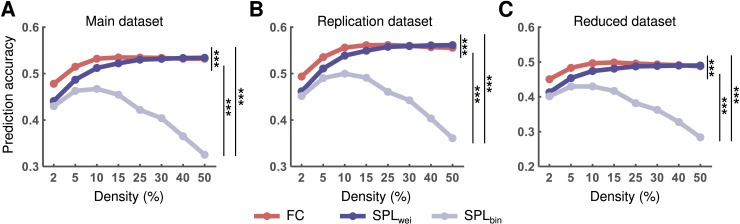 Figure 50
Peer Reviews
No public reviews on file for this paper yet. If you reviewed it on a platform where reviews are public (OpenReview, ICLR, NeurIPS, ICML), you can paste yours below so the community can read it here.
Videos
No videos yet. Explain this paper in a talk, walkthrough, or lecture? Add one.
Taxonomy
TopicsFunctional Brain Connectivity Studies · Neural dynamics and brain function · Complex Network Analysis Techniques