Diffusion models enable zero-shot pose estimation for lower-limb prosthetic users
Tianxun Zhou, Muhammad Nur Shahril Iskandar, Keng-Hwee Chiam, Chiara Corti, Chiara Corti

TL;DR
This paper introduces a new method using diffusion models to improve gait analysis for lower-limb prosthetic users by generating synthetic images that standard pose estimation tools can process.
Contribution
The novel zero-shot approach uses diffusion models to transform prosthetic limb images into able-bodied representations without retraining or additional data.
Findings
The method reduced keypoint coordinate errors by 37% for transtibial and 76% for transfemoral prosthetic limbs.
It enabled the detection of gait deviations like reduced knee flexion and altered limb kinematics.
The approach works with existing pose estimation models and consumer cameras, offering potential for personalized rehabilitation.
Abstract
Quantitative gait analysis is important for assessing and rehabilitating lower-limb prosthetic users, but markerless motion capture has been challenging for this population due to the difficulty in detecting prosthetic joints using models trained primarily on able-bodied individuals. This study proposes a zero-shot method leveraging generative diffusion models to transform prosthetic limb images into able-bodied representations that standard pose estimation models can detect, eliminating the need for additional data collection or model retraining. Videos of unilateral transfemoral and transtibial amputees walking were obtained publicly from YouTube. For each video frame, an edge map was generated and used as input to a ControlNet diffusion model, generating a synthetic image resembling an able-bodied person while preserving the person’s original pose. These synthetic images were then…
Genes, proteins, chemicals, diseases, species, mutations and cell lines named across the full text — each resolved to its canonical identifier and authoritative record.
Click any figure to enlarge with its caption.
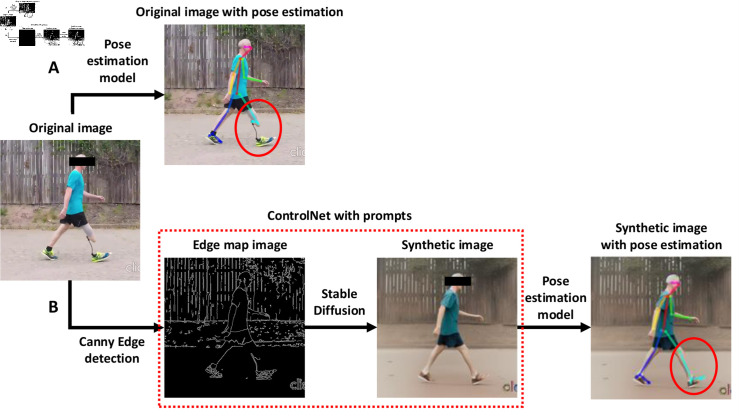 Figure 1
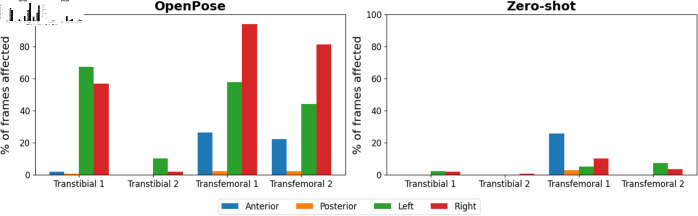 Figure 2
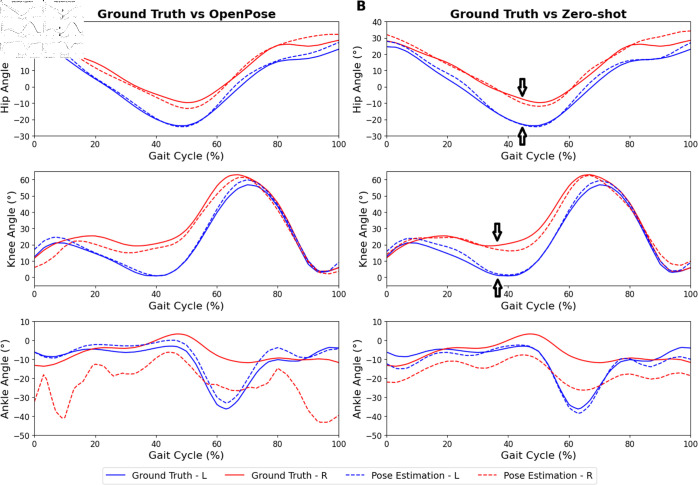 Figure 3
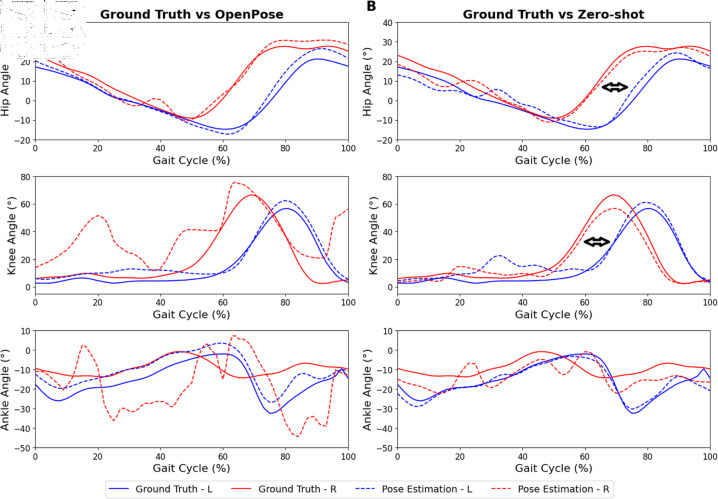 Figure 4
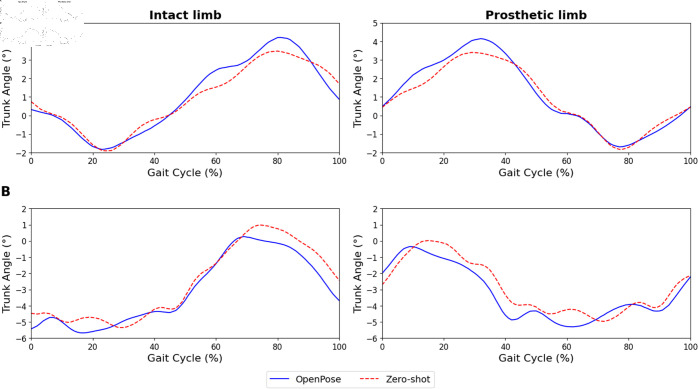 Figure 5
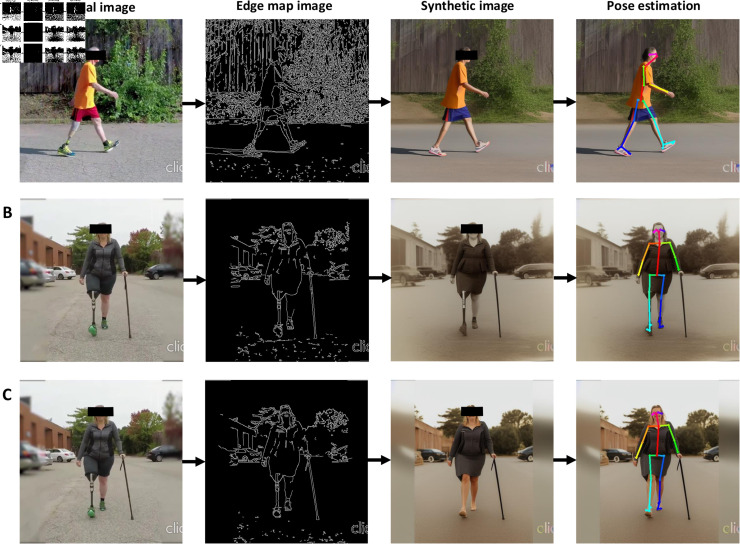 Figure 6
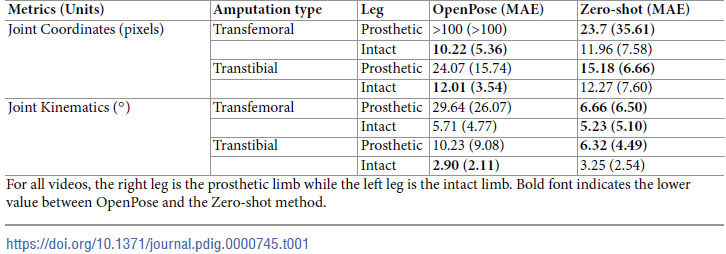 Figure 7
Peer Reviews
No public reviews on file for this paper yet. If you reviewed it on a platform where reviews are public (OpenReview, ICLR, NeurIPS, ICML), you can paste yours below so the community can read it here.
Videos
No videos yet. Explain this paper in a talk, walkthrough, or lecture? Add one.
Taxonomy
TopicsProsthetics and Rehabilitation Robotics · Muscle activation and electromyography studies · Stroke Rehabilitation and Recovery