Alteration in ATR protein level does not account for the inherent radiosensitivity of HPV-positive head and neck squamous cell carcinoma
Sibylla Kohl, Florentine S.B. Subtil, Vanessa Climenti, Houmam Anees, Ann C. Parplys, Rita Engenhart-Cabillic, Sebastian Adeberg, Ekkehard Dikomey, Ulrike Theiß

TL;DR
This study shows that lower ATR protein levels in HPV-positive head and neck cancer cells do not cause their increased sensitivity to radiation, but instead work together with radiation effects.
Contribution
The study reveals that reduced ATR protein levels in HPV-positive cells are not responsible for their radiosensitivity but contribute additively to it.
Findings
HPV-positive cells have lower ATR protein levels but maintain functional ATR activity after radiation.
ATR knockdown increases radiosensitivity and residual DNA damage only in HPV-positive cells.
HPV-positive cells repair DNA breaks via homologous recombination despite low ATR levels.
Abstract
•HPV-positive HNSCC cells show lower ATR protein levels than HPV-negative.•Despite low protein levels, ATR is fully functional and activated in response to radiation.•HPV-positive but not HPV-negative cells are radiosensitized after ATR knockdown.•HPV-positive cells are able to repair one-ended DSBs by homologous recombination. HPV-positive HNSCC cells show lower ATR protein levels than HPV-negative. Despite low protein levels, ATR is fully functional and activated in response to radiation. HPV-positive but not HPV-negative cells are radiosensitized after ATR knockdown. HPV-positive cells are able to repair one-ended DSBs by homologous recombination. Human papilloma virus (HPV)-positive head and neck squamous cell carcinoma (HNSCC) cells are highly radiosensitive resulting from an elevated number of DNA double-strand breaks (DSB) remaining after irradiation. Partially this effect…
Genes, proteins, chemicals, diseases, species, mutations and cell lines named across the full text — each resolved to its canonical identifier and authoritative record.
Click any figure to enlarge with its caption.
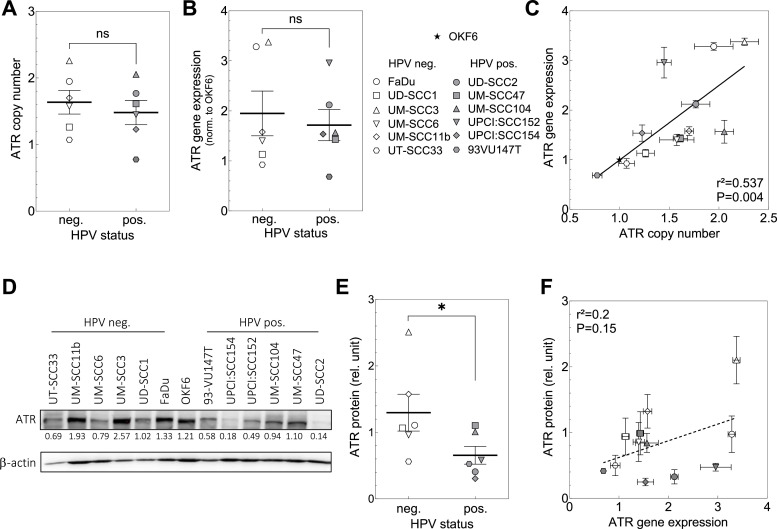 Figure 1
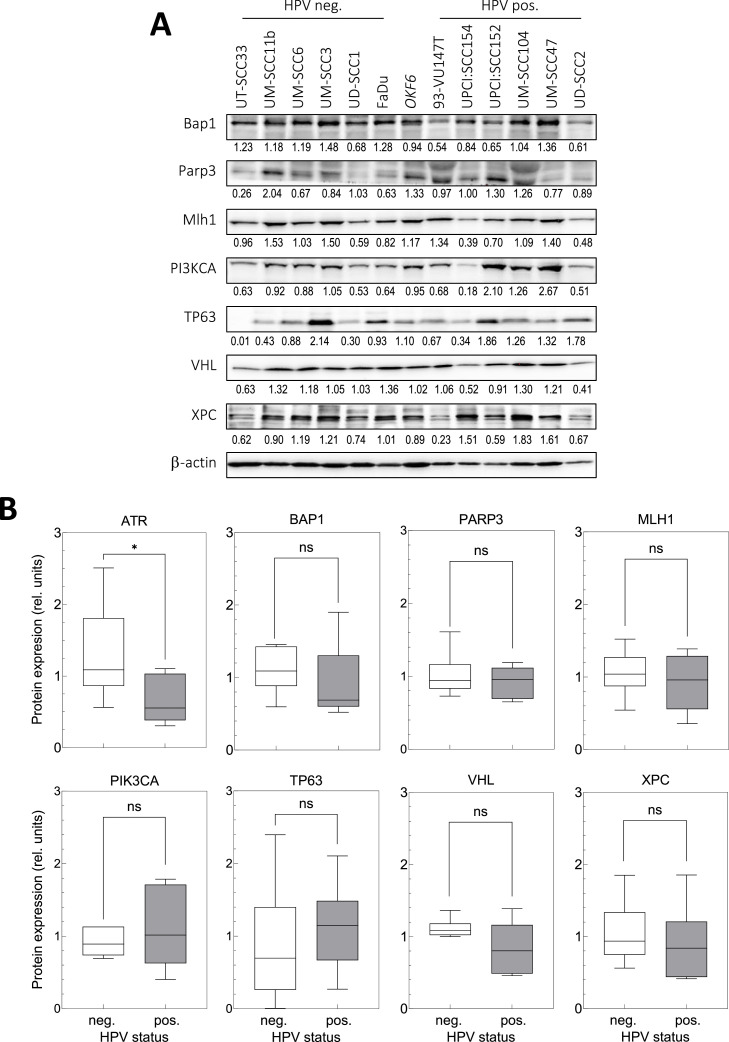 Figure 2
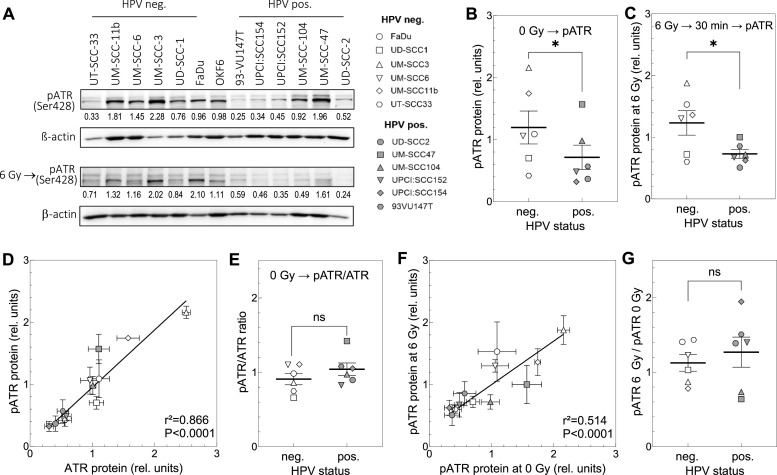 Figure 3
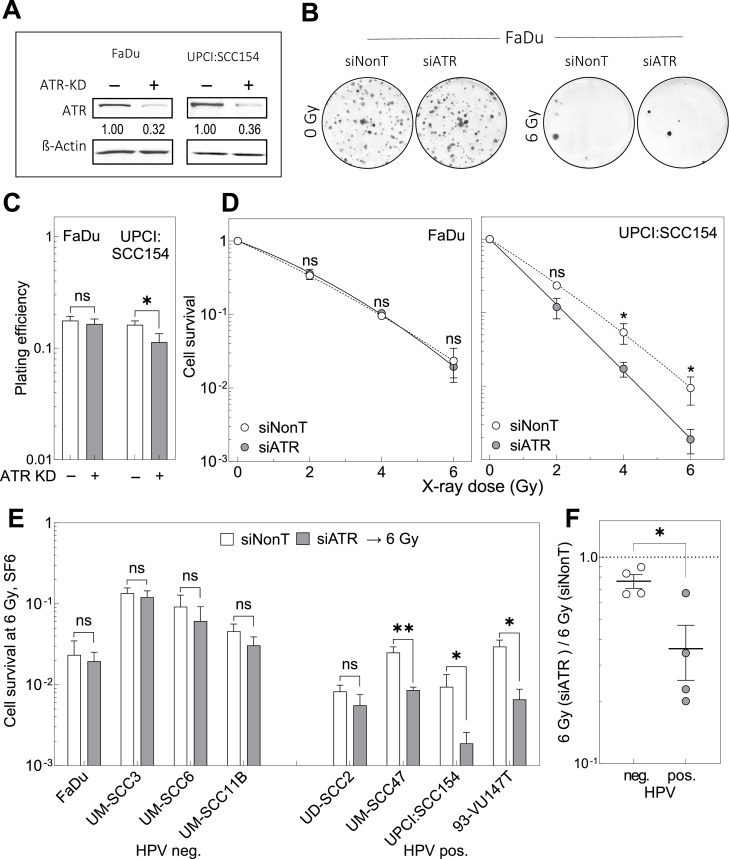 Figure 4
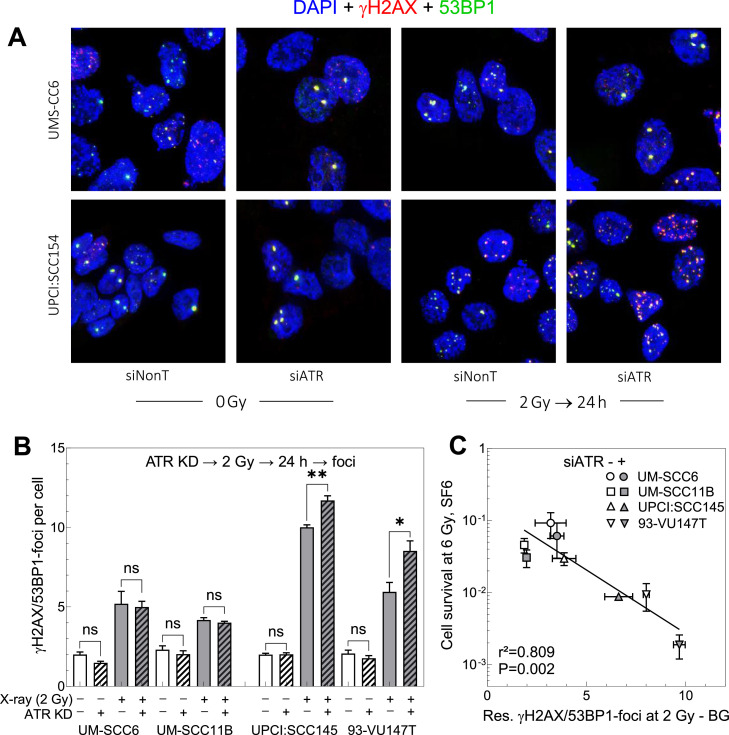 Figure 5
Peer Reviews
No public reviews on file for this paper yet. If you reviewed it on a platform where reviews are public (OpenReview, ICLR, NeurIPS, ICML), you can paste yours below so the community can read it here.
Videos
No videos yet. Explain this paper in a talk, walkthrough, or lecture? Add one.
Taxonomy
TopicsGenetics and Neurodevelopmental Disorders · Cell death mechanisms and regulation · interferon and immune responses