TphPMF: A microbiome data imputation method using hierarchical Bayesian Probabilistic Matrix Factorization
Xinyu Han, Kai Song

TL;DR
TphPMF is a new machine learning method that improves microbiome data imputation by using phylogenetic relationships, leading to better accuracy in analyzing microbial communities and predicting diseases.
Contribution
TphPMF introduces a novel Bayesian probabilistic matrix factorization approach that incorporates phylogenetic relationships to improve microbiome data imputation.
Findings
TphPMF outperforms existing methods in recovering missing taxon abundances in microbiome data.
TphPMF improves detection of differentially abundant taxa when used with DESeq2-phyloseq.
TphPMF enhances accuracy in predicting disease conditions in datasets related to type 2 diabetes and colorectal cancer.
Abstract
In microbiome research, data sparsity represents a prevalent and formidable challenge. Sparse data not only compromises the accuracy of statistical analyses but also conceals critical biological relationships, thereby undermining the reliability of the conclusions. To tackle this issue, we introduce a machine learning approach for microbiome data imputation, termed TphPMF. This technique leverages Probabilistic Matrix Factorization, incorporating phylogenetic relationships among microorganisms to establish Bayesian prior distributions. These priors facilitate posterior predictions of potential non-biological zeros. We demonstrate that TphPMF outperforms existing microbiome data imputation methods in accurately recovering missing taxon abundances. Furthermore, TphPMF enhances the efficacy of certain differential abundance analysis methods in detecting differentially abundant (DA) taxa,…
Genes, proteins, chemicals, diseases, species, mutations and cell lines named across the full text — each resolved to its canonical identifier and authoritative record.
Click any figure to enlarge with its caption.
 Figure 1
 Figure 2
 Figure 3
 Figure 4
 Figure 5
 Figure 6
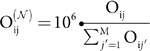 Figure 7
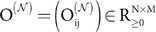 Figure 8
 Figure 9
 Figure 10
 Figure 11
 Figure 12
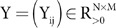 Figure 13
 Figure 14
 Figure 15
 Figure 16
 Figure 17
 Figure 18
 Figure 19
 Figure 20
 Figure 21
 Figure 22
 Figure 23
 Figure 24
 Figure 25
 Figure 26
 Figure 27
 Figure 28
 Figure 29
 Figure 30
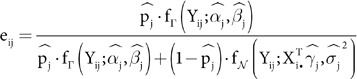 Figure 31
 Figure 32
 Figure 33
 Figure 34
 Figure 35
 Figure 36
 Figure 37
 Figure 38
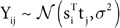 Figure 39
 Figure 40
 Figure 41
 Figure 42
 Figure 43
 Figure 44
 Figure 45
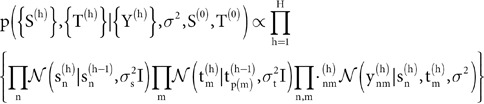 Figure 46
 Figure 47
 Figure 48
 Figure 49
 Figure 50
Peer Reviews
No public reviews on file for this paper yet. If you reviewed it on a platform where reviews are public (OpenReview, ICLR, NeurIPS, ICML), you can paste yours below so the community can read it here.
Videos
No videos yet. Explain this paper in a talk, walkthrough, or lecture? Add one.
Taxonomy
TopicsGut microbiota and health · Gene expression and cancer classification · Genomics and Phylogenetic Studies