Prediction models for Mtb infection among adolescent and adult household contacts in high tuberculosis incidence settings
Edson Tawanda Marambire, Claire J. Calderwood, Leyla Larsson, Kathrin Held, Palwasha Khan, Denise Banze, Celina Nhamuave, Lillian T. Minja, Alfred Mfinanga, Rishi K. Gupta, Celso Khosa, Junior Mutsvangwa, Norbert Heinrich, Katharina Kranzer

TL;DR
Researchers developed models to predict Mtb infection in household contacts of tuberculosis patients but found them ineffective for guiding treatment decisions.
Contribution
The study evaluates the utility of Mtb infection prediction models in guiding tuberculosis preventive therapy in high-burden settings.
Findings
Prediction models showed limited predictive capability with AUROC values of 0.592 and 0.586 for basic and comprehensive models respectively.
Neither model outperformed a treat-all strategy in terms of net benefit.
Improved diagnostics for Mtb infection are needed due to limitations in current testing accuracy and model performance.
Abstract
Tuberculosis household contacts are at high risk of developing tuberculosis. Tuberculosis preventive therapy (TPT) is highly effective, but implementation is hindered by limited accessibility of diagnostic tests aimed at detecting Mycobacterium tuberculosis (Mtb) infection. Development of Mtb infection prediction models to guide clinical decision-making aims to overcome these challenges. We used data from 1905 tuberculosis household contacts (age ≥10 years) from Zimbabwe, Mozambique and Tanzania to develop two prediction models for Mtb infection determined by interferon-gamma release assay (IGRA) using logistic regression with backward elimination and cross-validation and converted these into a risk score. Model performance was assessed using area under the receiver operating characteristic curve (AUROC), sensitivity, and specificity. We developed a basic model with six predictors (age,…
Genes, proteins, chemicals, diseases, species, mutations and cell lines named across the full text — each resolved to its canonical identifier and authoritative record.
Click any figure to enlarge with its caption.
 Figure 1
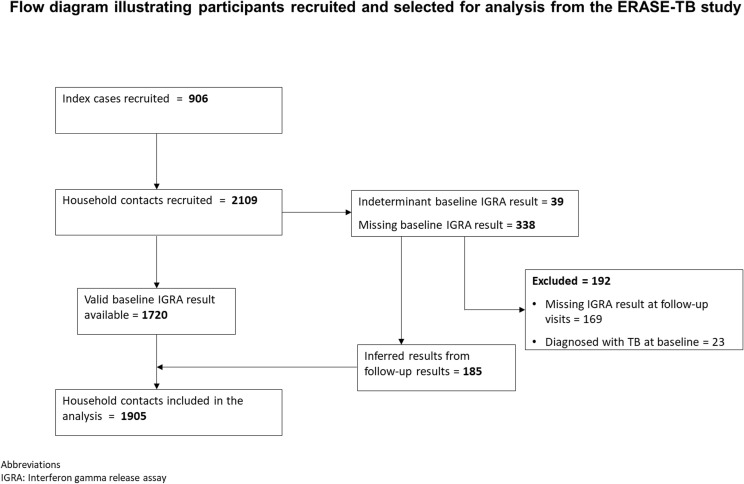 Figure 2
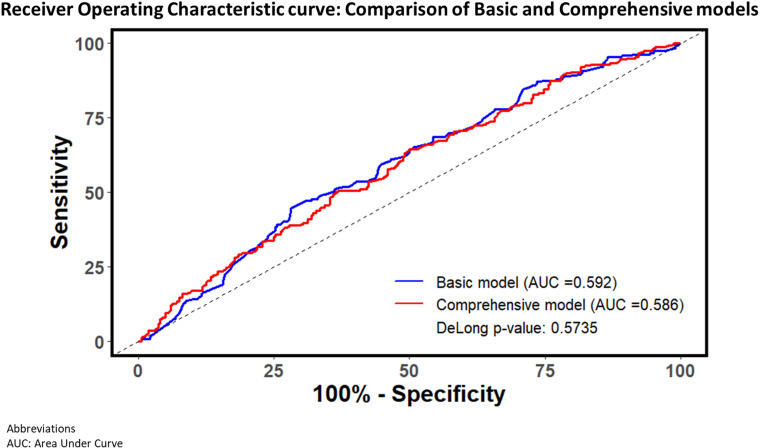 Figure 3
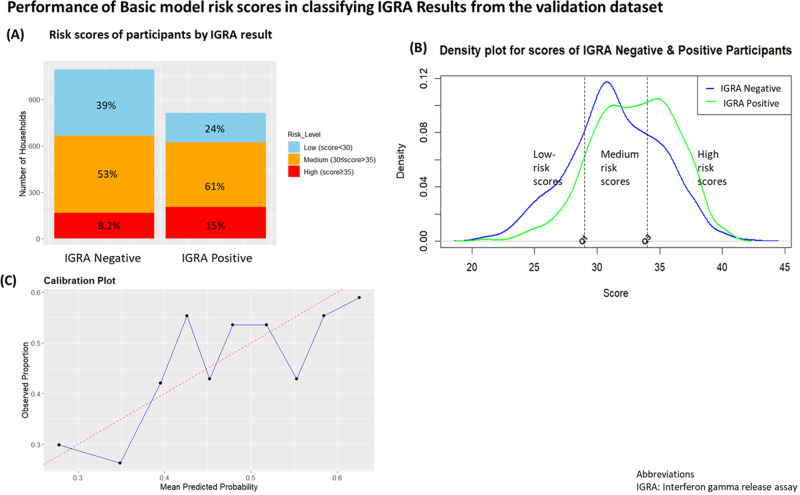 Figure 4
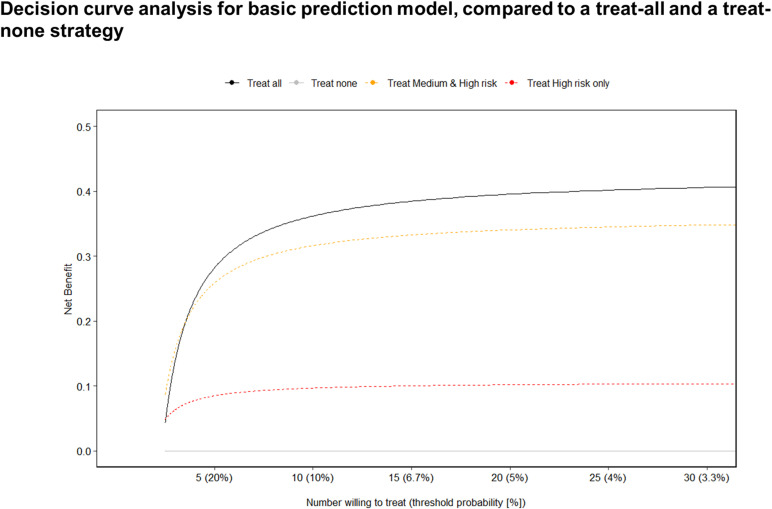 Figure 5
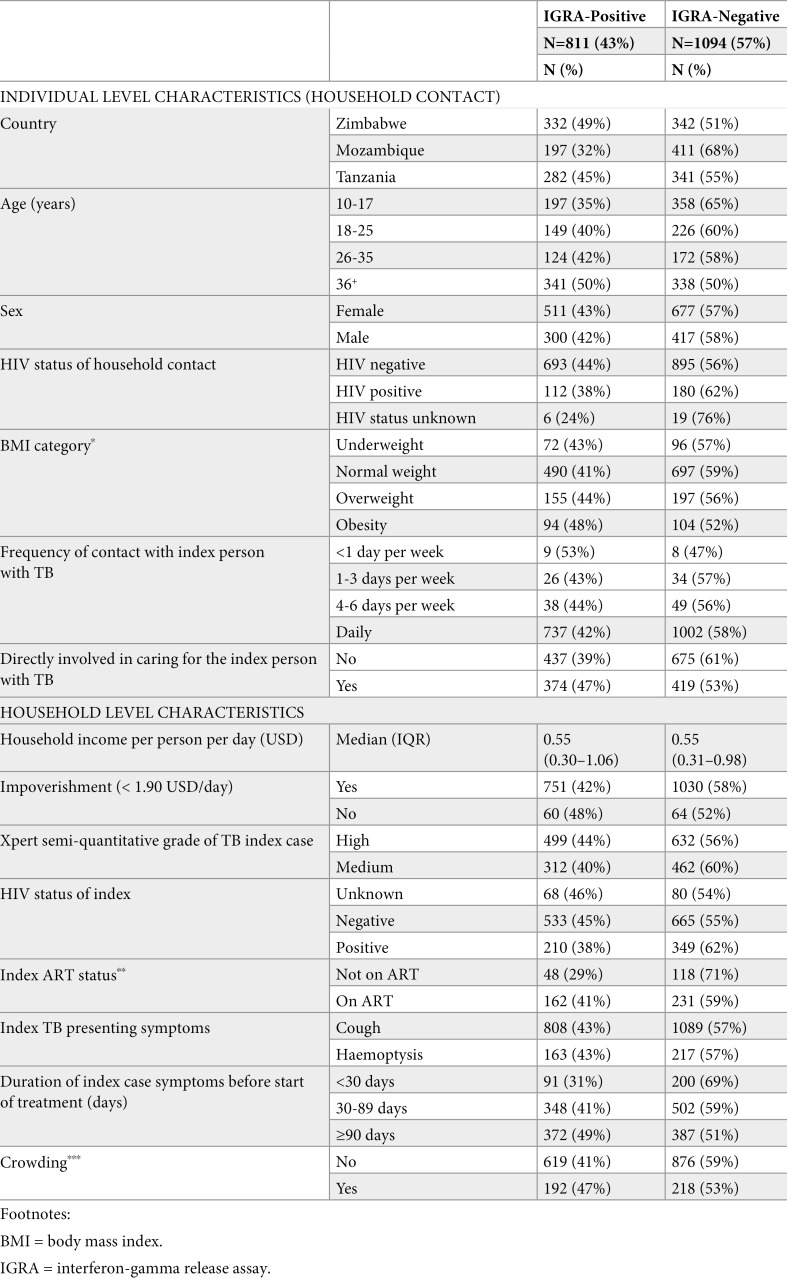 Figure 6
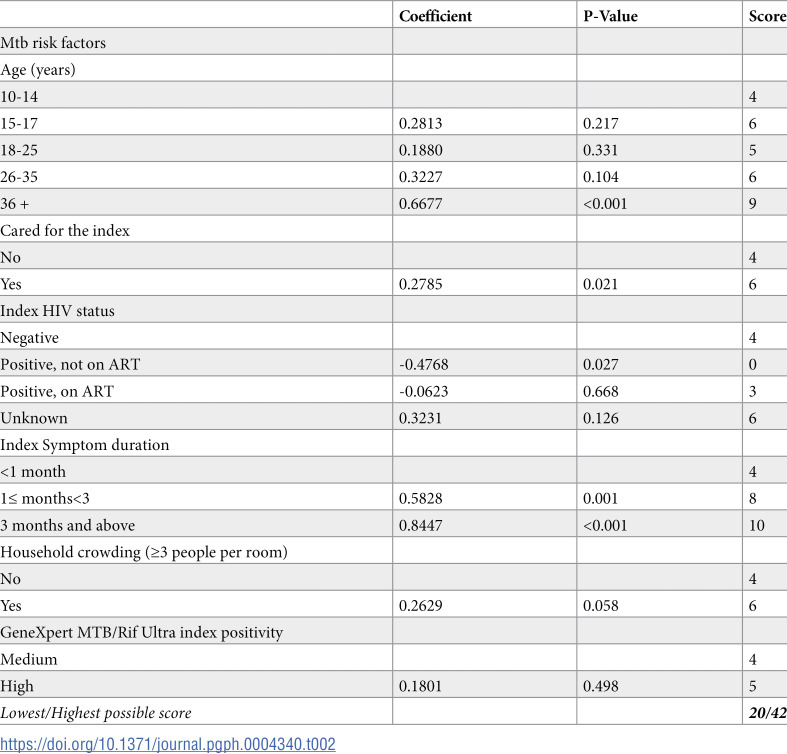 Figure 7
Peer Reviews
No public reviews on file for this paper yet. If you reviewed it on a platform where reviews are public (OpenReview, ICLR, NeurIPS, ICML), you can paste yours below so the community can read it here.
Videos
No videos yet. Explain this paper in a talk, walkthrough, or lecture? Add one.
Taxonomy
TopicsTuberculosis Research and Epidemiology · Pneumonia and Respiratory Infections · Mycobacterium research and diagnosis