PrEP knowledge and perceptions among women living in North Carolina public housing communities
Lauren M. Hill, Olivia Allison, Oluwamuyiwa Adeniran, Marcella Jones, Suur Ayangeakaa, Tonya Stancil, K. Jean Phillips-Weiner, Alexandra F. Lightfoot, Mehri S. McKellar, Carol E. Golin, Douglas S. Krakower, Douglas S. Krakower, Douglas Krakower

TL;DR
A study in North Carolina found that many low-income women are unaware of PrEP but would consider using it after learning about it, highlighting the need for targeted education.
Contribution
The study provides new insights into PrEP awareness and acceptance among low-income women, emphasizing the role of community-based communication strategies.
Findings
Only 35% of surveyed women had heard of PrEP, but 61% expressed interest in using it after being informed.
Participants identified side effects and cost as the most important factors influencing PrEP interest.
Focus group discussions revealed misconceptions about PrEP being targeted only at men and concerns about safety and daily dosing.
Abstract
Women in low-income communities are disproportionately affected by HIV yet have been largely left out of efforts to raise awareness about pre-exposure prophylaxis (PrEP). To inform future awareness campaigns, we assessed women’s current knowledge of and attitudes toward PrEP. We surveyed 184 women living in public housing communities in North Carolina regarding PrEP knowledge, attitudes, and perceived norms, as well as reported HIV-associated factors and perceived HIV acquisition chances. 38 women participated in eight focus group discussions (FGDs) addressing personal and community PrEP perceptions. Survey participants were 46 years old on average, and 86% identified as Black/African American. Only 35% had heard of PrEP, yet, after being told what it was, 61% said they probably or definitely would take PrEP in the next 6 months. Most women believed that if they decided to take PrEP,…
Genes, proteins, chemicals, diseases, species, mutations and cell lines named across the full text — each resolved to its canonical identifier and authoritative record.
Click any figure to enlarge with its caption.
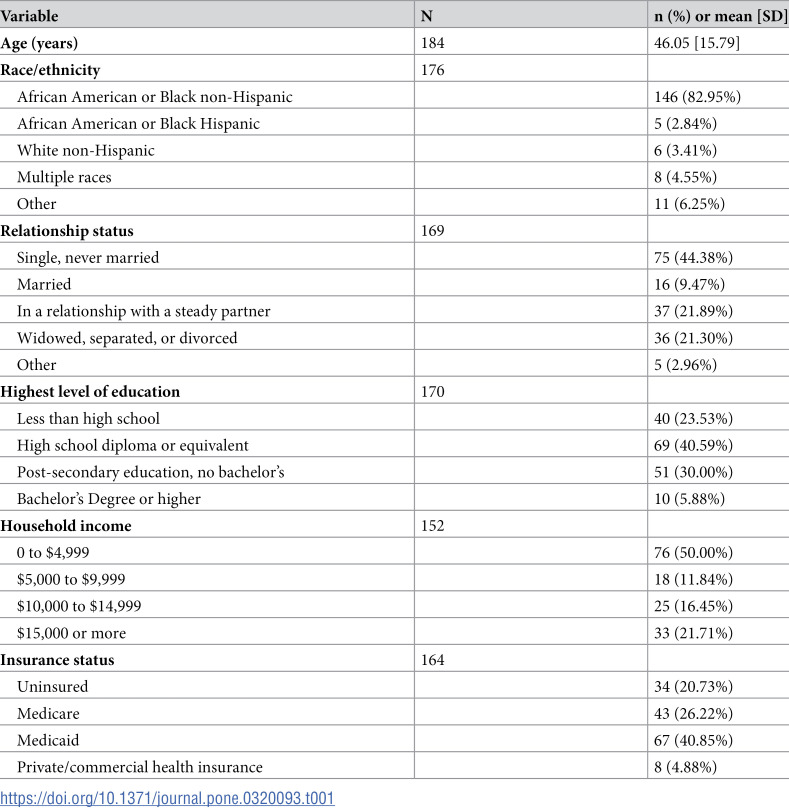 Figure 1
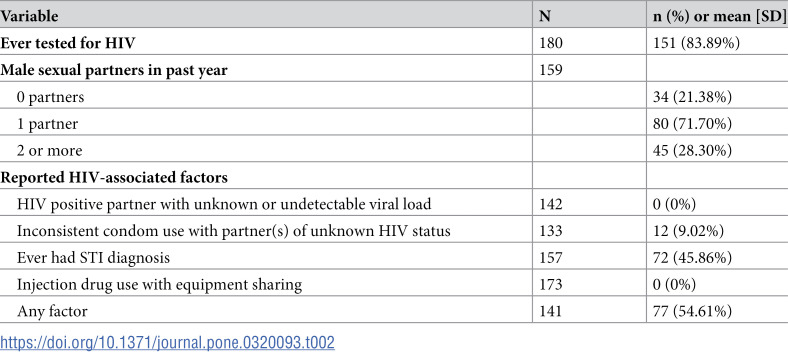 Figure 2
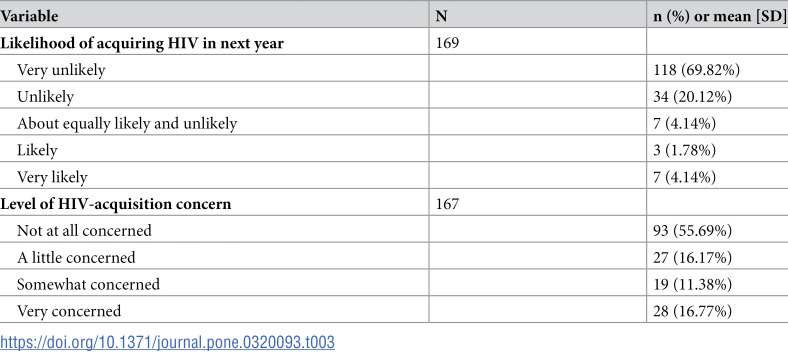 Figure 3
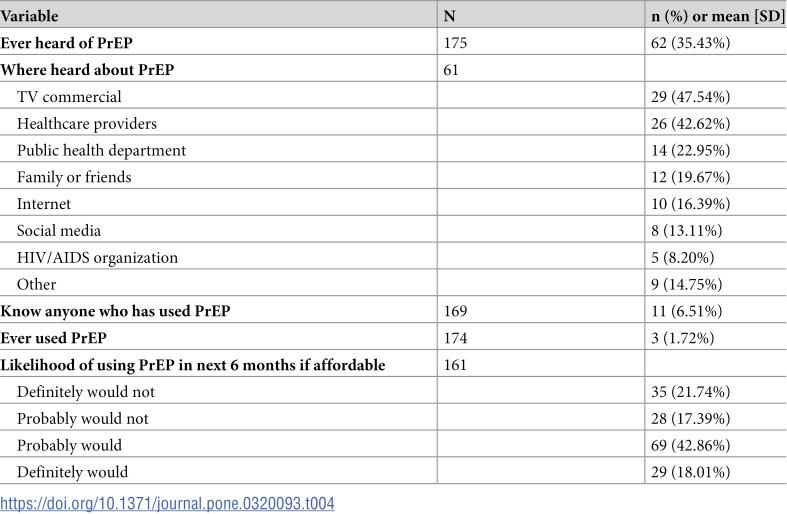 Figure 4
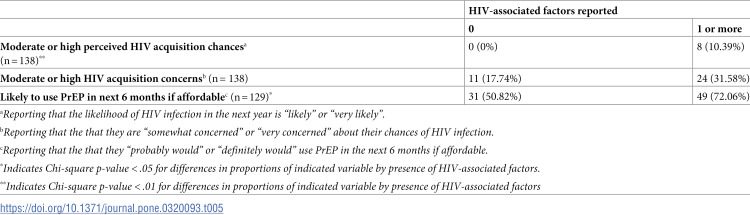 Figure 5
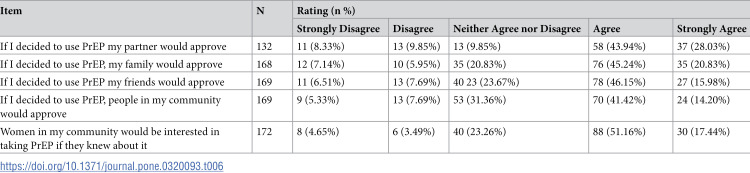 Figure 6
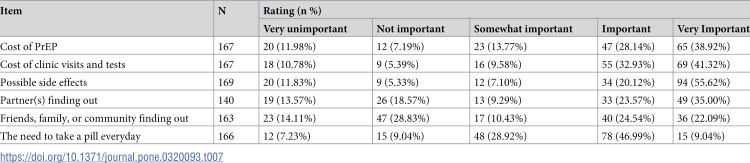 Figure 7
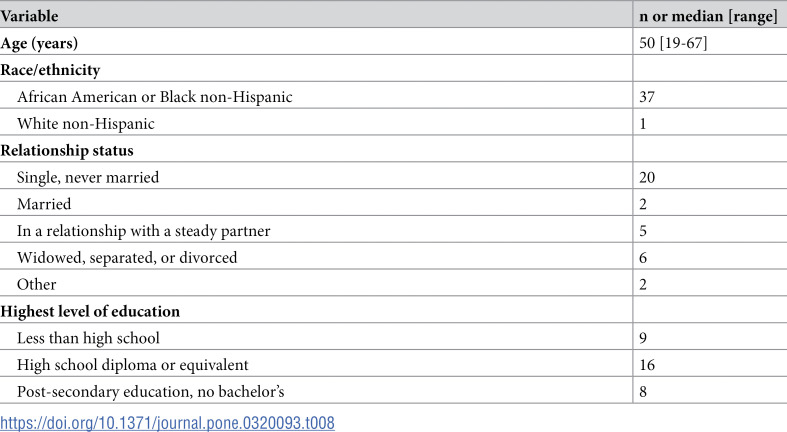 Figure 8
Peer Reviews
No public reviews on file for this paper yet. If you reviewed it on a platform where reviews are public (OpenReview, ICLR, NeurIPS, ICML), you can paste yours below so the community can read it here.
Videos
No videos yet. Explain this paper in a talk, walkthrough, or lecture? Add one.
Taxonomy
TopicsHIV/AIDS Research and Interventions · Sex work and related issues · HIV, Drug Use, Sexual Risk