Severe malaria enforces short-lived effector cell differentiation but does not prevent effective secondary responses by memory CD8 T cells
Jacob A. Hildebrand, Noah R. Daniels, Emma M. Dehm, Benjamin D. Fisher, Joseph K. Guter, Chris J. Janse, Erin D. Lucas, Jules A. Sangala, Trevor N. Tankersley, Geoffrey T. Hart, Sara E. Hamilton

TL;DR
Malaria causes CD8 T cells to become short-lived, but the few memory cells that remain can still protect against future infections.
Contribution
The study reveals that Plasmodium infection uniquely programs CD8 T cells and shows that limited memory does not hinder host protection.
Findings
PbA infection biases CD8 T cells toward a short-lived effector cell phenotype with reduced memory precursor formation.
PbA-induced inflammation, including IFNγ, contributes to the effector cell bias in CD8 T cells.
Despite low memory T cell numbers after PbA, they can robustly expand and protect during secondary infections.
Abstract
Parasitic infections are a major worldwide health burden, yet most studies of CD8 T cell differentiation focus on acute viral and bacterial infections. To understand effector and memory CD8 T cell responses during erythrocytic malaria infection in mice, we utilized transgenic OT-I T cells and compared CD8 T cell responses between infection with OVA-expressing strains of Listeria monocytogenes (Lm) and Plasmodium berghei ANKA (PbA). We find that CD8 T cells expand vigorously during both infections. However, in contrast to Lm infection, PbA infection induces T cells that are heavily biased toward an IL-7Ra-deficient and KLRG1+ short-lived effector cell (SLEC) phenotype at the expense of memory precursor effector cell (MPECs) formation. PbA-induced inflammation, including IFNγ, is partially responsible for this outcome. Following treatment with antimalarial drugs and T cell contraction,…
Genes, proteins, chemicals, diseases, species, mutations and cell lines named across the full text — each resolved to its canonical identifier and authoritative record.
Click any figure to enlarge with its caption.
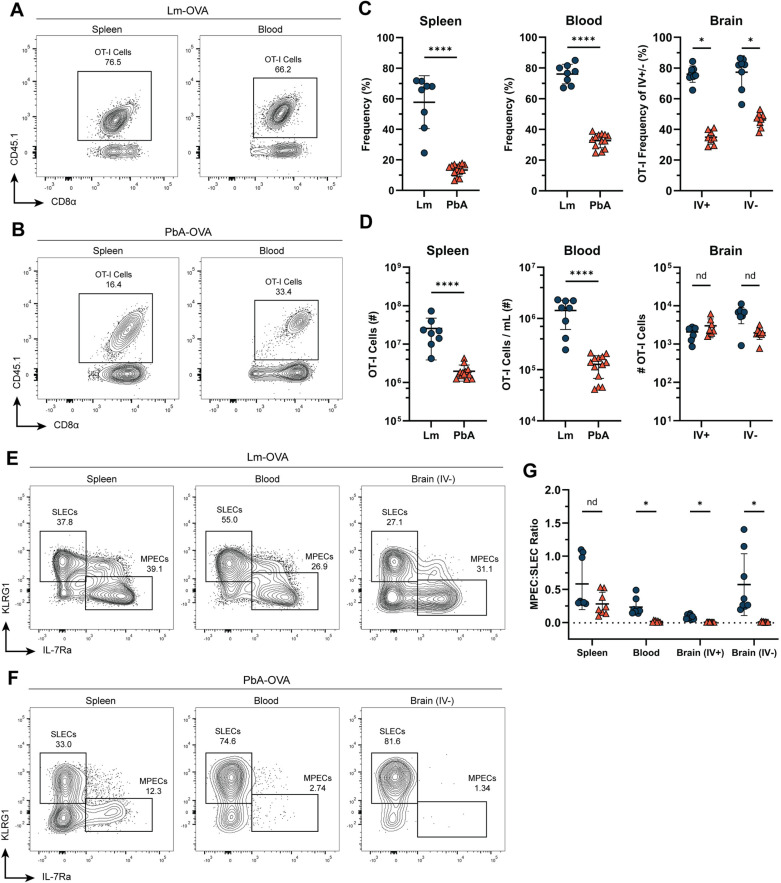 Figure 1
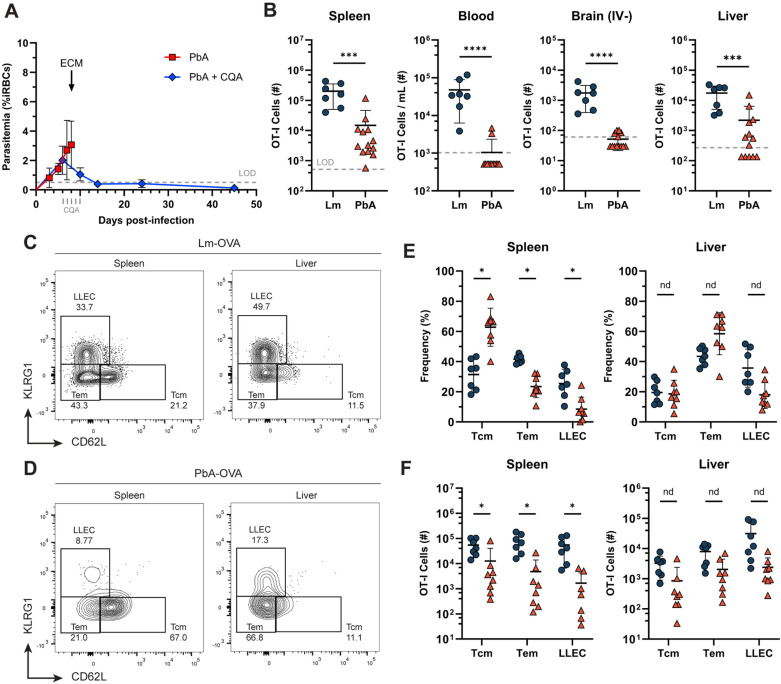 Figure 2
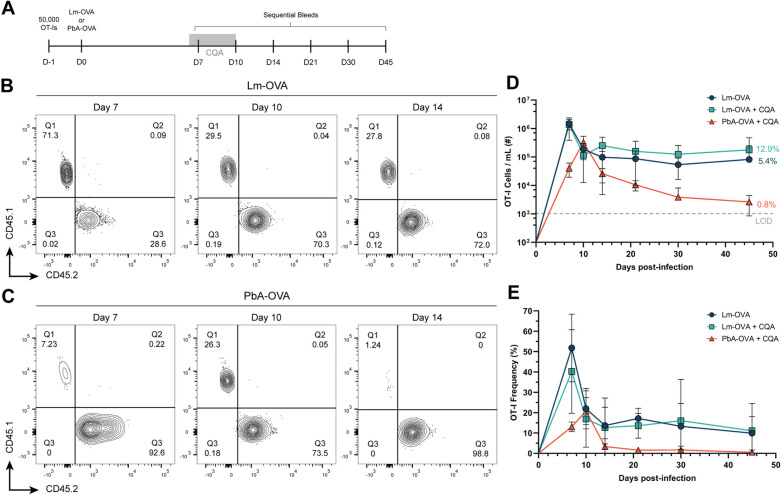 Figure 3
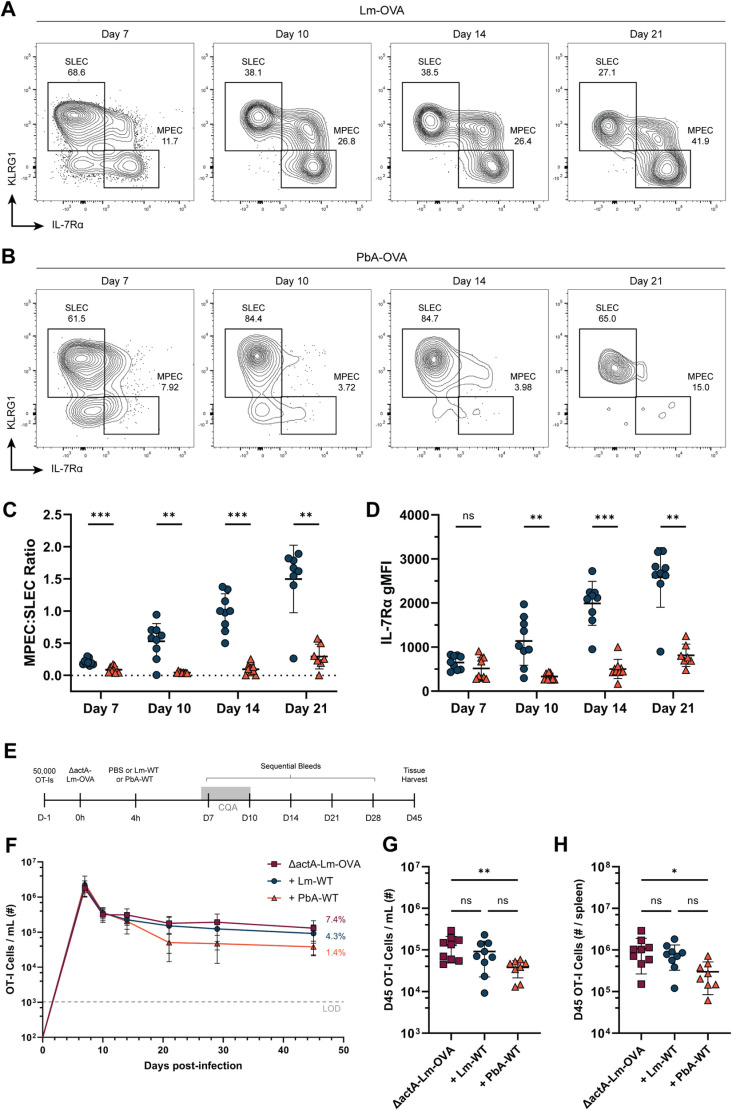 Figure 4
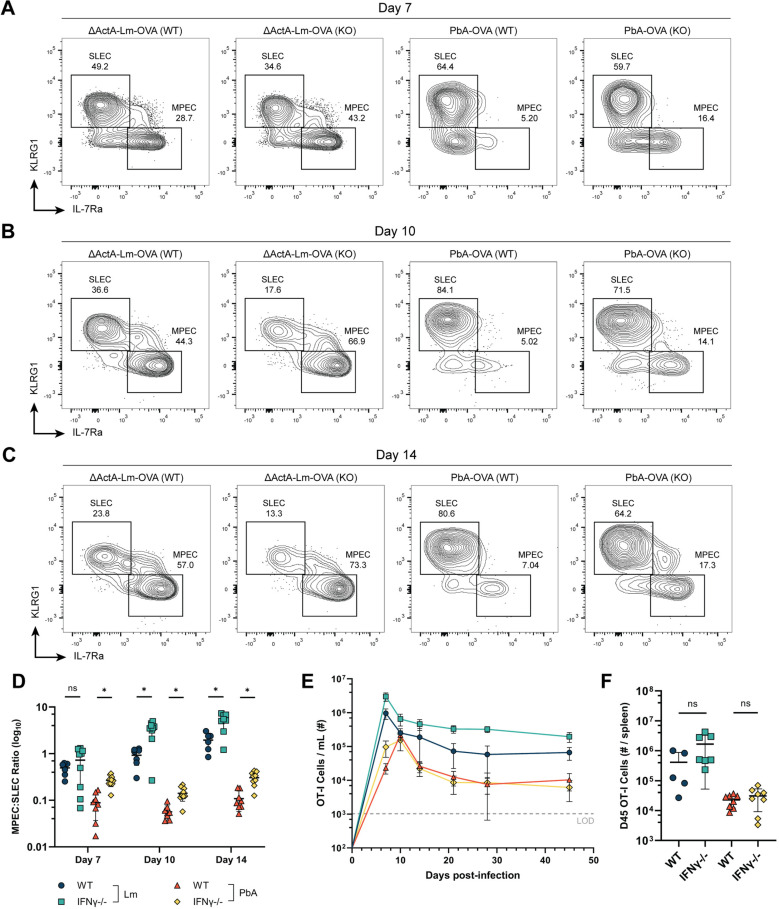 Figure 5
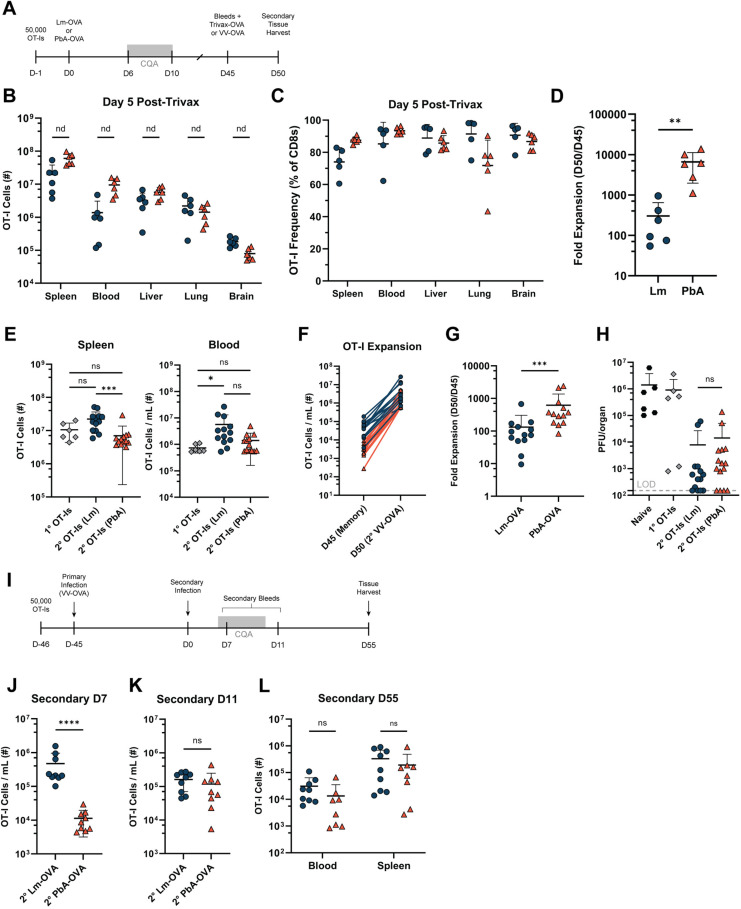 Figure 6
Peer Reviews
No public reviews on file for this paper yet. If you reviewed it on a platform where reviews are public (OpenReview, ICLR, NeurIPS, ICML), you can paste yours below so the community can read it here.
Videos
No videos yet. Explain this paper in a talk, walkthrough, or lecture? Add one.
Taxonomy
TopicsMalaria Research and Control · T-cell and B-cell Immunology · Immune Cell Function and Interaction