Evaluation of in-vivo and in-vitro binding property of a novel PET tracer for CSF1R imaging and comparison with two currently-used CSF1R-PET tracers
Xiyan Rui, Yuzhou Ding, Nailian Zhang, Xinran Zhao, Chie Seki, Tomoteru Yamasaki, Masayuki Fujinaga, Ming-Rong Zhang, Jun Qian, Bin Ji, Rong Zhou

TL;DR
Researchers tested a new PET tracer for imaging CSF1R, finding it more sensitive than existing tracers but with off-target binding issues.
Contribution
A novel PET tracer, [11C]FJRD, was developed and compared to existing CSF1R tracers with improved sensitivity but lower specificity.
Findings
[11C]FJRD showed low brain uptake and specific binding in most organs except kidneys in normal mice and rats.
Cold CPPC partially blocked [11C]FJRD binding in various organs, while GW2580 and BLZ945 had minimal blocking effects.
[11C]CPPC and [11C]GW2580 showed faint specific binding in mouse organs, with [11C]CPPC detectable in the spleen.
Abstract
Colony-stimulating factor 1 receptor (CSF1R) is a promising imaging biomarker for neuroinflammation or tumor-associated macrophages. However, existing positron emission tomography (PET) tracers for CSF1R imaging commonly are suffering from limited specificity or sensitivity. We have performed 11C-labeled radiosynthesis of compound FJRD (3-((2-amino-5-(1-methyl-1H-pyrazol-4-yl)pyridin-3-yl)ethynyl)-N-(4-methoxyphenyl)-4-methylbenzamide) with excellent affinity for CSF1R and evaluated its in-vivo and in-vitro binding properties. PET images of [11C]FJRD show low brain uptake and specific binding in the living organs except kidneys in the normal mice and rats. In-vitro autoradiographs show high-level specific binding in all investigated organs including brain, spleen, liver, kidneys and lungs when used self-blocking. Addition of cold CPPC partially blocked in-vitro [11C]FJRD binding in the…
Genes, proteins, chemicals, diseases, species, mutations and cell lines named across the full text — each resolved to its canonical identifier and authoritative record.
Click any figure to enlarge with its caption.
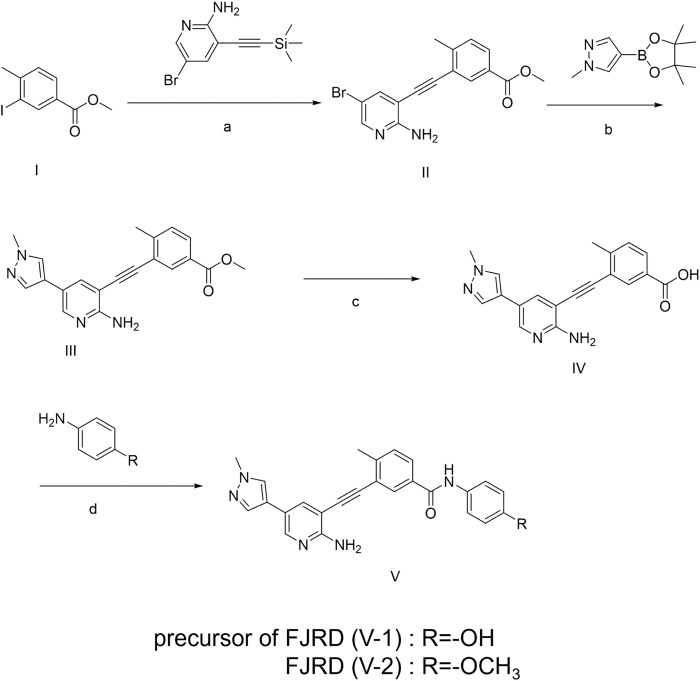 Figure 1
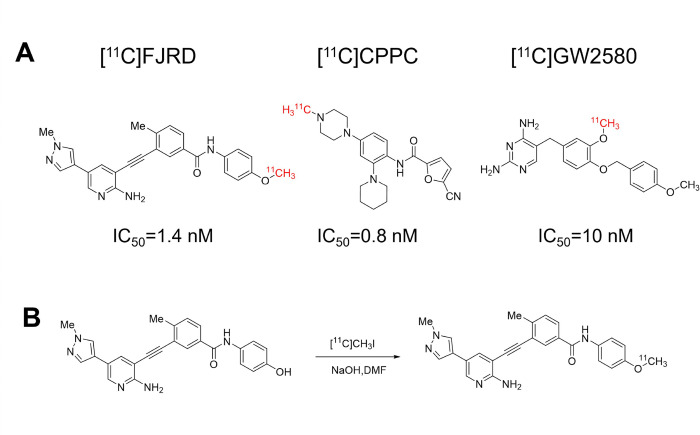 Figure 2
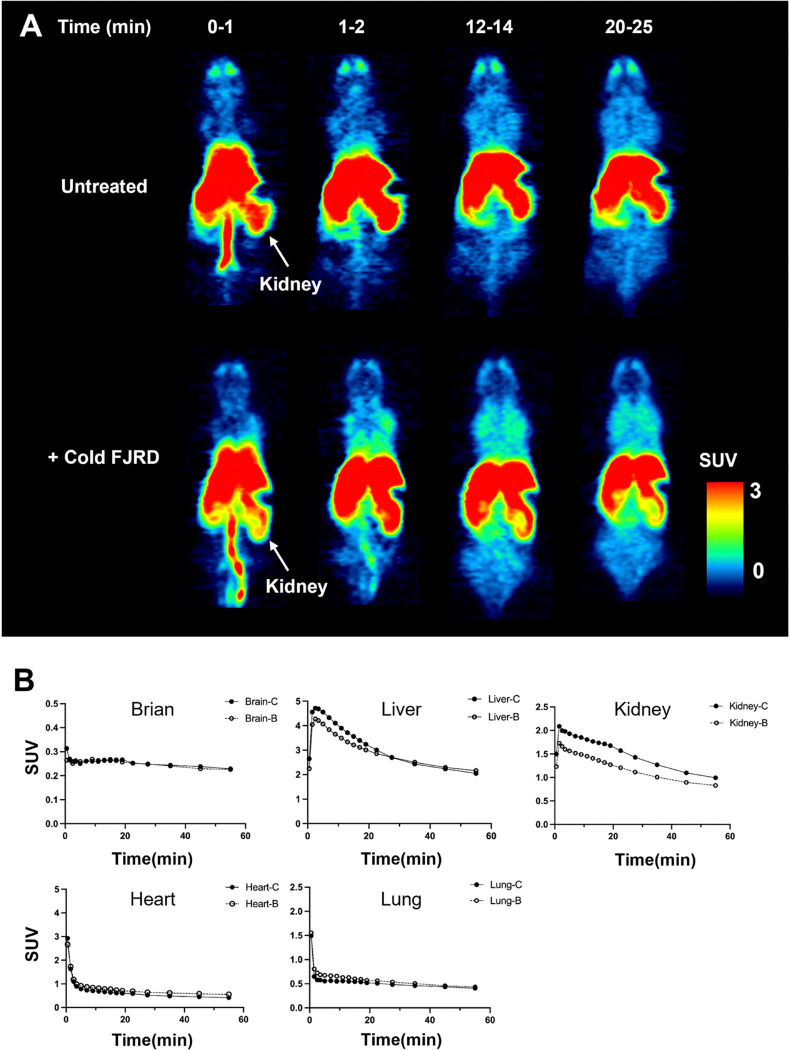 Figure 3
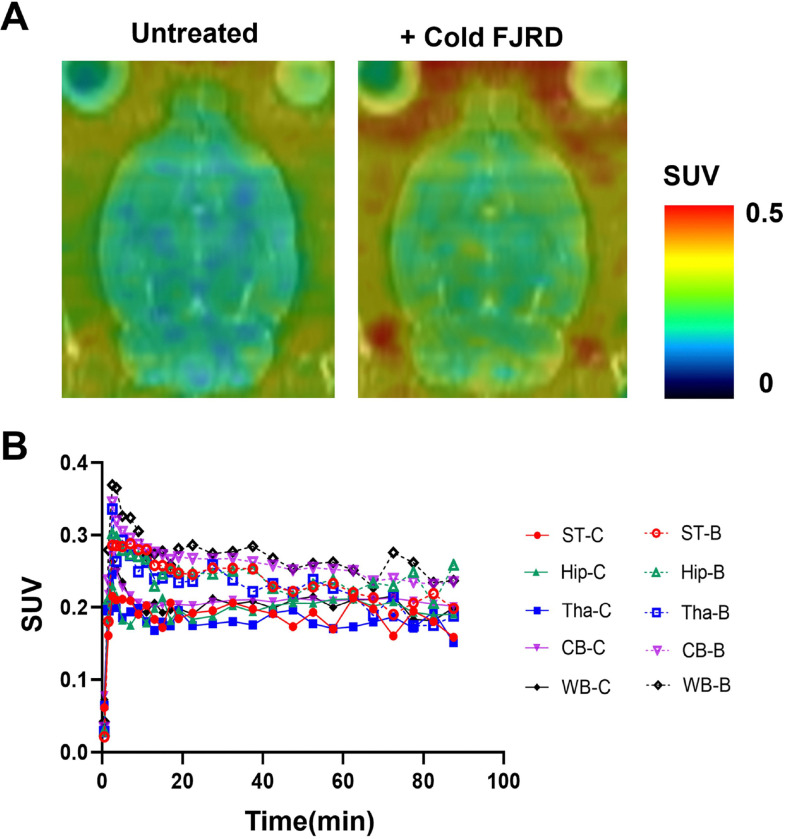 Figure 4
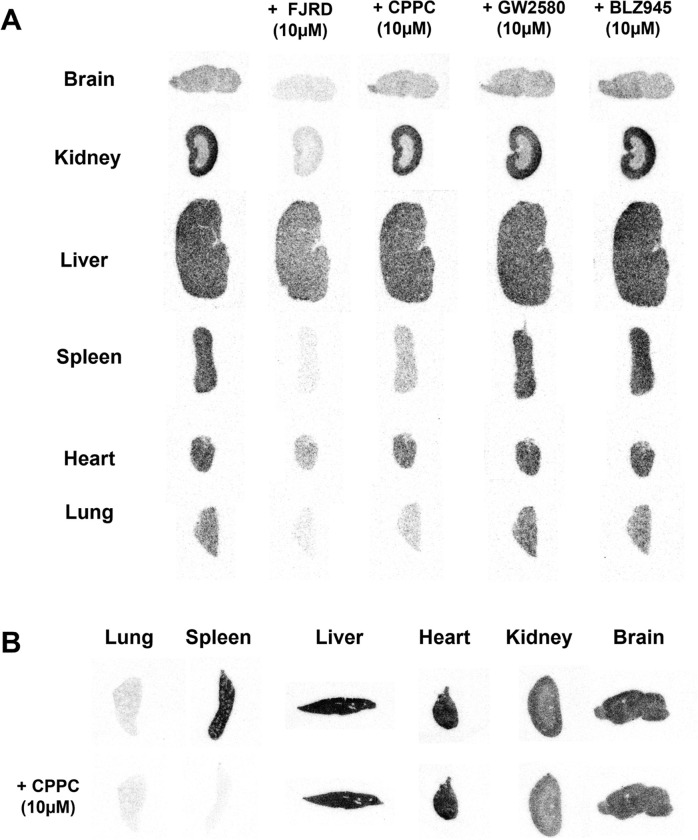 Figure 5
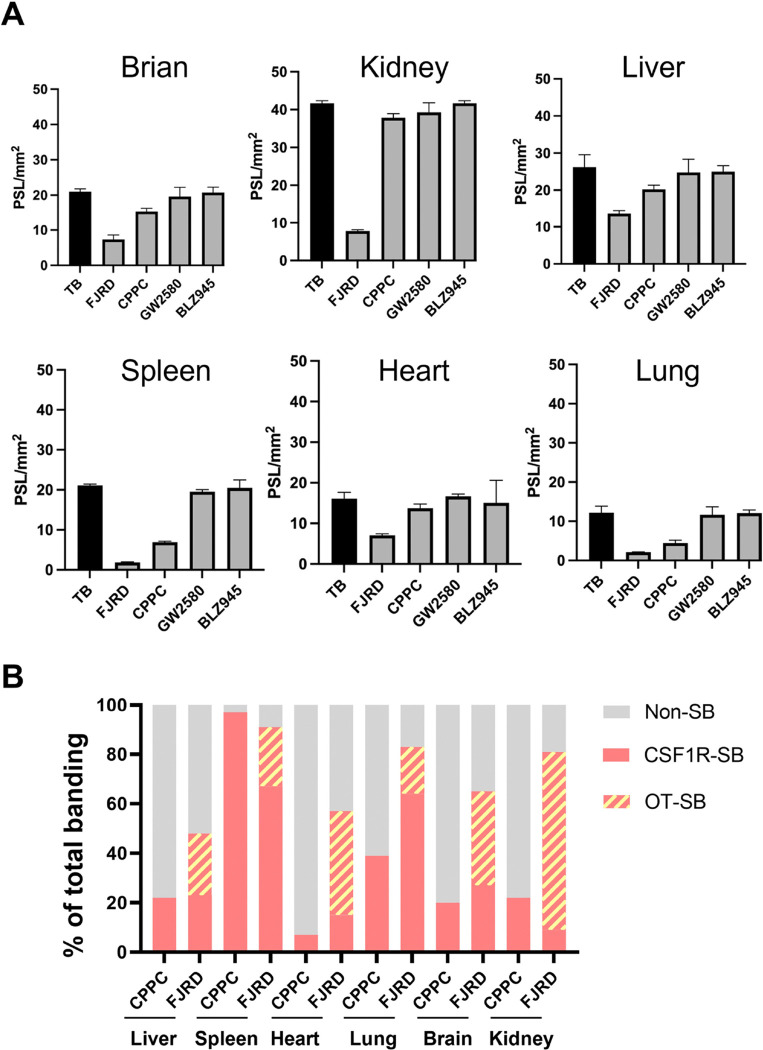 Figure 6
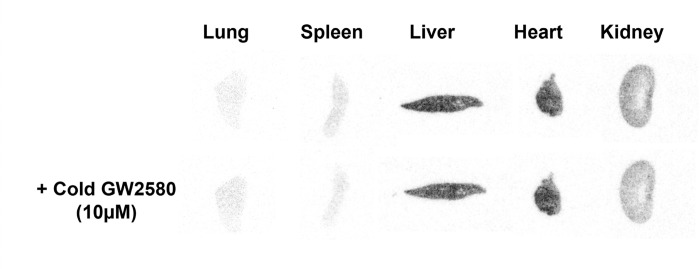 Figure 7
Peer Reviews
No public reviews on file for this paper yet. If you reviewed it on a platform where reviews are public (OpenReview, ICLR, NeurIPS, ICML), you can paste yours below so the community can read it here.
Videos
No videos yet. Explain this paper in a talk, walkthrough, or lecture? Add one.
Taxonomy
TopicsImmune cells in cancer · Neuroinflammation and Neurodegeneration Mechanisms · Adenosine and Purinergic Signaling