Hotspot mutations in HER2 interfaces destabilize structure, causing breast cancer treatment failure
Abhijit De, Pranay Dey, Aniketh Bishnu, Janvi Patel, Shivali Mishra, Nikhil Gadewal, Pritha Ray, Sudeep Gupta

TL;DR
This study finds that specific mutations in the HER2 receptor cause structural changes leading to resistance to breast cancer treatments like trastuzumab and neratinib.
Contribution
The paper identifies new hotspot mutations in HER2 domains II and IV that cause treatment resistance and highlights tucatinib as a potential alternative.
Findings
Mutations G309A, S310Y, and P523S disrupt HER2:HER2 binding and promote HER2:HER3 interactions.
These mutations shift downstream signaling from ERK to AKT, increasing resistance to trastuzumab and neratinib.
Cells with these mutations remain sensitive to the HER2 kinase inhibitor tucatinib.
Abstract
Many HER2-positive breast cancer (BC) patients relapse within a year of trastuzumab or neratinib treatment. We identified specific pathogenic mutations in the dimerization domains II and IV of the HER2 receptor that contribute to treatment resistance. Mutations G309A, S310Y, and P523S induce significant structural alterations, disrupting crucial HER2:HER2 binding pockets. HER3-preferring mutants exhibited increased HER2:HER3 interactions, as confirmed by proximity ligation assay in HER2-low and HER2-high cell lines. G309A, S310Y, and P523S mutations induced a receptor switch, altering downstream signaling from ERK to AKT activation, leading to high insensitivity to trastuzumab or neratinib in cell survival and migration assays, which was further confirmed by bioluminescence imaging of orthotopic tumors expressing the P523S mutation. This study identifies new hotspot mutations in HER2…
Genes, proteins, chemicals, diseases, species, mutations and cell lines named across the full text — each resolved to its canonical identifier and authoritative record.
Click any figure to enlarge with its caption.
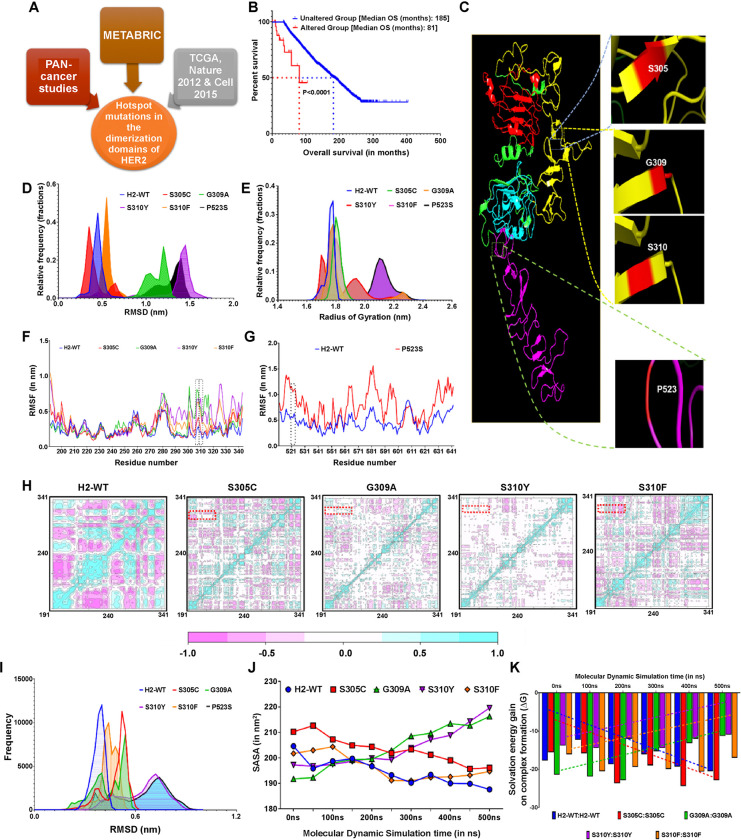 Figure 1
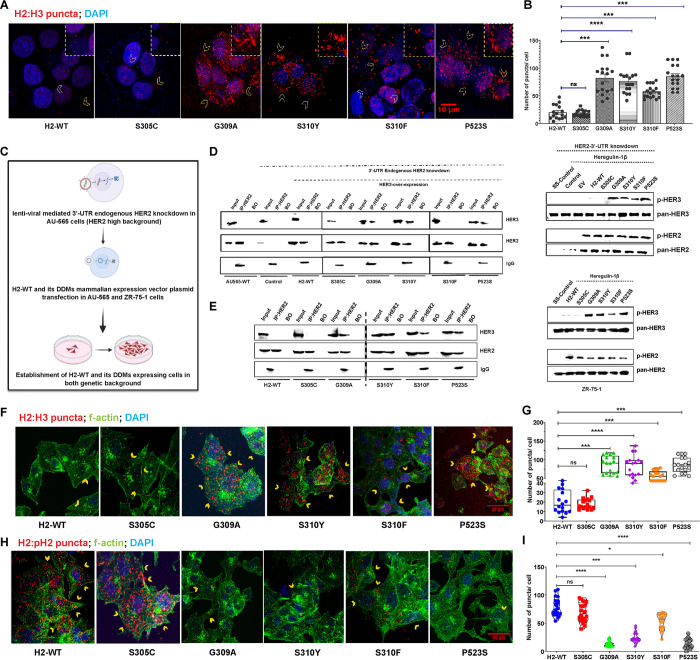 Figure 2
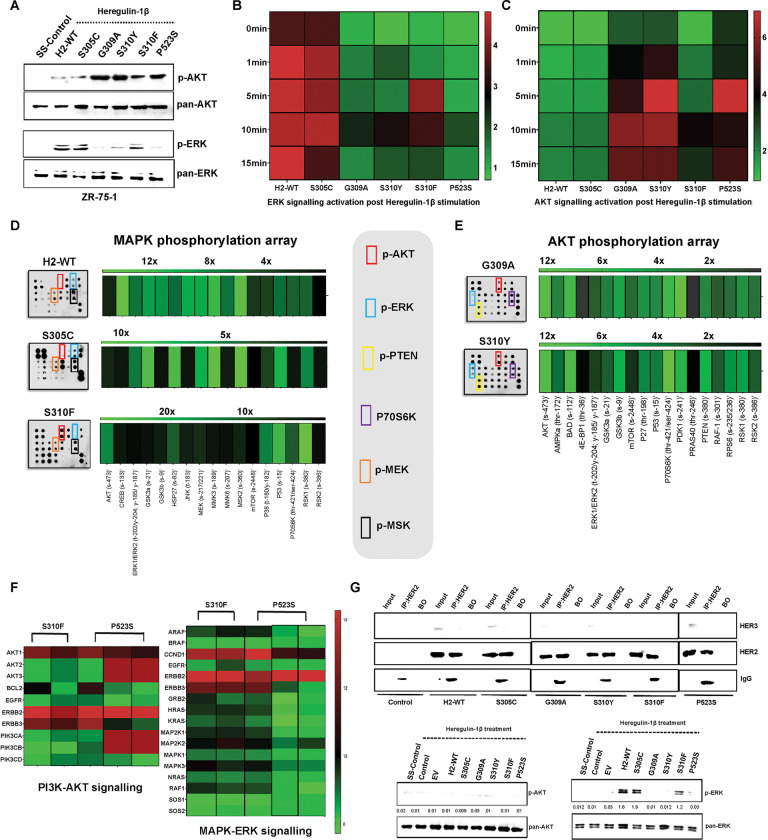 Figure 3
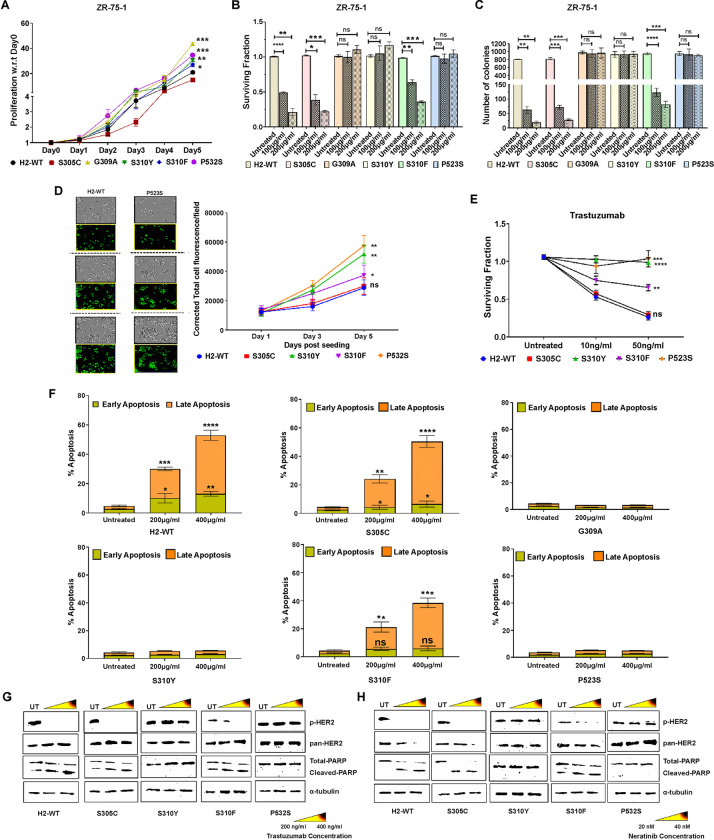 Figure 4
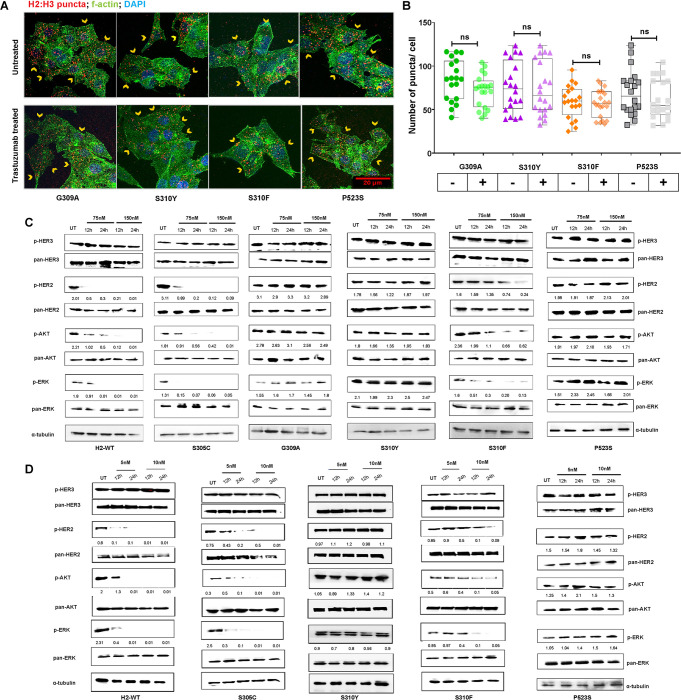 Figure 5
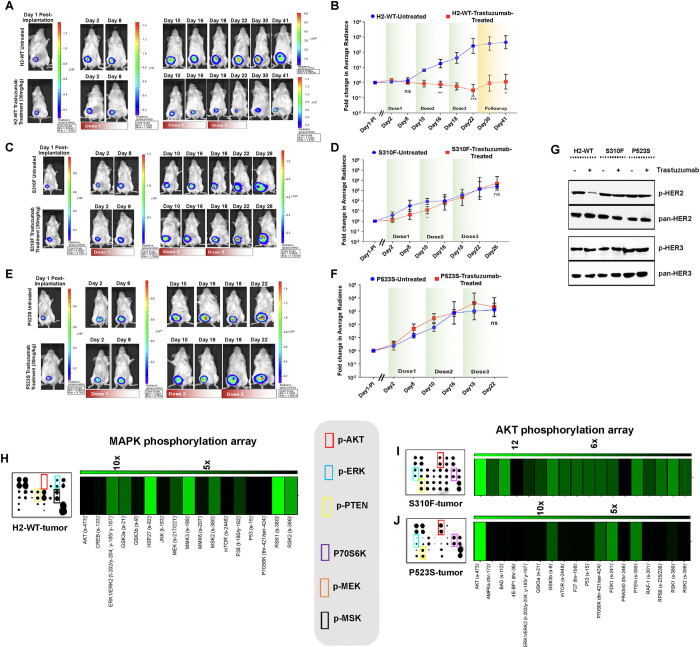 Figure 6
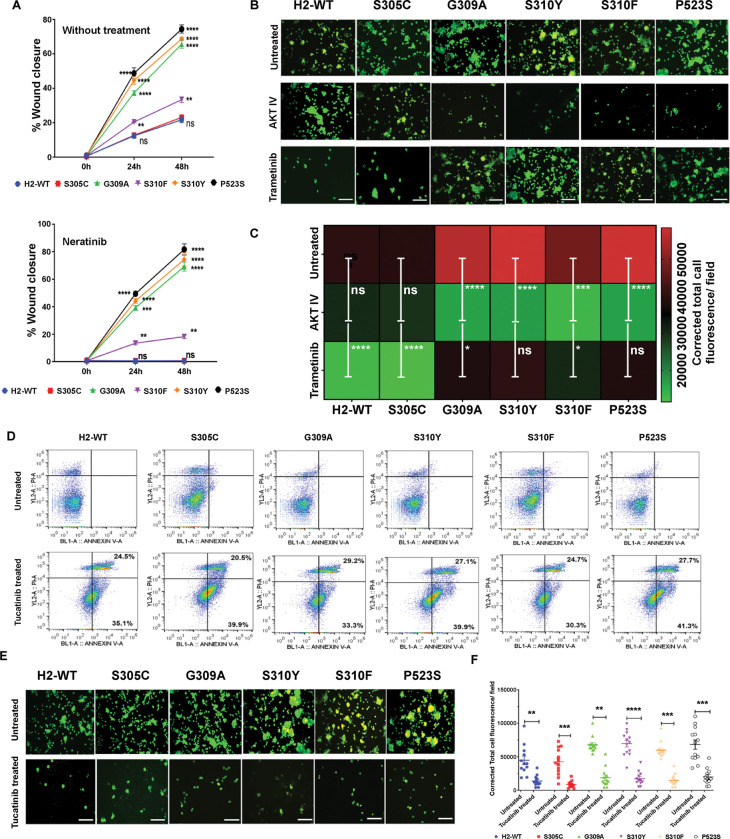 Figure 7
Peer Reviews
No public reviews on file for this paper yet. If you reviewed it on a platform where reviews are public (OpenReview, ICLR, NeurIPS, ICML), you can paste yours below so the community can read it here.
Videos
No videos yet. Explain this paper in a talk, walkthrough, or lecture? Add one.
Taxonomy
TopicsHER2/EGFR in Cancer Research · Monoclonal and Polyclonal Antibodies Research · Click Chemistry and Applications