Evaluation of a Novel Suture-Button Technique for Open Reduction and Internal Fixation in Isolated Fractures of the Greater Tuberosity of the Humerus: A Retrospective Study
Christos Koukos, Dimitrios Giotis, Michael Troullinakis, Dimitrios Karadimos, Paolo Arrigoni, Emilios E Pakos, Christos Lyrtzis, Alexandros Tsitsikas, Fredy Montoya

TL;DR
This study evaluates a new suture-button technique for fixing shoulder fractures, showing good recovery and minimal complications.
Contribution
A novel suture-button method for treating greater tuberosity fractures is introduced and validated.
Findings
Patients showed significant improvement in shoulder function scores and range of motion post-surgery.
Functional outcomes remained stable over 18 months with minimal complications.
Radiological assessments confirmed successful fracture fixation and healing.
Abstract
The purpose of the study is to present a novel technique for the open reduction and fixation of isolated displaced greater tuberosity (GT) fractures, utilizing a suture-button system, along with an evaluation of its efficacy. We conducted a retrospective study, including 18 patients with isolated tuberosity fractures displaced by more than 5 mm. All patients underwent surgical treatment using open reduction and internal fixation with a suture-button system (Zip Tight), reinforced with high-resistance sutures. The "Constant score," the "ASES (American Shoulder and Elbow Surgeons) score," and range of motion (ROM) were assessed postoperatively, with a minimum follow-up of 18 months. Postoperative X-rays were obtained in the anteroposterior (AP) view with the humerus in a neutral position, as well as in internal and external rotation and axial views. The "Constant score," the "ASES score,"…
Genes, proteins, chemicals, diseases, species, mutations and cell lines named across the full text — each resolved to its canonical identifier and authoritative record.
Click any figure to enlarge with its caption.
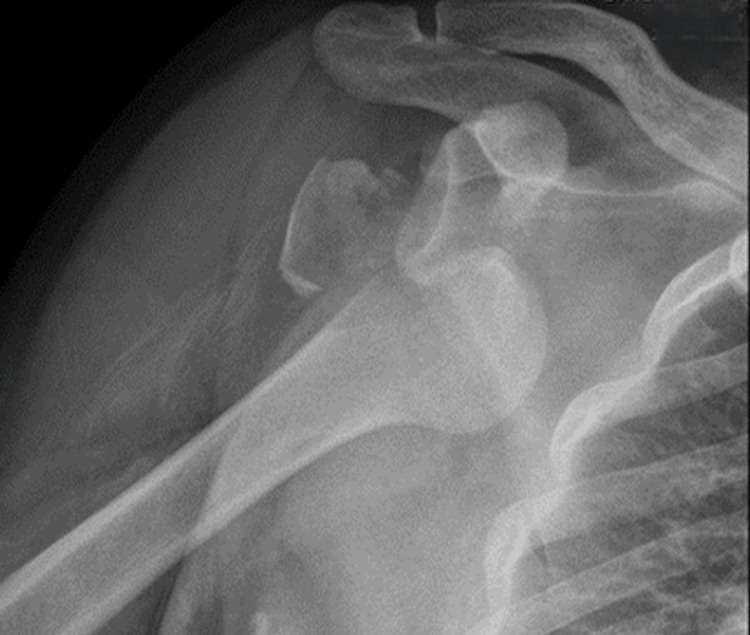 Figure 1
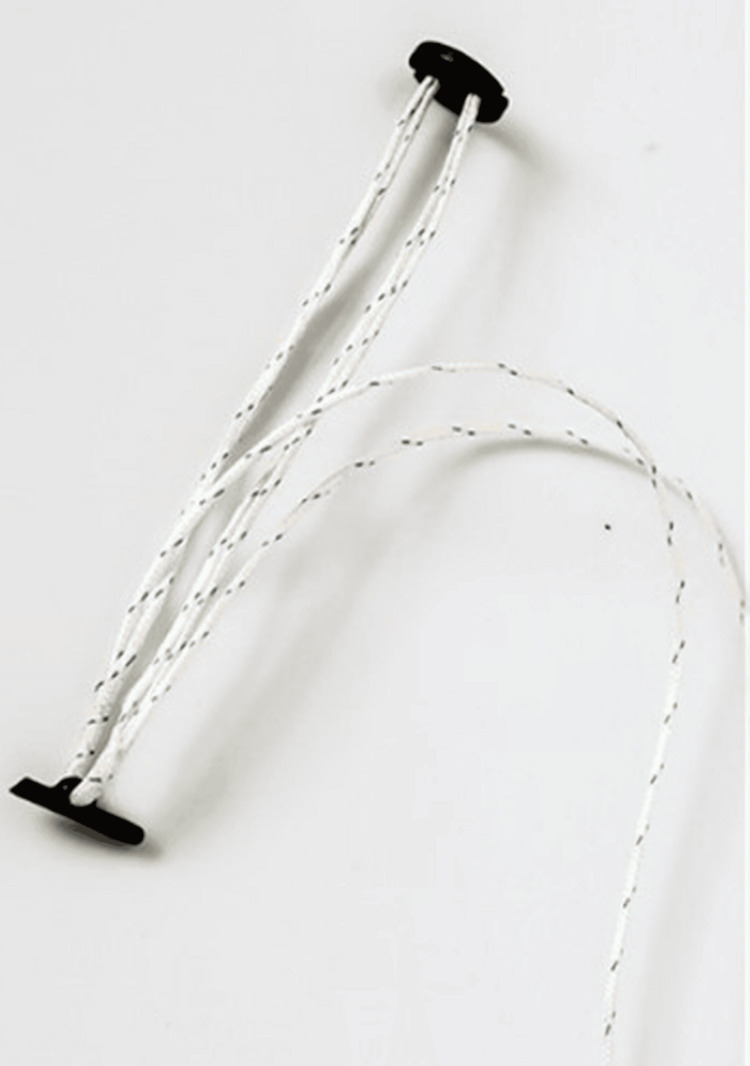 Figure 2
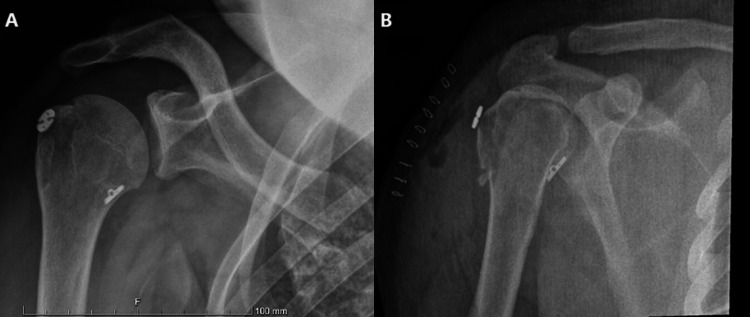 Figure 3
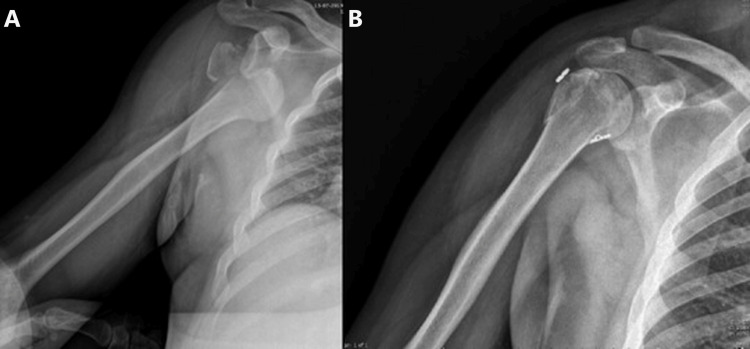 Figure 4
Peer Reviews
No public reviews on file for this paper yet. If you reviewed it on a platform where reviews are public (OpenReview, ICLR, NeurIPS, ICML), you can paste yours below so the community can read it here.
Videos
No videos yet. Explain this paper in a talk, walkthrough, or lecture? Add one.
Taxonomy
TopicsShoulder Injury and Treatment · Shoulder and Clavicle Injuries · Sports injuries and prevention