Development and evaluation of RhizoQOL, a quality-of-life caregiver-reported survey for rhizomelic chondrodysplasia punctata, a rare peroxisomal disorder
Mousumi Bose, Tahra C. Anglade, Chelsea I. Donlon, Adrian L. Kerrihard, Hila F. Berger, Ariel S. Berkowitz, Shawn A. Ritchie, Tara M. Smith

TL;DR
This paper describes the development and testing of a new caregiver-reported quality-of-life survey for a rare genetic disorder called rhizomelic chondrodysplasia punctata.
Contribution
The paper introduces RhizoQOL, a novel clinical outcome assessment tool specifically designed for RCDP patients.
Findings
Caregiver focus groups identified six key domains for the RhizoQOL survey: psychosocial behavior, feeding, mobility, respiratory symptoms, seizures, and treatment impact.
The final survey instrument demonstrated strong reliability with a Cronbach’s alpha of 0.856.
The survey was refined from 31 to 23 items through cognitive interviews and longitudinal testing.
Abstract
Rhizomelic chondrodysplasia punctata (RCDP) is a rare genetic disorder characterized by symptoms such as respiratory dysfunction, seizures, orthopedic issues, and neurodevelopmental delay. Potential therapeutics for RCDP warrant the development of clinical outcome assessments to assess the efficacy of treatment and the well-being of patients. Our study aimed to develop a valid quality-of-life (QOL) caregiver-reported survey instrument, RhizoQOL, to be used as a supportive endpoint in RCDP clinical trials. Development of the RhizoQOL survey tool included three RCDP caregiver focus groups to elicit concepts to serve as potential domains in a QOL survey instrument for RCDP, pilot survey development and initial testing, cognitive interviewing of revised survey drafts to determine content validity, as well as a three-month longitudinal study for reliability and internal consistency of the…
Genes, proteins, chemicals, diseases, species, mutations and cell lines named across the full text — each resolved to its canonical identifier and authoritative record.
Click any figure to enlarge with its caption.
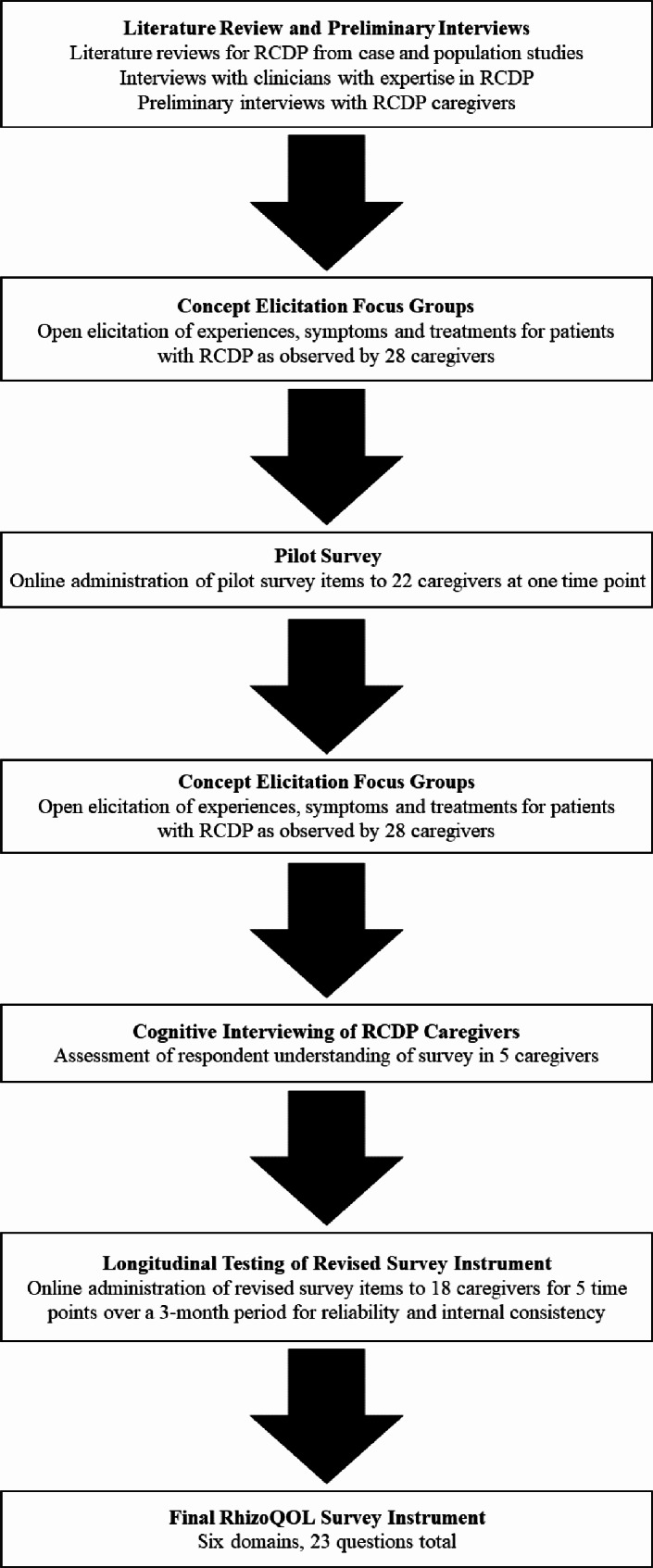 Figure 1
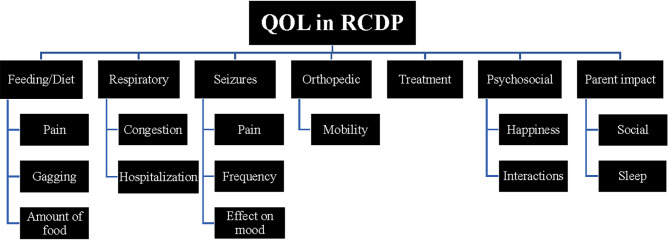 Figure 2
Peer Reviews
No public reviews on file for this paper yet. If you reviewed it on a platform where reviews are public (OpenReview, ICLR, NeurIPS, ICML), you can paste yours below so the community can read it here.
Videos
No videos yet. Explain this paper in a talk, walkthrough, or lecture? Add one.
Taxonomy
TopicsPeroxisome Proliferator-Activated Receptors · Bone and Joint Diseases · Osteoarthritis Treatment and Mechanisms