Structural characteristics of mitochondrial genome of Spirobo-lus walkeri (Spirobolida: Spirobolidae), and phylogenetic analysis of Diplopoda
Wenwen Zhang, Shengjun Zhao, Lingna Li, Yingzhu Li, Hongyi Liu, Peng Cui

TL;DR
This study sequenced the mitochondrial genome of Spirobolus walkeri and used it to clarify evolutionary relationships among millipede species.
Contribution
The paper provides the first complete mitogenome of Spirobolus walkeri and contributes to resolving Diplopoda phylogeny.
Findings
The mitogenome of S. walkeri is 14,879 bp and contains 37 genes and a control region.
Phylogenetic analysis shows S. walkeri is closely related to S. bungii and Narceus annularus.
tRNA structures and gene start/stop codons show variation, aiding evolutionary benchmarking.
Abstract
The phylogeny of Diplopoda, a group of ancient arthropod and an important component of modern terrestrial ecosystems, remains unclear. Here, the complete mitogenome of Spirobolus walkeri was determined. The newly sequenced complete mitogenome was circular DNA molecules with sizes of 14,879 bp. The mitogenome was composed of 37 genes and one control region. Negative AT-skews and positive GC-skews were found in whole mitogenome. The gene COX1 used CGA as the start codon, while the other PCGs utilized ATN (A, T, G) as the start codons; however, the sequence of the stop codon was variable. The Ser2 exhibited the highest usage bias. All tRNAs have typical cloverleaf structures, except trnS-AGC and trnM. Phylogenetic analysis showed that S. walkeri and Spirobolus bungii shared a close relationship and that they were also closely related with Narceus annularus. This study helps resolve…
Genes, proteins, chemicals, diseases, species, mutations and cell lines named across the full text — each resolved to its canonical identifier and authoritative record.
Click any figure to enlarge with its caption.
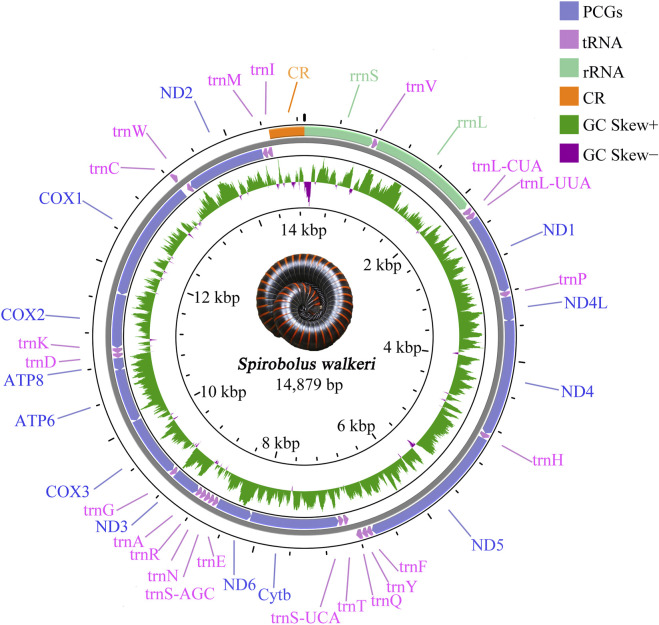 Figure 1
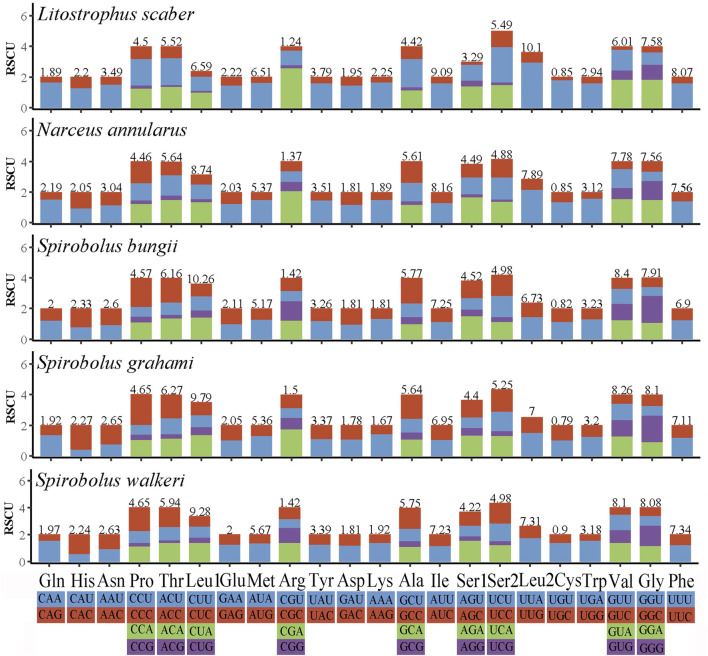 Figure 2
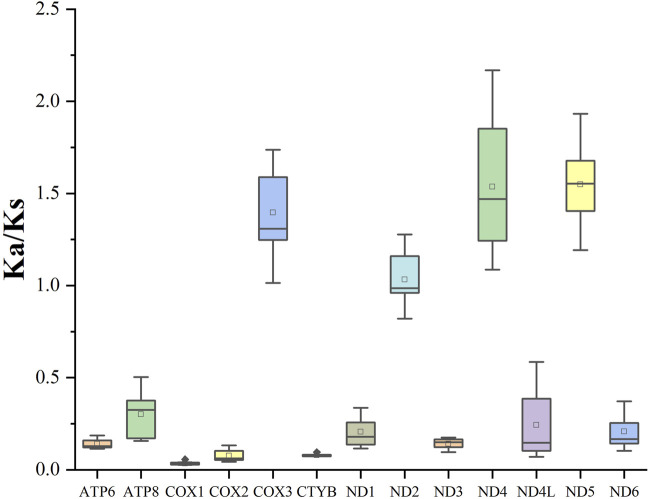 Figure 3
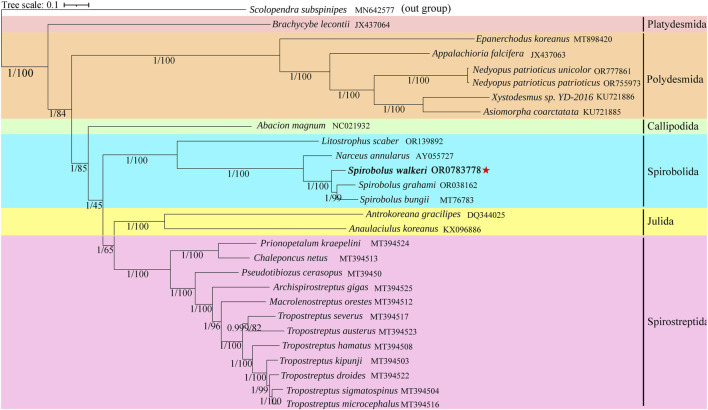 Figure 4
Peer Reviews
No public reviews on file for this paper yet. If you reviewed it on a platform where reviews are public (OpenReview, ICLR, NeurIPS, ICML), you can paste yours below so the community can read it here.
Videos
No videos yet. Explain this paper in a talk, walkthrough, or lecture? Add one.
Taxonomy
TopicsGenomics and Phylogenetic Studies · Subterranean biodiversity and taxonomy · Spider Taxonomy and Behavior Studies