Effect of subcutaneous fat on long-term survival after surgery for stage I-III breast cancer as determined by computed tomography
Yi-Wen Mao, Hong-Dou Zeng, Ye Fang, Xin-Yao Wu, Ming-Hao Zhang, Cheng-Da Hu, Ya-Xin Zhao

TL;DR
This study shows that higher subcutaneous fat in chest CT scans of breast cancer patients is linked to worse long-term survival, suggesting a new way to guide patient care.
Contribution
The study introduces the use of chest CT scans at the T11 level to assess subcutaneous fat as a prognostic indicator for breast cancer survival.
Findings
Higher subcutaneous fat index (SFI) at T11 was independently associated with worse overall and recurrence-free survival in breast cancer patients.
Kaplan-Meier analysis confirmed significant survival differences between groups with high and low SFI after matching.
The study suggests that subcutaneous fat measurement could inform personalized postoperative care and lifestyle interventions.
Abstract
Monitoring body composition through Computed Tomography (CT) scans, including muscle and adipose tissue, plays a key role in the prognosis of various cancers. However, abdominal CT is impractical for patients with breast cancer (BC), making chest CT an essential tool for postoperative surveillance. This study aims to evaluate the effect of subcutaneous fat tissue at the 11th thoracic vertebral plane on the postoperative prognosis of BC patients by analyzing chest CT images, providing evidence for postoperative nutritional and rehabilitation guidance. We conducted a retrospective analysis of the medical records of 188 BC patients treated and discharged from the Second Affiliated Hospital of Wenzhou Medical University between January 1, 2013, and December 31, 2013. The subcutaneous fat area (SFA) at the 11th thoracic vertebra (T11) was measured using chest CT images, and the subcutaneous…
Genes, proteins, chemicals, diseases, species, mutations and cell lines named across the full text — each resolved to its canonical identifier and authoritative record.
Click any figure to enlarge with its caption.
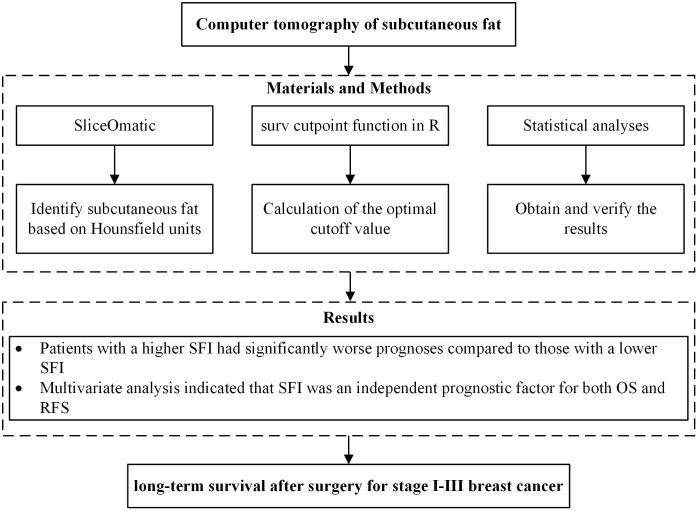 Figure 1
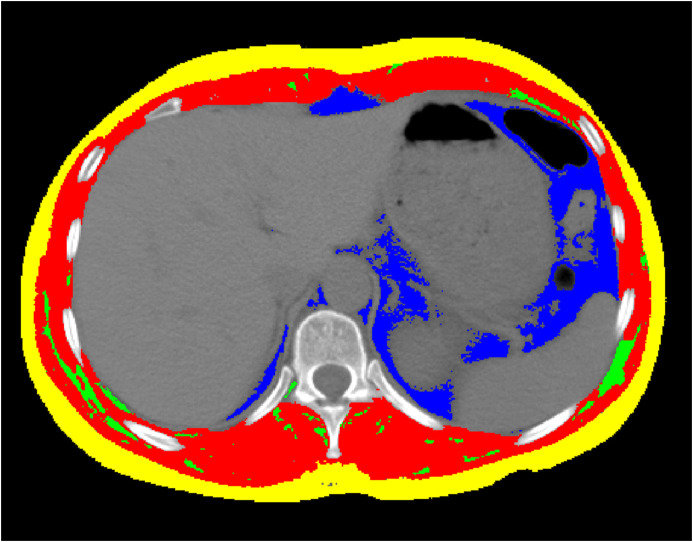 Figure 2
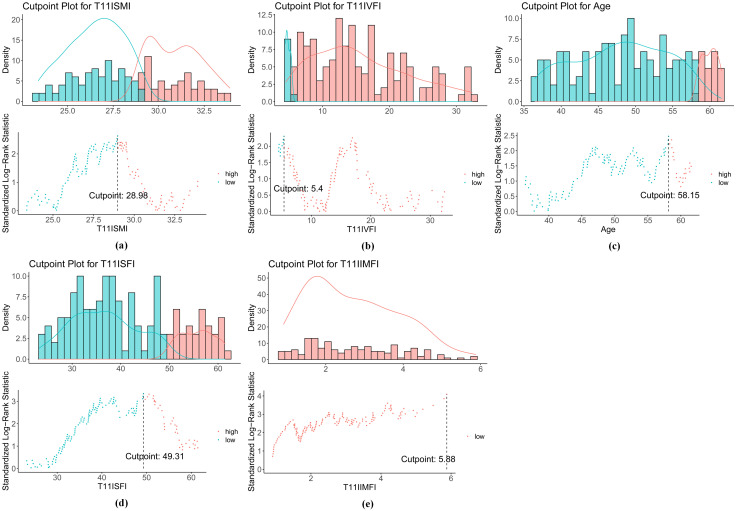 Figure 3
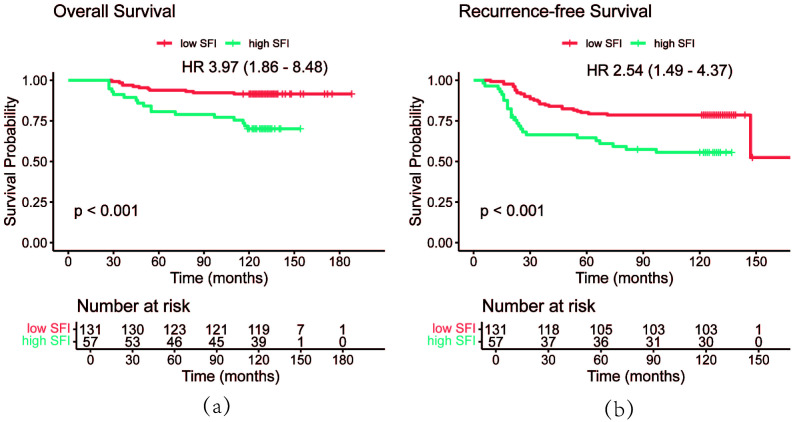 Figure 4
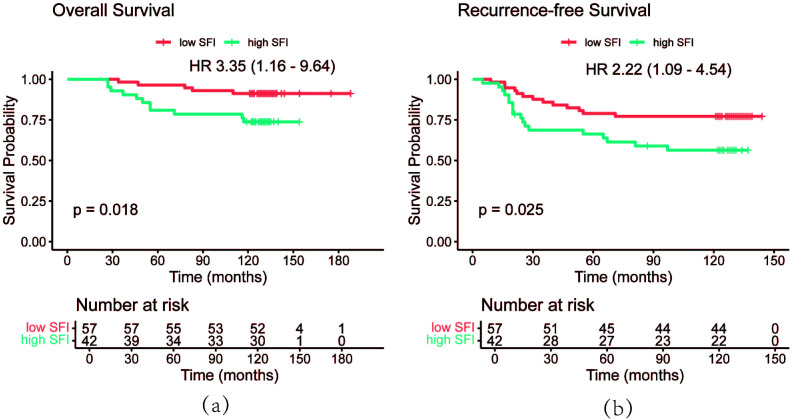 Figure 5
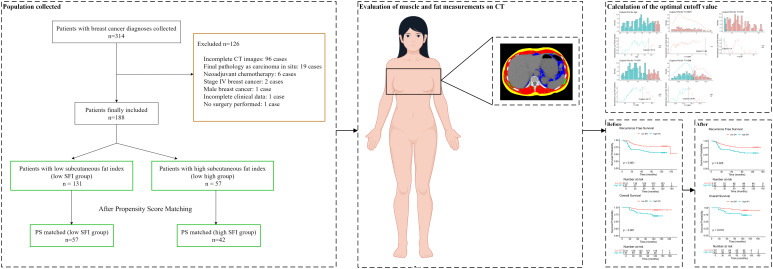 Figure 6
Peer Reviews
No public reviews on file for this paper yet. If you reviewed it on a platform where reviews are public (OpenReview, ICLR, NeurIPS, ICML), you can paste yours below so the community can read it here.
Videos
No videos yet. Explain this paper in a talk, walkthrough, or lecture? Add one.
Taxonomy
TopicsCancer Risks and Factors · Nutrition and Health in Aging · Cancer, Lipids, and Metabolism