Exploring the early diagnostic value of MRI for type I stress fractures: a retrospective analysis based on imaging manifestations
Hui Lu, Cailin Wang, Leilei Wang, Xuefeng Gao, Ruquan Li, Xiaofeng Jin, Jun Tang, Sen Guan

TL;DR
This study shows that MRI is more effective than X-ray and CT for early diagnosis of Type I stress fractures in the tibia and femur.
Contribution
The study demonstrates MRI's superior diagnostic accuracy for early detection of Type I stress fractures compared to conventional imaging methods.
Findings
MRI had a significantly higher early diagnosis rate than X-ray and CT for both tibial and femoral stress fractures.
MRI detected visible fracture lines, soft tissue swelling, and marrow signal changes more effectively than X-ray and CT in tibial fractures.
MRI outperformed X-ray and CT in detecting fracture signs in femoral stress fractures, though not for periosteal reaction or callus formation.
Abstract
To compare the positive rate of early diagnosis and the detection rate of fracture signs in Type I stress fractures using x-ray, CT, and MRI. A total of 56 patients with Type I stress fractures admitted to the 904st Hospital of the PLA Joint Logistics Support Force from January 2011 to June 2021 were included in the retrospective analysis, including 35 cases of tibial stress fractures (tibia group) and 21 cases of femoral stress fractures (femur group). The positive rate of early diagnosis and the detection rates of visible fracture lines, periosteal reaction, callus formation, surrounding soft tissue swelling, and marrow cavity signal changes were compared between x-ray, CT, and MRI. (1) The positive rate of early diagnosis of MRI in the tibia and femur groups were significantly higher than those of x-ray and CT examinations, and the differences were statistically significant (P <…
Genes, proteins, chemicals, diseases, species, mutations and cell lines named across the full text — each resolved to its canonical identifier and authoritative record.
Click any figure to enlarge with its caption.
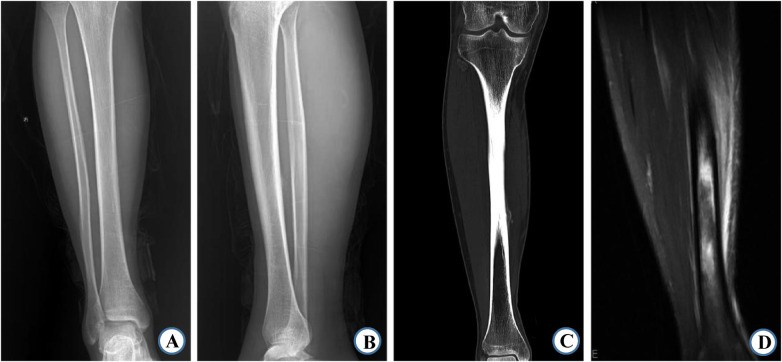 Figure 1
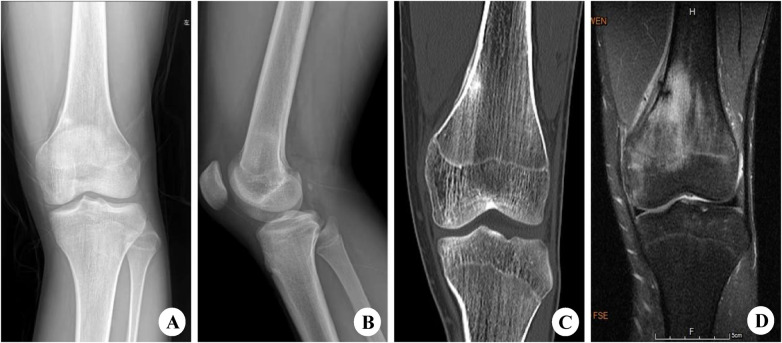 Figure 2
Peer Reviews
No public reviews on file for this paper yet. If you reviewed it on a platform where reviews are public (OpenReview, ICLR, NeurIPS, ICML), you can paste yours below so the community can read it here.
Videos
No videos yet. Explain this paper in a talk, walkthrough, or lecture? Add one.
Taxonomy
TopicsLower Extremity Biomechanics and Pathologies · Bone and Joint Diseases · Fatigue and fracture mechanics