Potential compensatory mechanism for cognitive impairment in type 2 diabetes and prediabetes: altered structure-function coupling
Weiye Lu, Xuan Huang, Die Shen, Kun Wang, Jiahe Wang, Ziyu Diao, Shijun Qiu

TL;DR
This study explores how brain structure and function interactions change in prediabetes and type 2 diabetes, suggesting a potential compensatory mechanism for cognitive decline.
Contribution
The study identifies altered structure-function coupling in the limbic network as a possible compensatory mechanism for cognitive impairment in diabetes.
Findings
T2DM patients showed higher SC-FC coupling in the default mode network and lower in the limbic network compared to normal glucose metabolism patients.
Diabetes-related measures like HbA1c and fasting glucose were linked to altered SC-FC coupling in the limbic network.
Altered SC-FC coupling in the limbic network may act as a compensatory mechanism for cognitive decline in diabetes.
Abstract
Structure-function (SC-FC) coupling may be more sensitive to detecting changes in the brain than any single modality. The aim of this study was to investigate the effects of SC-FC coupling changes on cognition and their interactions in patients with prediabetes and type 2 diabetes mellitus (T2DM). A total of 493 participants (119 with normal glucose metabolism (NGM), 125 with prediabetes, and 249 with T2DM) were included in the study. Diffusion-weighted MRI and resting state functional MRI data were used to quantify SC-FC coupling. General linear model and linear regression analysis were used to evaluate the relationship between glucose metabolism, SC-FC coupling, and cognition. Mediation models were used to evaluate the mediating role of regional SC-FC coupling between diabetes-related measures and cognition. The regional coupling strength of SC-FC varied greatly in different brain…
Genes, proteins, chemicals, diseases, species, mutations and cell lines named across the full text — each resolved to its canonical identifier and authoritative record.
Click any figure to enlarge with its caption.
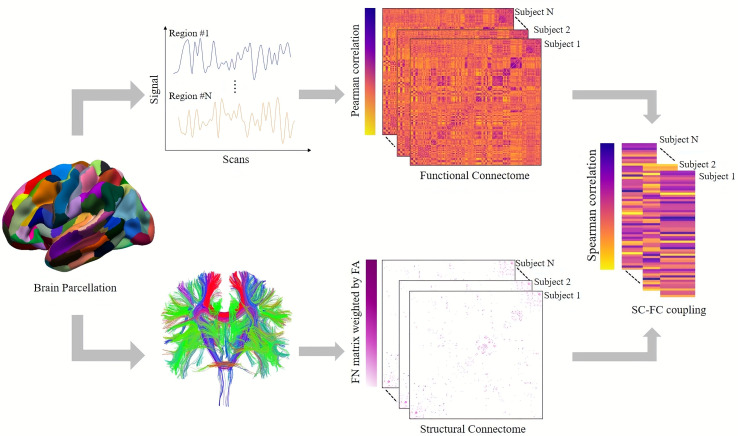 Figure 1
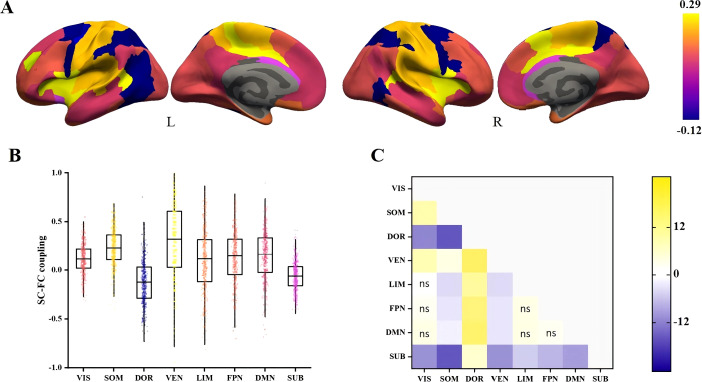 Figure 2
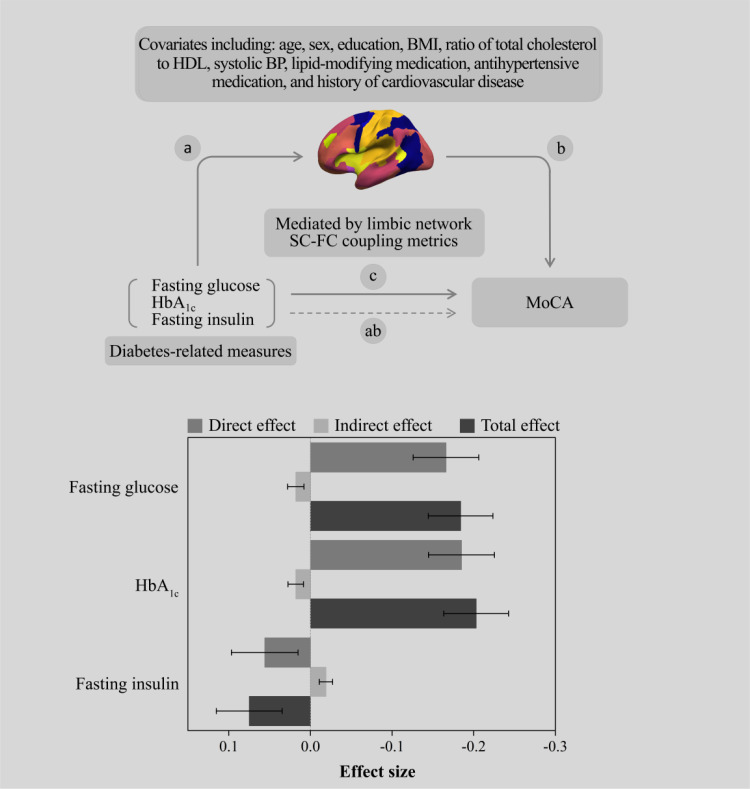 Figure 3
Peer Reviews
No public reviews on file for this paper yet. If you reviewed it on a platform where reviews are public (OpenReview, ICLR, NeurIPS, ICML), you can paste yours below so the community can read it here.
Videos
No videos yet. Explain this paper in a talk, walkthrough, or lecture? Add one.
Taxonomy
TopicsNeurological Disorders and Treatments · Blood Pressure and Hypertension Studies · Alzheimer's disease research and treatments