Endoscopic ultrasound-guided antegrade treatment using a novel nonslip short-length balloon catheter for hepaticojejunostomy anastomotic stricture
Tadahisa Inoue, Rena Kitano, Tomoya Kitada, Kazumasa Sakamoto, Satoshi Kimoto, Jun Arai, Kiyoaki Ito

Abstract
Genes, proteins, chemicals, diseases, species, mutations and cell lines named across the full text — each resolved to its canonical identifier and authoritative record.
Click any figure to enlarge with its caption.
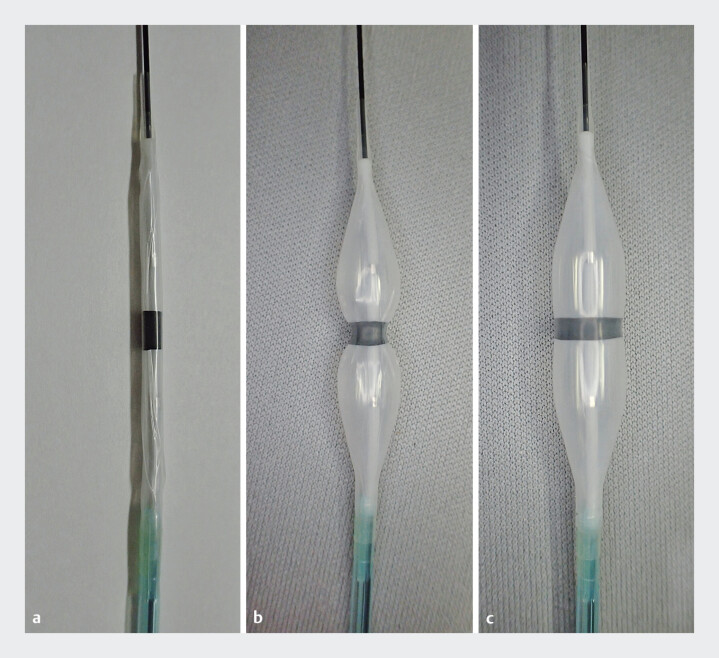 Fig. 1
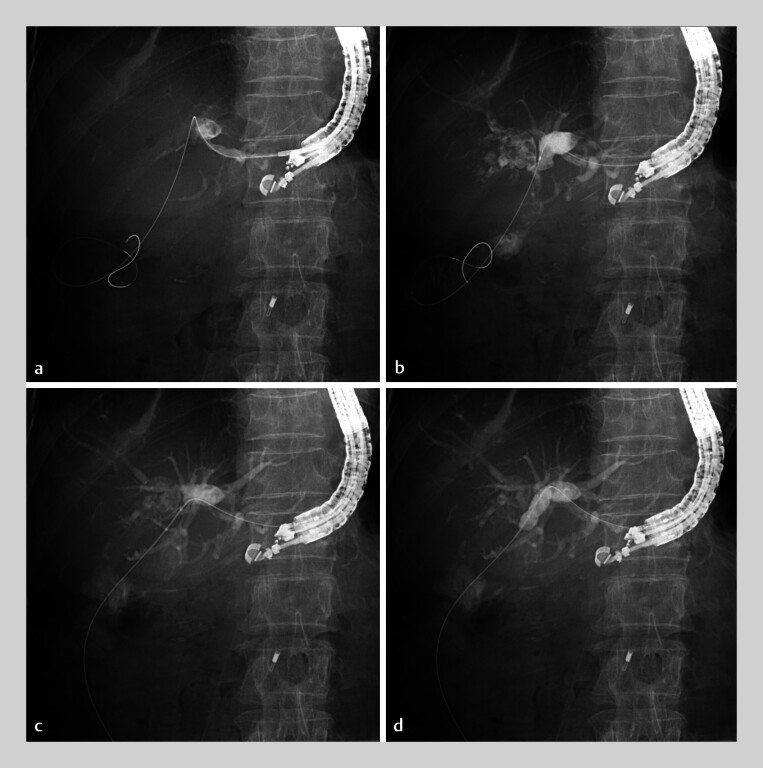 Fig. 2
Peer Reviews
No public reviews on file for this paper yet. If you reviewed it on a platform where reviews are public (OpenReview, ICLR, NeurIPS, ICML), you can paste yours below so the community can read it here.
Videos
No videos yet. Explain this paper in a talk, walkthrough, or lecture? Add one.
Taxonomy
TopicsEsophageal and GI Pathology · Gallbladder and Bile Duct Disorders · Cholangiocarcinoma and Gallbladder Cancer Studies
Balloon stricture dilation via balloon enteroscopy-assisted endoscopic retrograde cholangiopancreatography is the standard treatment for hepaticojejunostomy anastomotic stricture (HJAS) 1 , but accessing the anastomosis is often challenging. In such cases, an endoscopic ultrasound (EUS)-guided antegrade approach can be considered as an alternative.
Conventional balloons designed for papillary, or bile duct dilation are often too long for treating HJAS, which may lead to unnecessary dilation of the intrahepatic bile ducts. In contrast, short balloons are prone to slipping during inflation, presenting a greater challenge in the EUS-guided approach. This is because the position of the balloon cannot be directly visualized endoscopically, making precise positioning and adjustment during inflation more difficult.
We developed a novel dedicated balloon catheter ( Fig. 1 ), which was designed to address these challenges. This balloon is exceptionally short, measuring only 15 mm, and features an elastic band at its center. The band delays the expansion of the central portion during inflation, effectively preventing slippage 2 . Furthermore, the tapered tip is designed to enhance insertion and pushability, ensuring optimal performance when passing through the fistula and stricture.
The novel dedicated balloon catheter (RIGEL; Japan Lifeline, Tokyo, Japan) measures 15 mm in length, shorter than conventional balloons (typically 30–50 mm). a The catheter features an elastic band in the middle. b, c The elastic band results in delayed expansion of the central portion, preventing slippage. The tapered tip is designed to enhance insertion and pushability, ensuring optimal performance when passing through the fistula and stricture.
An 86-year-old woman who had undergone hepaticojejunostomy with Roux-en-Y reconstruction developed obstructive jaundice caused by HJAS. A short-type single-balloon enteroscope could not reach the anastomosis, so a linear-array echoendoscope was used instead ( Video 1 ). The left intrahepatic bile duct was punctured from the stomach using a 19-G needle, and a 0.025-inch guidewire was inserted and advanced through the HJAS into the jejunum ( Fig. 2 a ). A standard catheter was inserted, and contrast medium was injected to confirm the HJAS ( Fig. 2 b ). Subsequently, the novel 8-mm-diameter balloon was introduced and positioned at the site of the HJAS ( Fig. 2 c ). The central portion of the balloon expanded with a controlled delay during inflation, allowing full expansion without slippage ( Fig. 2 d ). The stricture was successfully recanalized, resulting in good contrast flow from the intrahepatic bile ducts into the small intestine, with no adverse events.
Fluoroscopic images. a The left intrahepatic bile duct was punctured from the stomach using a 19-G needle, and a 0.025-inch guidewire was inserted and advanced through the hepaticojejunostomy anastomotic stricture (HJAS) into the jejunum. b A standard catheter was inserted, and contrast medium was injected to confirm the HJAS. c Subsequently, the novel 8-mm-diameter balloon was introduced and positioned at the site of the HJAS. d The central portion of the balloon expanded with a controlled delay during inflation, allowing full expansion without slippage.
Endoscopic ultrasound-guided antegrade treatment using a novel nonslip short-length balloon catheter in a patient with hepaticojejunostomy anastomotic stricture.Video 1
Endoscopy_UCTN_Code_TTT_1AS_2AH
The reference list from the paper itself. Each links out to its DOI / PubMed record.
- 1Sato T Kogure H Nakai Y Double-balloon endoscopy-assisted treatment of hepaticojejunostomy anastomotic strictures and predictive factors for treatment success Surg Endosc 2020341612162010.1007/s 00464-019-06924-631218422 · doi ↗ · pubmed ↗
- 2Inoue T Kutsumi H Ibusuki MA novel non-slip banded balloon catheter for endoscopic sphincteroplasty: an ex vivo and in vivo pilot study Sci Rep 202313403210.1038/s 41598-023-31206-636899107 PMC 10006090 · doi ↗ · pubmed ↗