Newcomb-Benford number law and ecological processes
Robert D. Davic

TL;DR
This paper explores how the Newcomb-Benford number law can reveal patterns in ecological systems, helping detect changes and stability.
Contribution
The paper introduces novel applications of Benford's law to ecological data for detecting state transitions and divergence.
Findings
Benford's law shows statistical correspondence with ecological systems in dynamic equilibrium.
Case studies demonstrate its use in detecting impending state transitions in marginally stable systems.
Kullback-Leibler entropy measures reveal temporal and spatial divergence in ecological data.
Abstract
The Newcomb-Benford number law has found applications in the natural and social sciences for decades, with limited ecological attention. The aim of this communication is to highlight a statistical correspondence between the first significant digit frequencies of the Benford probability distribution and ecological systems in a balanced state of dynamic equilibrium. Analytical methods, including multidimensional Euclidean distance, Cohen-W effect size, Kossovsky sum of squared deviations (SSD), and Pearson residuals are presented to facilitate the identification of this canonical representation across multiple levels of ecological organization and scale. Case studies reveal novel applications of the Benford distribution for detecting impending state transitions in marginally stable systems, as well as temporal and spatial divergence of ecological information through the measurement of…
Genes, proteins, chemicals, diseases, species, mutations and cell lines named across the full text — each resolved to its canonical identifier and authoritative record.
Click any figure to enlarge with its caption.
 Figure 1
 Figure 2
 Figure 3
 Figure 4
 Figure 5
 Figure 6
 Figure 7
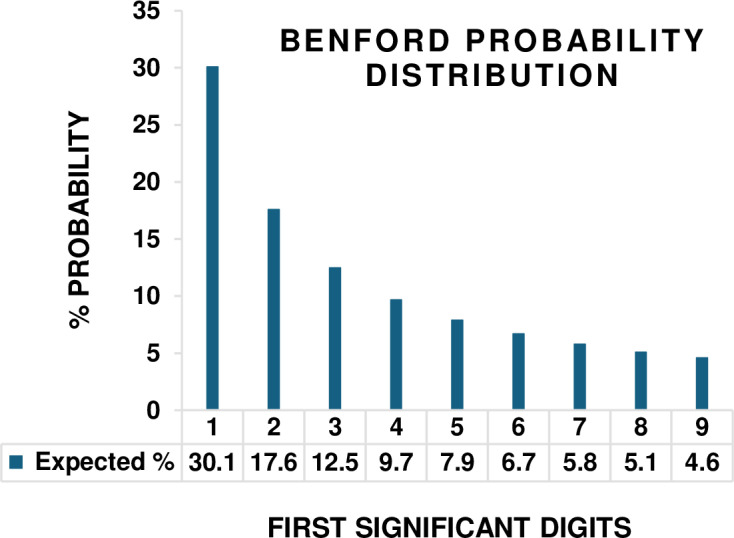 Figure 8
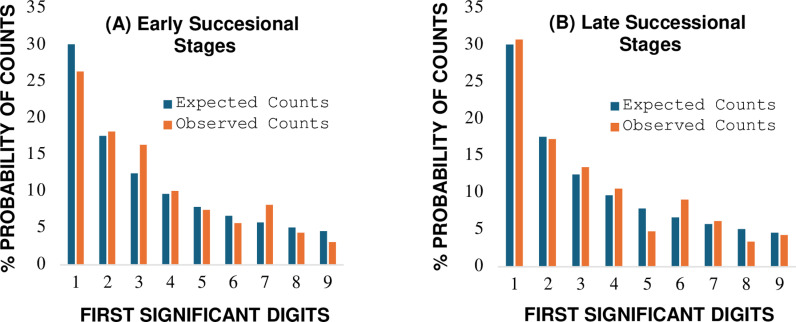 Figure 9
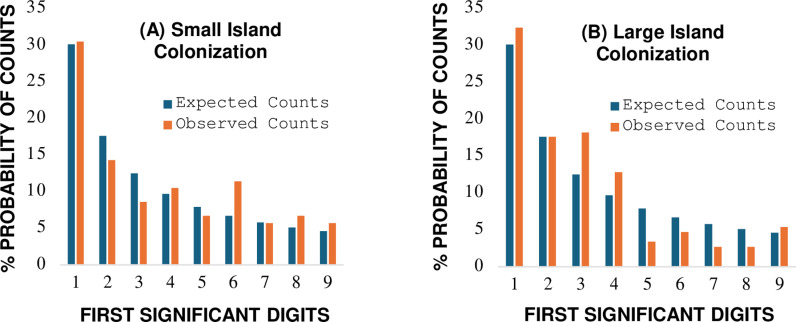 Figure 10
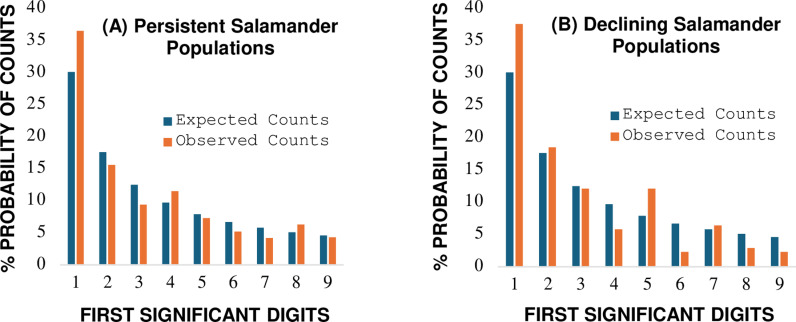 Figure 11
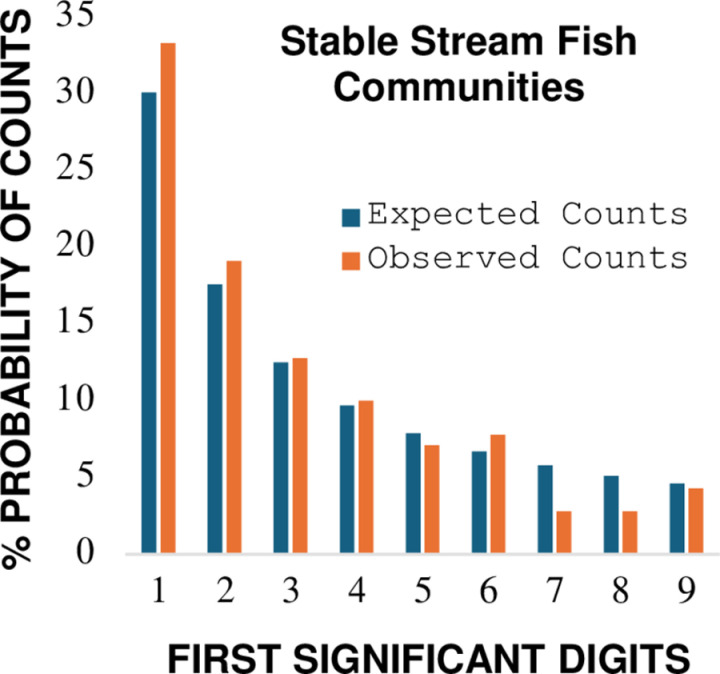 Figure 12
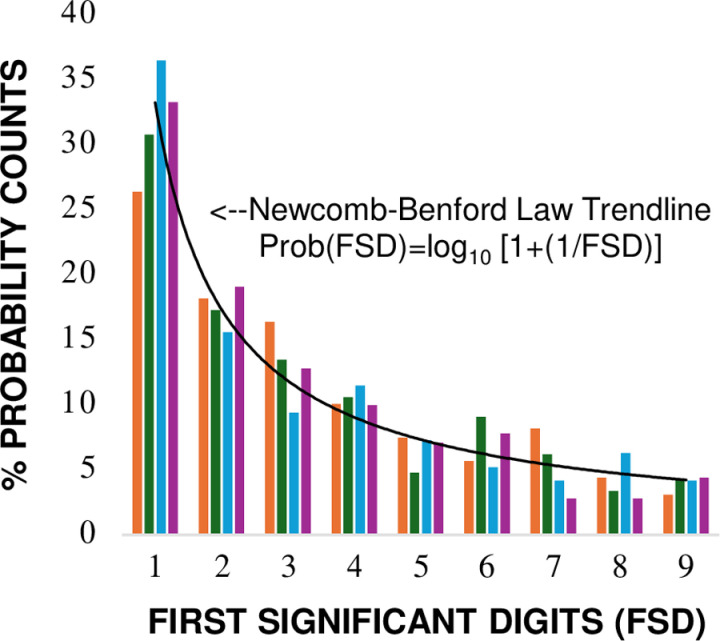 Figure 13
 Figure 14
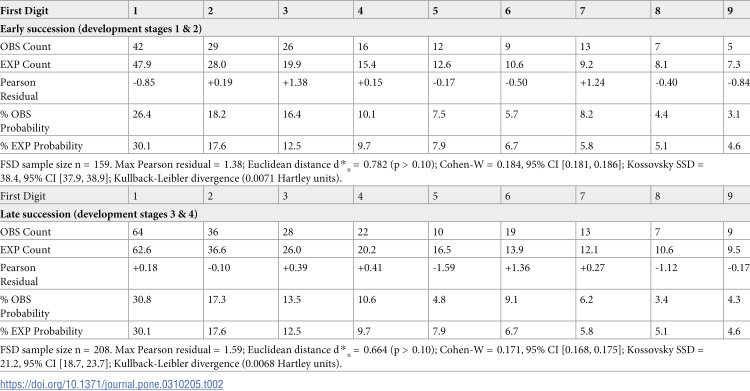 Figure 15
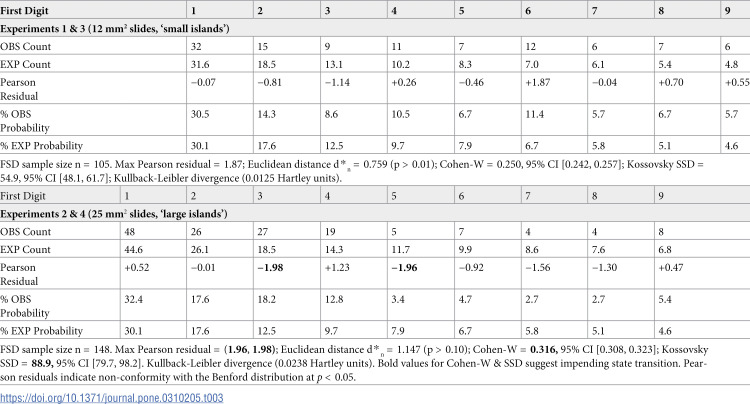 Figure 16
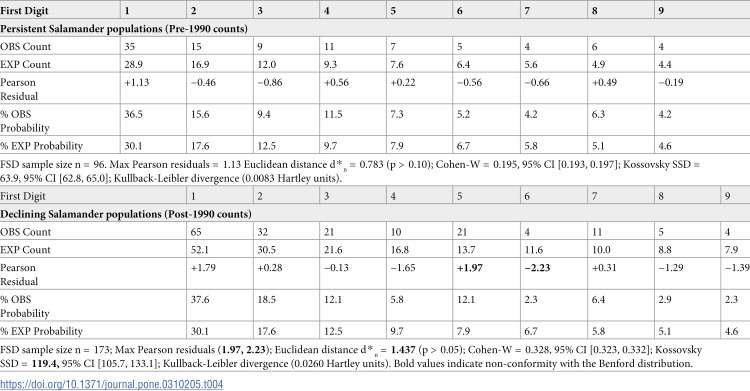 Figure 17
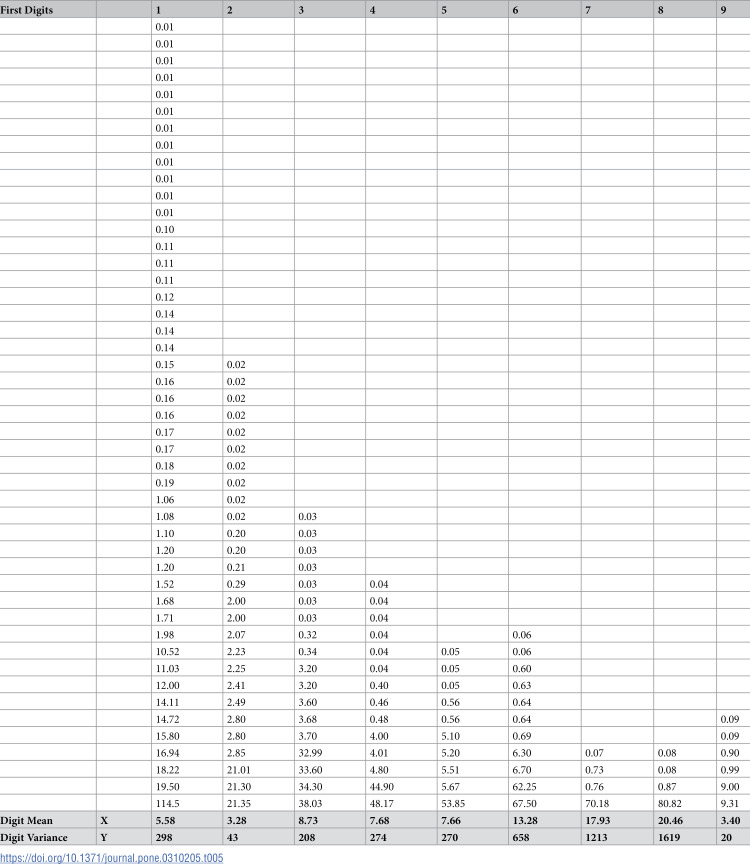 Figure 18
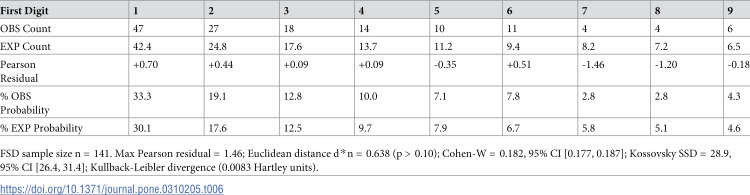 Figure 19
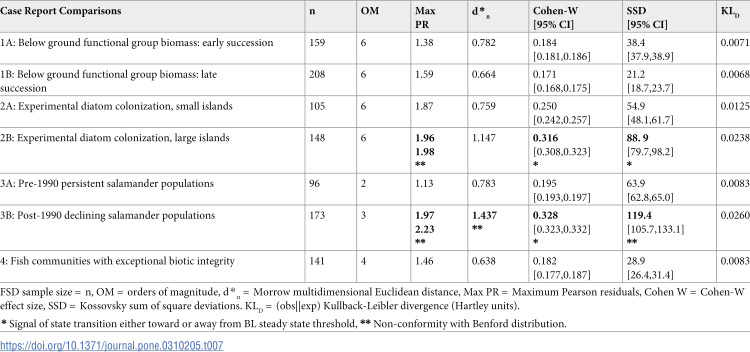 Figure 20
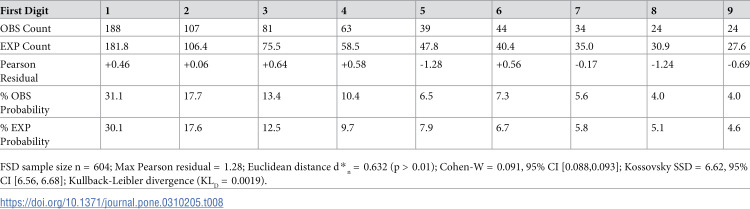 Figure 21
Peer Reviews
No public reviews on file for this paper yet. If you reviewed it on a platform where reviews are public (OpenReview, ICLR, NeurIPS, ICML), you can paste yours below so the community can read it here.
Videos
No videos yet. Explain this paper in a talk, walkthrough, or lecture? Add one.
Taxonomy
TopicsBenford’s Law and Fraud Detection · Complex Systems and Time Series Analysis