Cryo-EM analysis of the Bacillus thuringiensis extrasporal matrix identifies F-ENA as a widespread family of endospore appendages across Firmicutes
Mike Sleutel, Adrià Sogues, Nani Van Gerven, Unni Lise Jonsmoen, Marina Aspholm, Inge Van Molle, Marcus Fislage, Laurent Theunissen, Nathan Bellis, Diana Baquero, Edward Egelman, Mart Krupovic, Jerry Wang, Han Remaut

TL;DR
This paper uses cryo-EM to discover and characterize F-ENA, a new type of protein appendage found on Bacillus thuringiensis spores that may help spores cluster together.
Contribution
The study identifies F-ENA as a novel family of endospore appendages and reveals their structural and functional roles in spore clustering.
Findings
F-ENA are monomolecular protein polymers attached to the exosporium of Bt spores.
F-ENA have a head-neck domain structure and are widespread across Firmicutes.
F-ENA may facilitate spore clustering through interlocking head-neck units.
Abstract
For over 100 years, Bacillus thuringiensis (Bt) has been used as an agricultural biopesticide to control pests caused by insect species in the orders of Lepidoptera, Diptera and Coleoptera. Under nutrient starvation, Bt cells differentiate into spores and associated toxin crystals that can adopt biofilm-like aggregates. We reveal that such Bt spore/toxin biofilms are embedded in a fibrous extrasporal matrix (ESM), and using cryoID, we resolved the structure and molecular identity of an uncharacterized type of pili, referred to here as Fibrillar ENdospore Appendages or ‘F-ENA’. F-ENA are monomolecular protein polymers tethered to the exosporium of Bt and are decorated with a flexible tip fibrillum. Phylogenetic analysis reveals that F-ENA is widespread not only in the class Bacilli, but also in the class Clostridia, and the cryoEM structures of F-ENA filaments from Bacillus, Anaerovorax…
Genes, proteins, chemicals, diseases, species, mutations and cell lines named across the full text — each resolved to its canonical identifier and authoritative record.
Click any figure to enlarge with its caption.
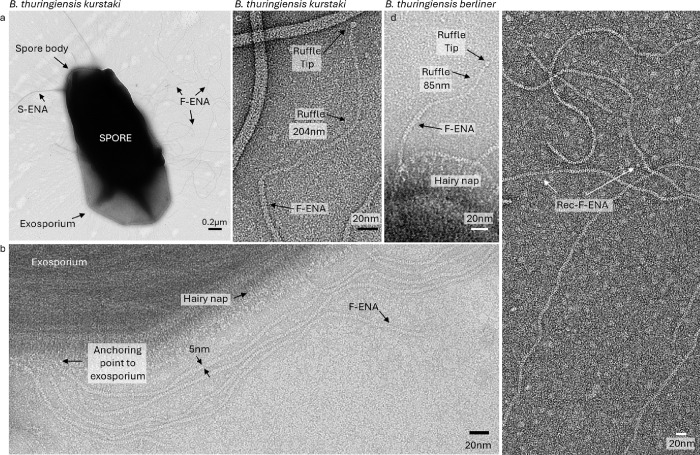 Figure 1
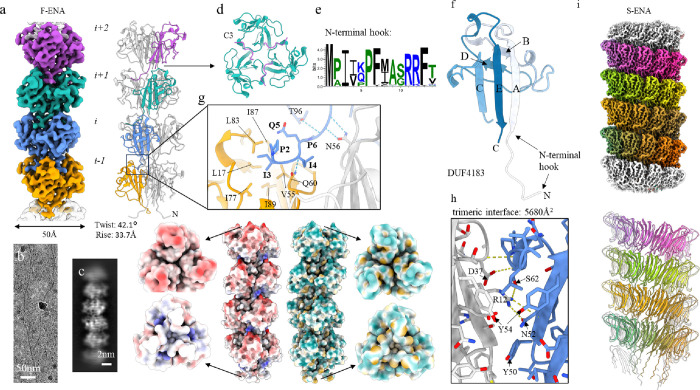 Figure 2
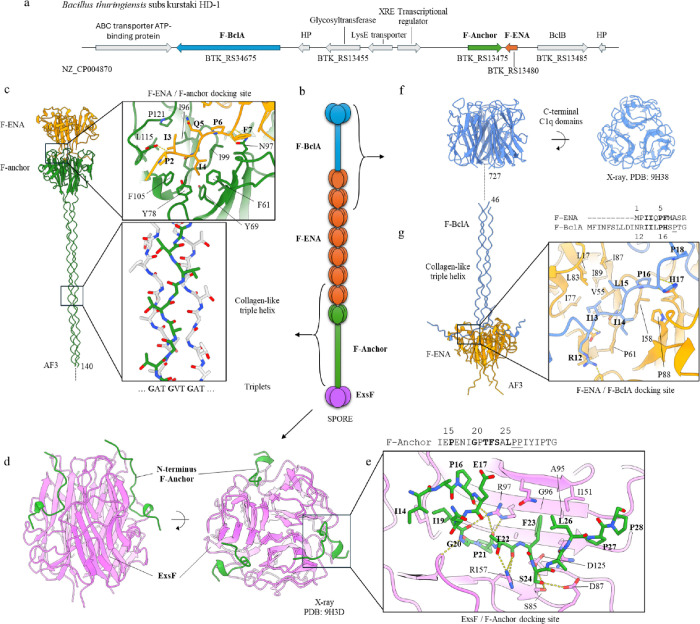 Figure 3
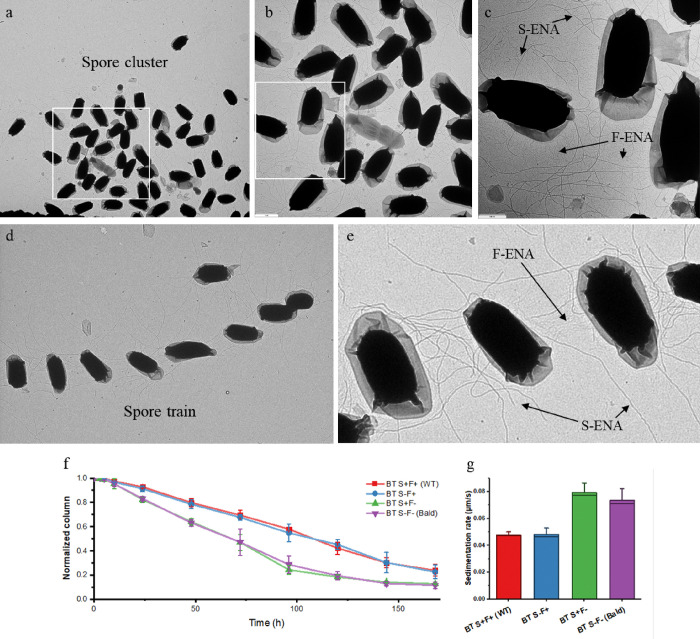 Figure 4
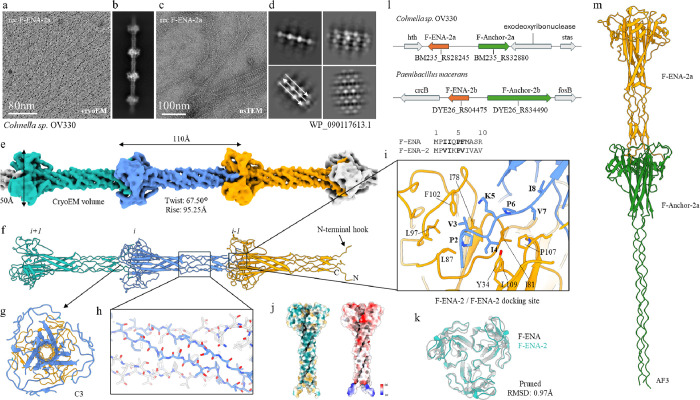 Figure 5
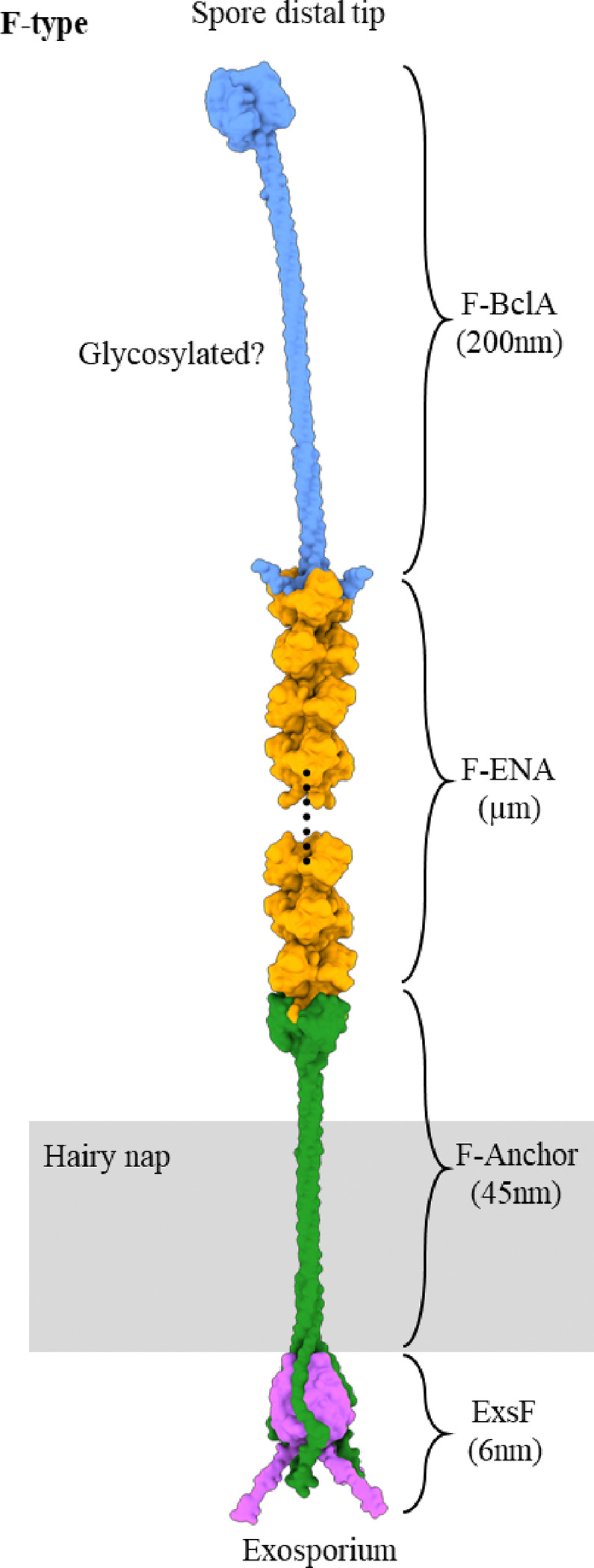 Figure 6
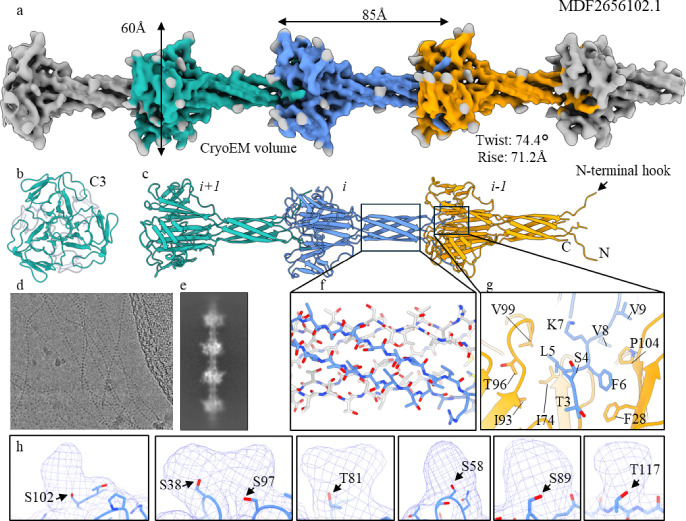 Figure 7
Peer Reviews
No public reviews on file for this paper yet. If you reviewed it on a platform where reviews are public (OpenReview, ICLR, NeurIPS, ICML), you can paste yours below so the community can read it here.
Videos
No videos yet. Explain this paper in a talk, walkthrough, or lecture? Add one.
Taxonomy
TopicsPlant Virus Research Studies · Nematode management and characterization studies · Plant-Microbe Interactions and Immunity