Sex differences in response to violence: Role of salience network expansion and connectivity on depression
Ellyn R. Butler, Noelle Samia, Mandy Mejia, Damon Pham, Adam Pines, Robin Nusslock

TL;DR
This study explores how violence affects depression differently in adolescent males and females, focusing on brain networks related to threat perception.
Contribution
The study identifies sex-specific mechanisms involving the salience network that explain how violence impacts depression during adolescence.
Findings
Females showed a stronger association between violence exposure and depression compared to males.
Males exhibited a positive association between salience network expansion and depression.
Salience network connectivity was linked to higher depression in males, even after controlling for prior depression.
Abstract
Violence is a major risk factor for depression across development. Depression quickly worsens during early adolescence, however, and especially among females, who experience worse depression following threats than males. This may be because they perceive future threats as less controllable. Evidence suggests that features of the salience network may serve as particularly critical mechanisms explaining sex differences on depression in response to threat, as those with depressive disorders have more expansive salience networks than controls, and threatening experiences result in the brain utilizing more tissue for fear generation in rodent models. Using a longitudinal sample of 220 adolescents ages 14–18 from the Chicago area, we test if salience network expansion and connectivity explain the differential impact of violence on depression across the sexes. We found that the association…
Genes, proteins, chemicals, diseases, species, mutations and cell lines named across the full text — each resolved to its canonical identifier and authoritative record.
Click any figure to enlarge with its caption.
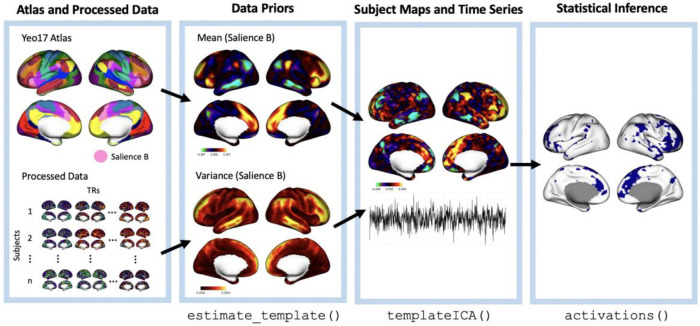 Figure 1
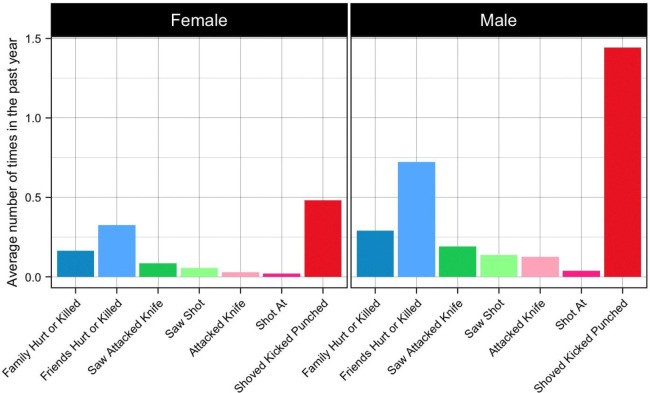 Figure 2
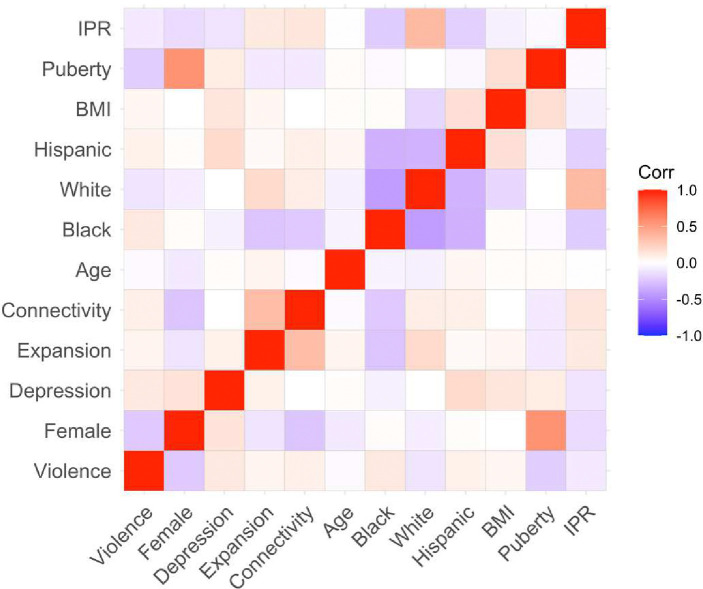 Figure 3
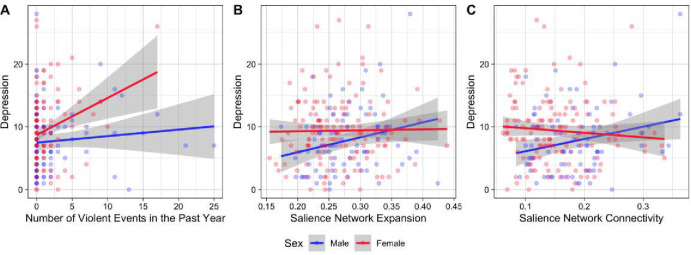 Figure 4
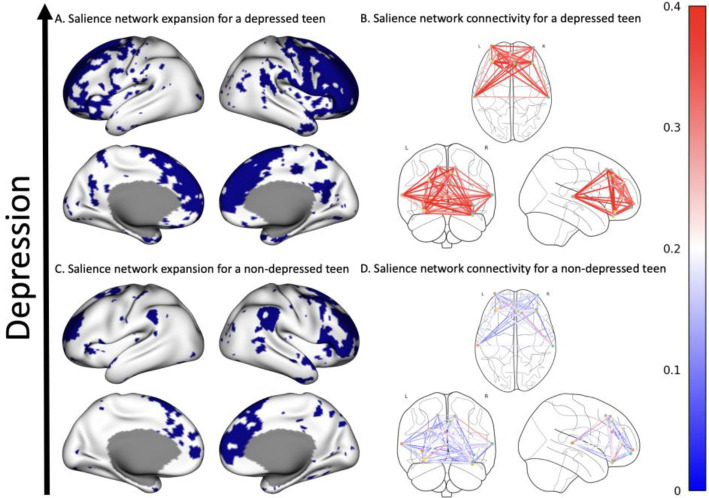 Figure 5
Peer Reviews
No public reviews on file for this paper yet. If you reviewed it on a platform where reviews are public (OpenReview, ICLR, NeurIPS, ICML), you can paste yours below so the community can read it here.
Videos
No videos yet. Explain this paper in a talk, walkthrough, or lecture? Add one.
Taxonomy
TopicsMental Health Research Topics · Attachment and Relationship Dynamics · Behavioral Health and Interventions