A Novel D-peptide modulates DCLK1 Gelsolin interactions, reducing PDAC tumor growth
Landon L. Moore, Dongfeng Qu, Parthasarathy Chandrekesan, Kamille Pitts, Randal May, Byron E. Anderson, Milton Brown, Courtney W. Houchen

TL;DR
A new D-peptide targets a specific part of DCLK1, reducing pancreatic cancer growth without killing cells.
Contribution
A novel D-peptide is developed to modulate DCLK1 isoform 4 interactions, offering a new therapeutic strategy for PDAC.
Findings
D-peptides selectively target DCLK1 isoform 4's extracellular domain, suppressing PDAC cell proliferation.
D-peptides reduce tumor growth in xenograft models by modulating DCLK1 interactions with pro-tumorigenic proteins like plasma gelsolin.
The study highlights non-kinase functions of DCLK1 as a potential therapeutic target in PDAC.
Abstract
What drives inflammation-associated tumorigenesis and progression in pancreatic ductal adenocarcinoma (PDAC)? Doublecortin-like kinase 1 (DCLK1) is a central driver of inflammation-associated tumorigenesis, with elevated expression linked to worse clinical outcomes. Isoform 4, which lacks microtubule-binding domains but contains a unique extracellular domain (ECD), plays a pivotal role in tumor progression. We identified novel D-peptides that selectively target this ECD, significantly suppressing PDAC cell proliferation in vitro and tumor growth in xenograft models without inducing cell death. In silico modeling and binding assays revealed DCLK1 isoform 4 interacts with pro-tumorigenic proteins like plasma gelsolin (pGSN), with D-peptides modulating these interactions. These findings underscore DCLK1’s non-kinase functions as a therapeutic target and highlight novel avenues for…
Genes, proteins, chemicals, diseases, species, mutations and cell lines named across the full text — each resolved to its canonical identifier and authoritative record.
Click any figure to enlarge with its caption.
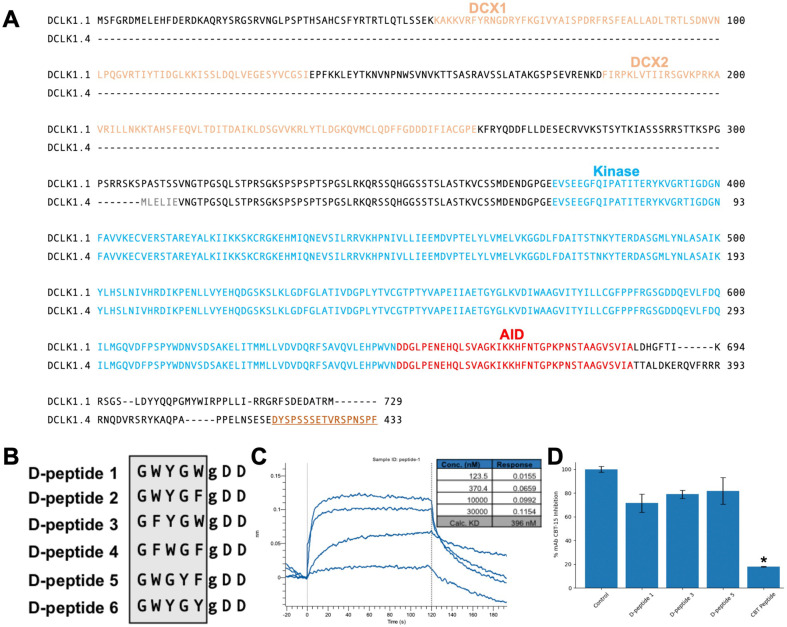 Figure 1
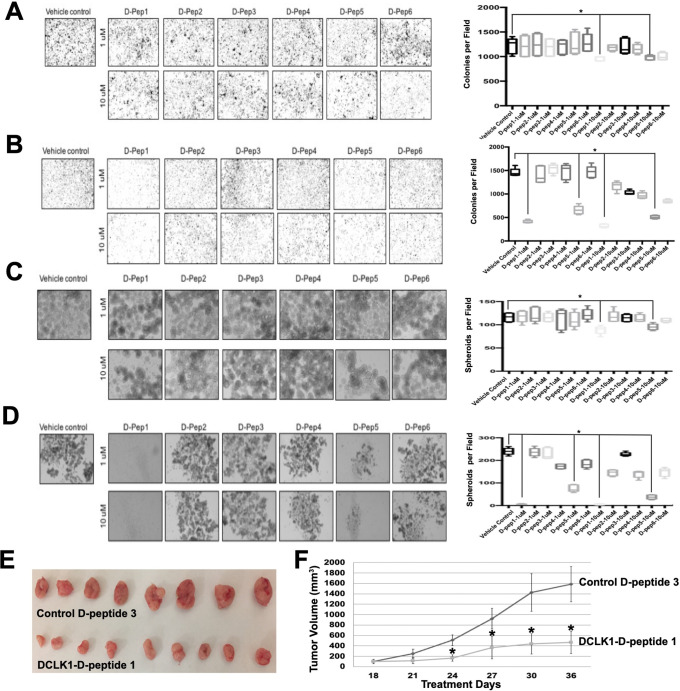 Figure 2
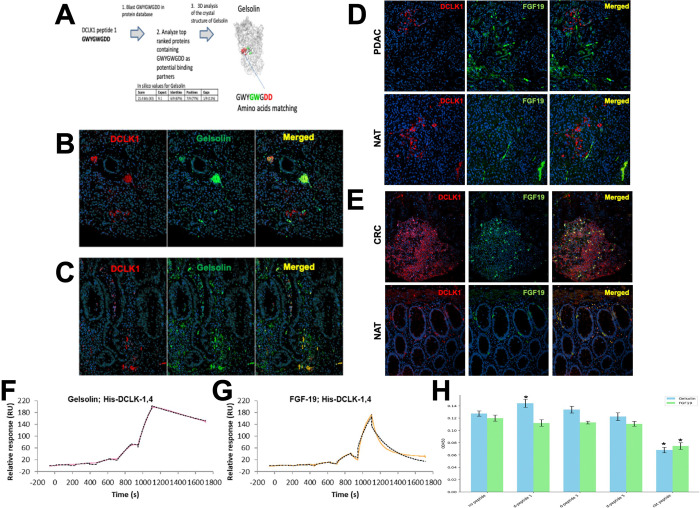 Figure 3
Peer Reviews
No public reviews on file for this paper yet. If you reviewed it on a platform where reviews are public (OpenReview, ICLR, NeurIPS, ICML), you can paste yours below so the community can read it here.
Videos
No videos yet. Explain this paper in a talk, walkthrough, or lecture? Add one.
Taxonomy
TopicsCaveolin-1 and cellular processes · Glycosylation and Glycoproteins Research · Pancreatic and Hepatic Oncology Research