Extraordinary siblings: Mole rats, marmosets, and Radcliffe-Brown
Doug Jones, Pat Barclay, Pat Barclay, Pat Barclay

TL;DR
This paper explores how social norms influence altruism toward siblings, using an evolutionary game to explain human and animal behavior.
Contribution
It introduces the Brothers Karamazov Game to model human-like social norm enforcement in kin selection.
Findings
The game shows how social norms can lead to exceptional treatment of siblings and related kin.
Applications are discussed for understanding social organization in lowland South America.
The model extends kin selection theory to include uniquely human social behaviors.
Abstract
According to the theory of kin selection, an organism that shows some level of altruism toward her kin – lowering her own fitness, raising that of a close genetic relative – may enjoy an evolutionary advantage. Some species show beyond-ordinary altruism toward siblings, and other kin, owing to unusual reproductive biology and/or ecology. Human beings are exceptional in another way: how we treat our kin depends partly on how we feel about them, but also partly on socially enforced norms. This article explores several versions of a simple evolutionary game, the Brothers Karamazov Game, that departs from the standard theory of kin selection to allow for the distinctively human capacity for establishing and enforcing social norms. We discuss possible applications to understanding the “unity of the sibling group” (Radcliffe-Brown) – according exceptional treatment to siblings, and to…
Genes, proteins, chemicals, diseases, species, mutations and cell lines named across the full text — each resolved to its canonical identifier and authoritative record.
Click any figure to enlarge with its caption.
 Figure 1
 Figure 2
 Figure 3
 Figure 4
 Figure 5
 Figure 6
 Figure 7
 Figure 8
 Figure 9
 Figure 10
 Figure 11
 Figure 12
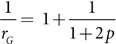 Figure 13
 Figure 14
 Figure 15
 Figure 16
 Figure 17
 Figure 18
 Figure 19
 Figure 20
 Figure 21
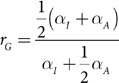 Figure 22
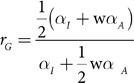 Figure 23
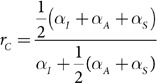 Figure 24
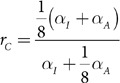 Figure 25
 Figure 26
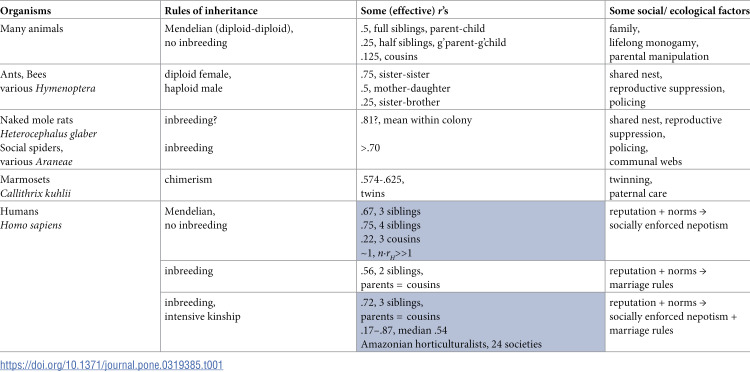 Figure 27
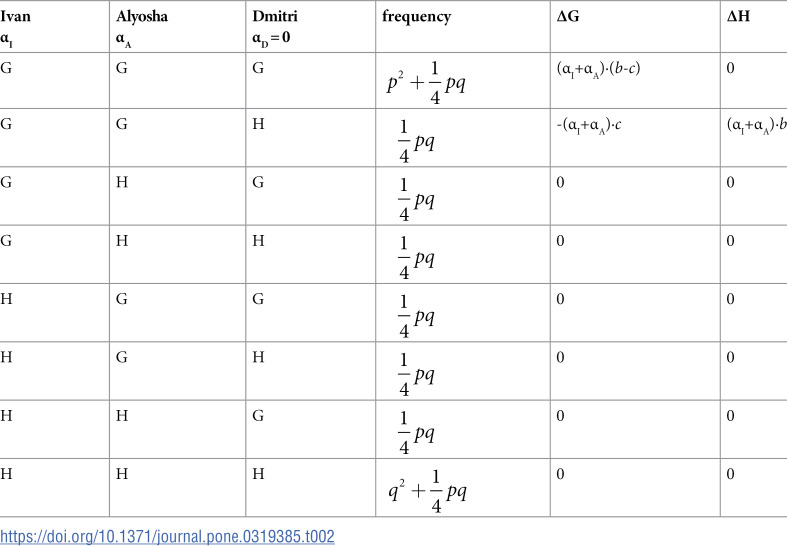 Figure 28
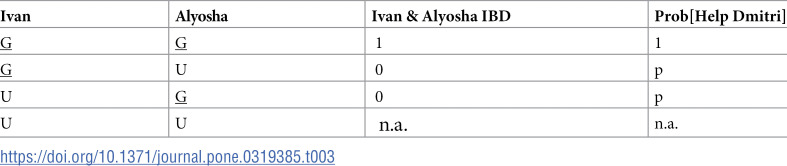 Figure 29
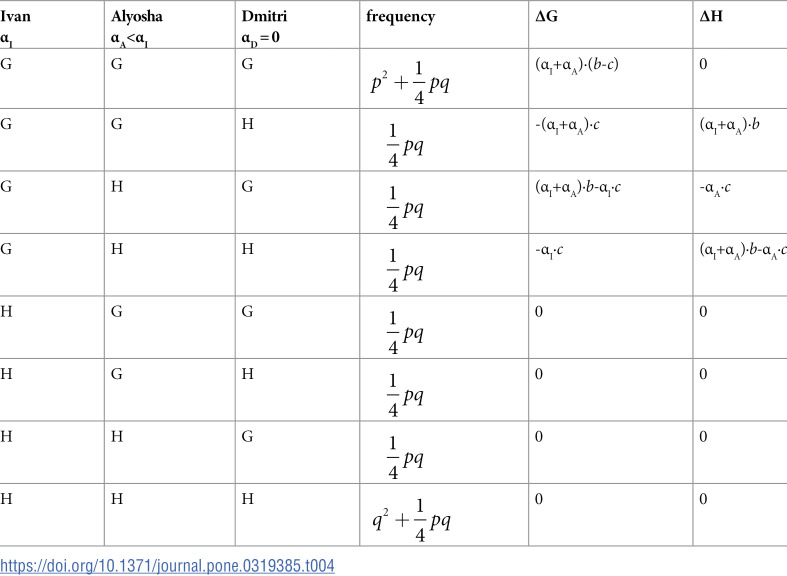 Figure 30
Peer Reviews
No public reviews on file for this paper yet. If you reviewed it on a platform where reviews are public (OpenReview, ICLR, NeurIPS, ICML), you can paste yours below so the community can read it here.
Videos
No videos yet. Explain this paper in a talk, walkthrough, or lecture? Add one.
Taxonomy
TopicsEvolutionary Game Theory and Cooperation · Evolutionary Psychology and Human Behavior · Cultural Differences and Values