Birmingham-group IncP-1α plasmids revisited: RP4, RP1 and RK2 are identical and their remnants can be detected in environmental isolates
Vuong Van Hung Le, Zhuang Gong, Lorrie Maccario, Emma Bousquet, Boris Parra, Arnaud Dechesne, Søren J. Sørensen, Joseph Nesme

TL;DR
This paper confirms that three plasmids, RP1, RP4, and RK2, are identical and finds evidence of their remnants in environmental bacteria, suggesting a possible lab-to-environment leak.
Contribution
The study provides nucleotide-level confirmation that RP1, RP4, and RK2 are identical and identifies a fusion gene and environmental remnants of these plasmids.
Findings
RP1, RP4, and RK2 plasmids are identical at the nucleotide level despite decades of use in different labs.
A fusion gene called pecM-orf2 was identified in the plasmid sequence.
Remnants of the plasmids were found in environmental bacterial isolates, suggesting a possible leak from laboratory settings.
Abstract
RP4, RP1, RK2 and R68 were isolated from the multidrug-resistant bacterial wound isolates in 1969 in the Birmingham Accident Hospital, Birmingham, England, and collectively called Birmingham-group IncP-1α plasmids. These plasmids have been widely used as models to study different aspects of plasmid biology, develop genetic delivery systems and design plasmid vectors. Early studies showed that these plasmids conferred the same antibiotic resistance profile, had a similar size and were undistinguishable from each other using DNA heteroduplex electron microscopy and restriction endonuclease analyses. These observations have led to the widely held assumption that they are identical, although there has been no conclusive supporting evidence. In this work, we sequenced the plasmids RP1 and RP4 from our laboratory strain collection and compared these new sequences with the plasmids RP4 and RK2…
Genes, proteins, chemicals, diseases, species, mutations and cell lines named across the full text — each resolved to its canonical identifier and authoritative record.
Click any figure to enlarge with its caption.
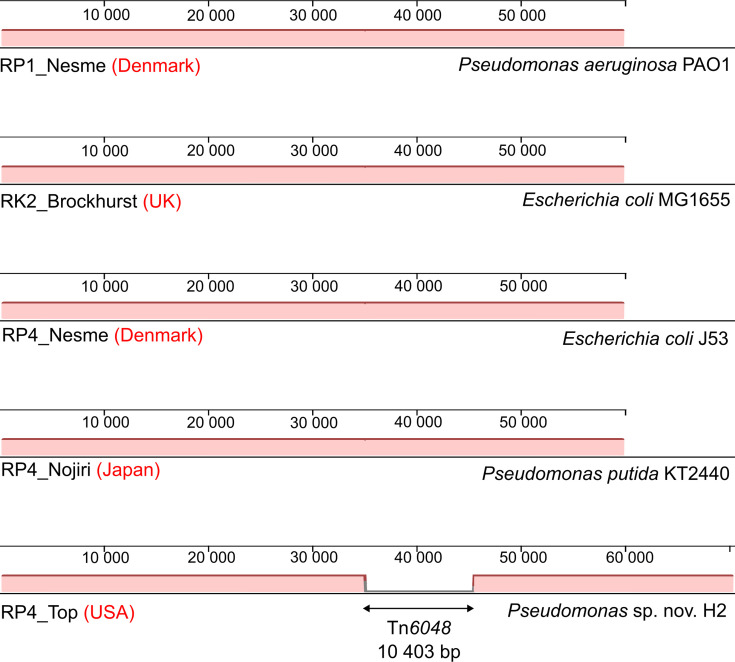 Figure 1
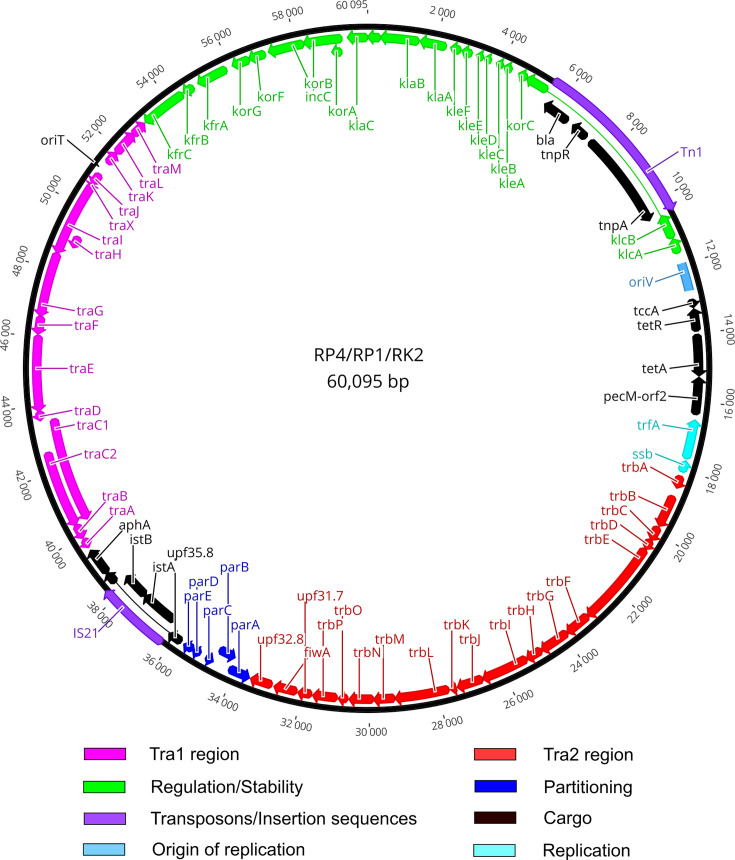 Figure 2
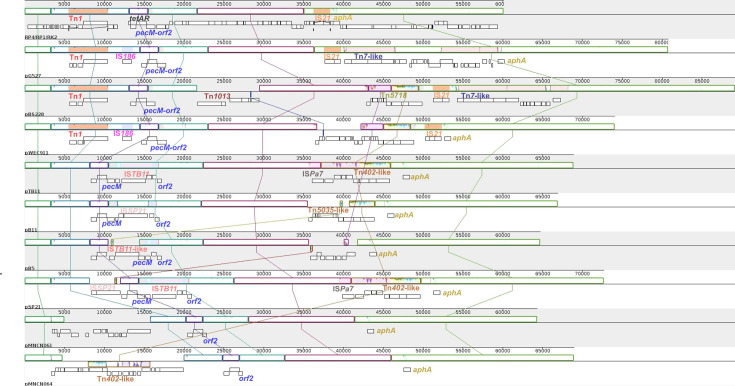 Figure 3
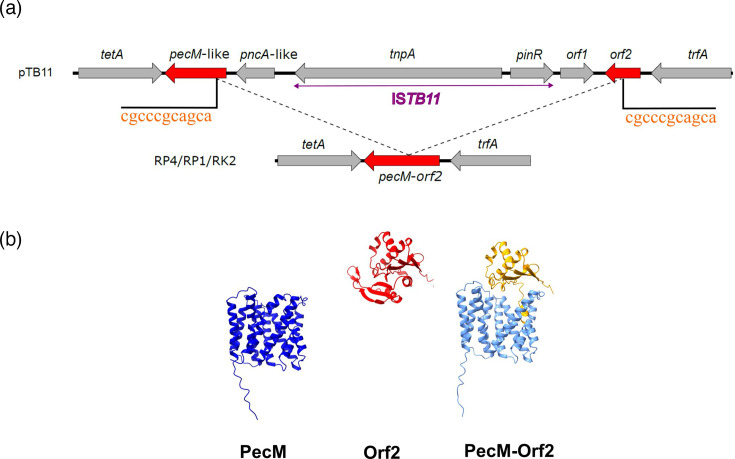 Figure 4
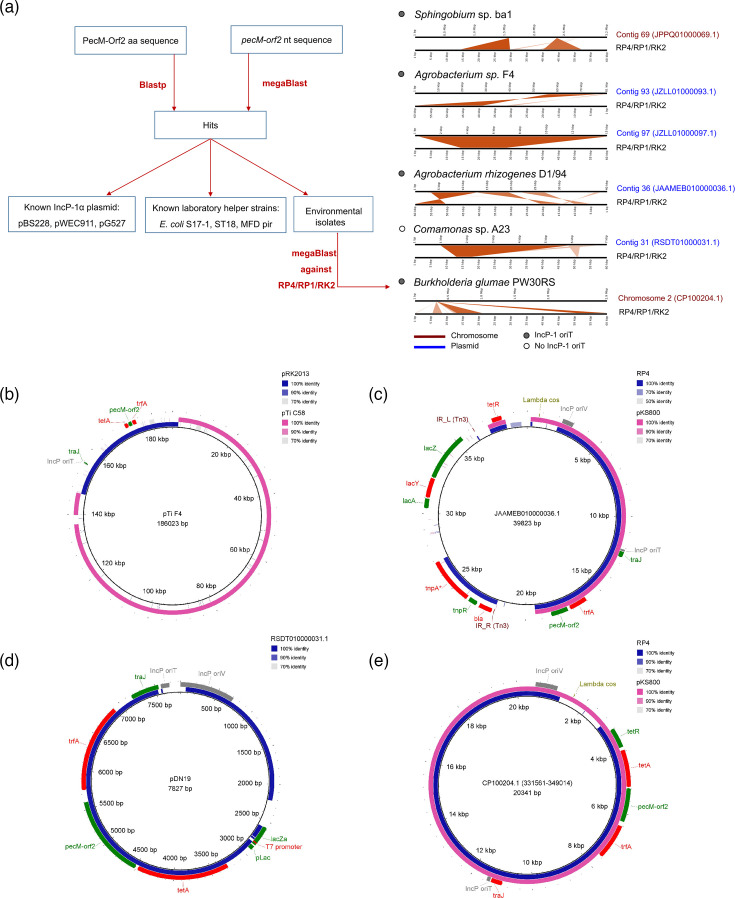 Figure 5
Peer Reviews
No public reviews on file for this paper yet. If you reviewed it on a platform where reviews are public (OpenReview, ICLR, NeurIPS, ICML), you can paste yours below so the community can read it here.
Videos
No videos yet. Explain this paper in a talk, walkthrough, or lecture? Add one.
Taxonomy
TopicsGenomics and Phylogenetic Studies · Infections and bacterial resistance · Microbial Community Ecology and Physiology