Association between timing of exanthema subitum and febrile seizures: The Japan environment and children’s study
Hisao Okabe, Koichi Hashimoto, Mika Yamada, Takashi Ono, Kazufumi Yaginuma, Yohei Kume, Mina Chishiki, Akiko Sato, Yuka Ogata, Karin Imaizumi, Tsuyoshi Murata, Hyo Kyozuka, Yuichi Nagasaka, Seiji Yasumura, Hidekazu Nishigori, Keiya Fujimori, Mitsuaki Hosoya, Hayato Go

TL;DR
This study found that delayed episodes of exanthema subitum in Japanese children are linked to a higher risk of febrile seizures.
Contribution
The study identifies a novel association between the timing of exanthema subitum and increased febrile seizure risk in children.
Findings
Late exanthema subitum increases the risk of febrile seizures until age 24 months (adjusted odds ratio 1.46).
Late exanthema subitum also increases the risk of febrile seizures until age 48 months (adjusted odds ratio 1.26).
Late exanthema subitum increases the risk of simultaneous febrile seizures with the condition (adjusted odds ratio 4.39).
Abstract
Recently, episodes of exanthema subitum (ES) have been occurring later than expected in Japanese patients, though the effects of this delayed timing remain unclear. Therefore, this study examined the association between ES timing and febrile seizure (FS) in Japanese children. Information on the diagnoses of ES and FS was obtained from the Japan Environment and Children’s Study, a nationwide prospective birth cohort study including 97,410 mothers and their children. Two groups were created: early ES (first ES episode between birth and 11 months of age) and late ES (first ES episode between 12 and 23 months of age) groups. Multivariate logistic regression analyses were performed to compare the cumulative incidence rate of FS between the groups. Moreover, because a single episode of fever implies that the ES and FS occurred simultaneously, we examined the association between the ES timing…
Genes, proteins, chemicals, diseases, species, mutations and cell lines named across the full text — each resolved to its canonical identifier and authoritative record.
Click any figure to enlarge with its caption.
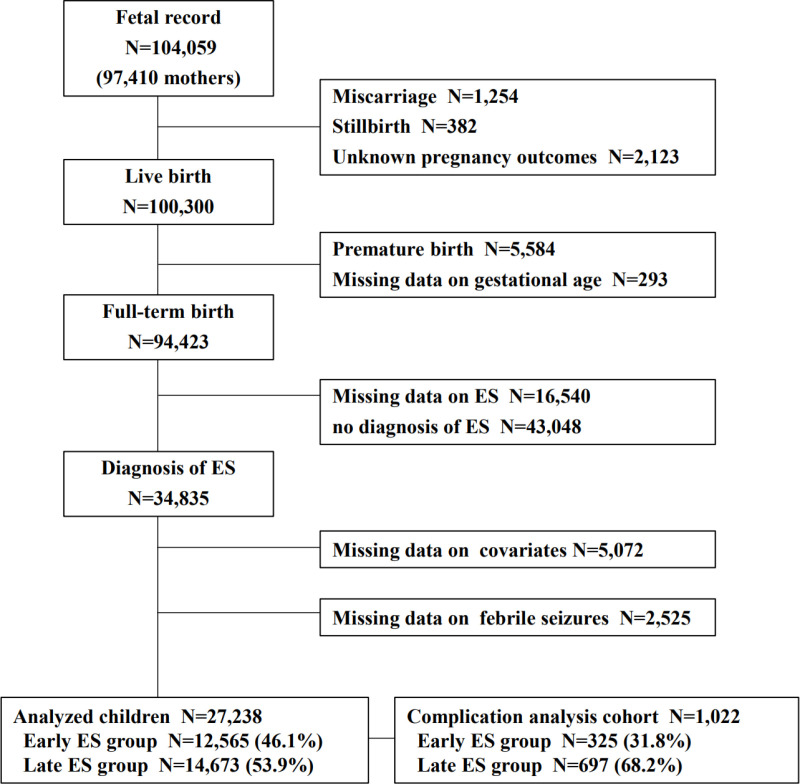 Figure 1
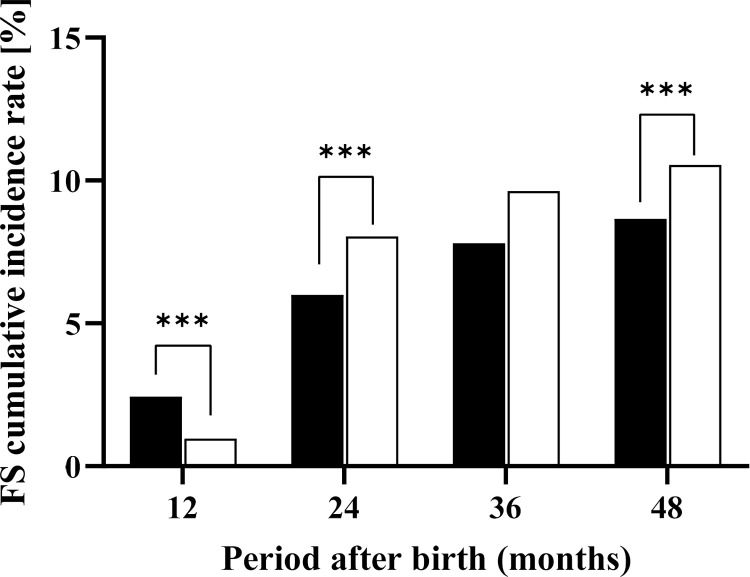 Figure 2
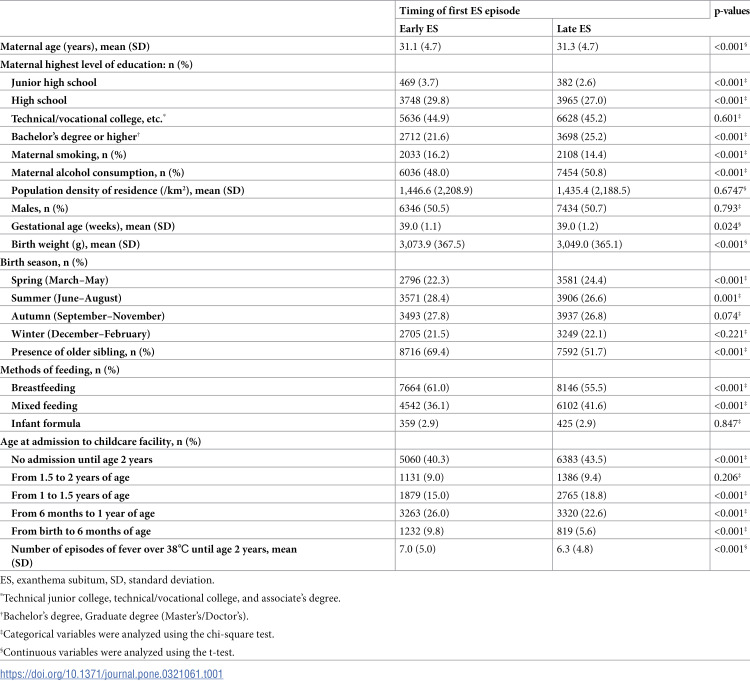 Figure 3
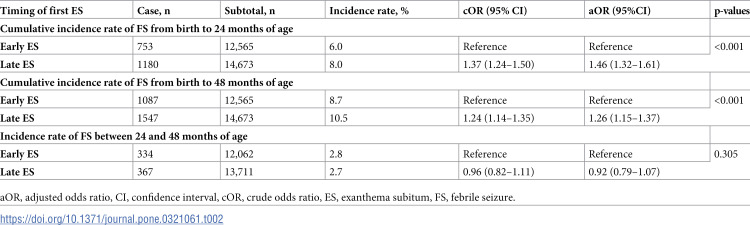 Figure 4
 Figure 5
Peer Reviews
No public reviews on file for this paper yet. If you reviewed it on a platform where reviews are public (OpenReview, ICLR, NeurIPS, ICML), you can paste yours below so the community can read it here.
Videos
No videos yet. Explain this paper in a talk, walkthrough, or lecture? Add one.
Taxonomy
TopicsInfectious Encephalopathies and Encephalitis · Cytomegalovirus and herpesvirus research · Mosquito-borne diseases and control