Trigger Finger Caused by a Solitary Osteochondroma of the Proximal Phalanx in an Adolescent: A Case Report
Hirotaka Kurata, Michiyuki Hakozaki, Shinichirou Yoshida, Jun Iwatsu, Toshitake Aizawa

TL;DR
A 16-year-old boy had trigger finger caused by a rare bone tumor, requiring surgery different from typical treatments.
Contribution
Reports a rare case of trigger finger caused by a solitary osteochondroma in an adolescent.
Findings
Trigger finger in the patient was caused by a solitary osteochondroma at the proximal phalanx.
Surgical excision was required, differing from standard treatments for common causes.
Tumorous lesions are rare but important to consider in trigger finger differential diagnosis.
Abstract
Trigger finger is a common disease, and stenosing tenosynovitis is the most frequent cause of this condition in middle-aged women. We report a case of surgical excision in a 16-year-old adolescent male with trigger finger symptoms caused by a solitary osteochondroma at the proximal end of the proximal phalanx. Although tumorous lesions are a rare cause of trigger finger, a differential diagnosis is necessary because the treatment strategy and surgical technique employed to treat this condition differ from those employed for common causes, such as stenosing tenosynovitis and pediatric trigger thumb.
Genes, proteins, chemicals, diseases, species, mutations and cell lines named across the full text — each resolved to its canonical identifier and authoritative record.
Click any figure to enlarge with its caption.
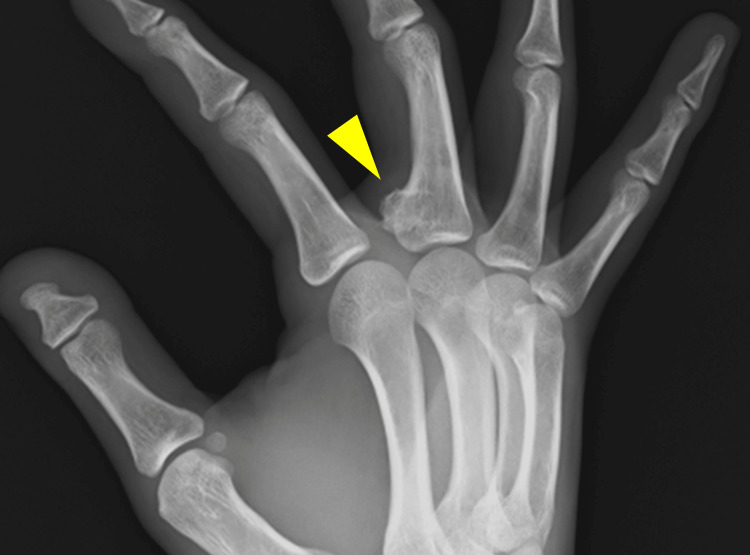 Figure 1
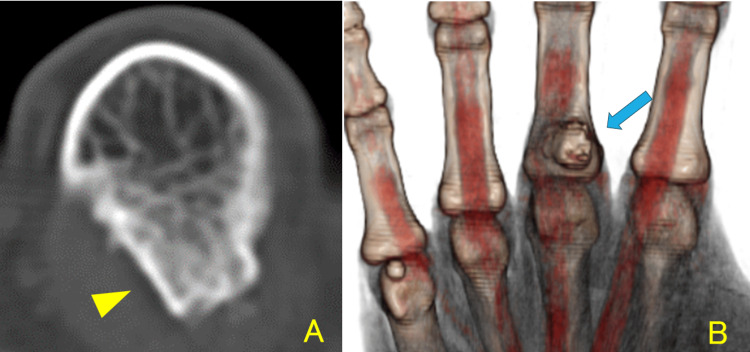 Figure 2
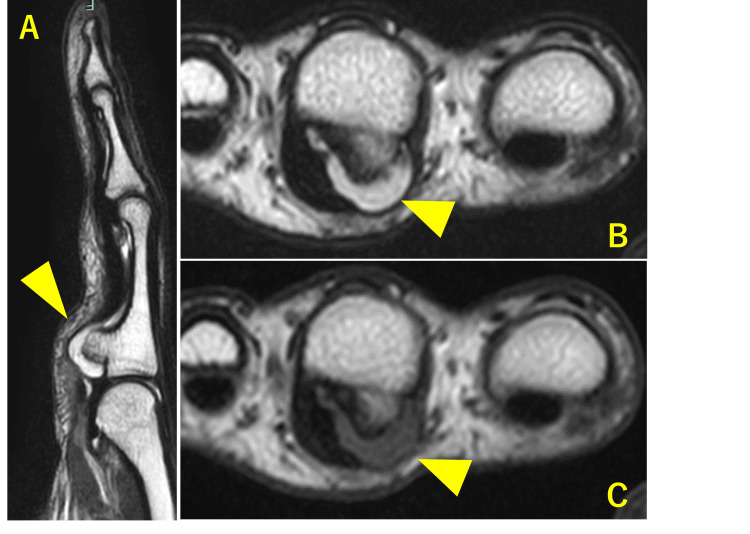 Figure 3
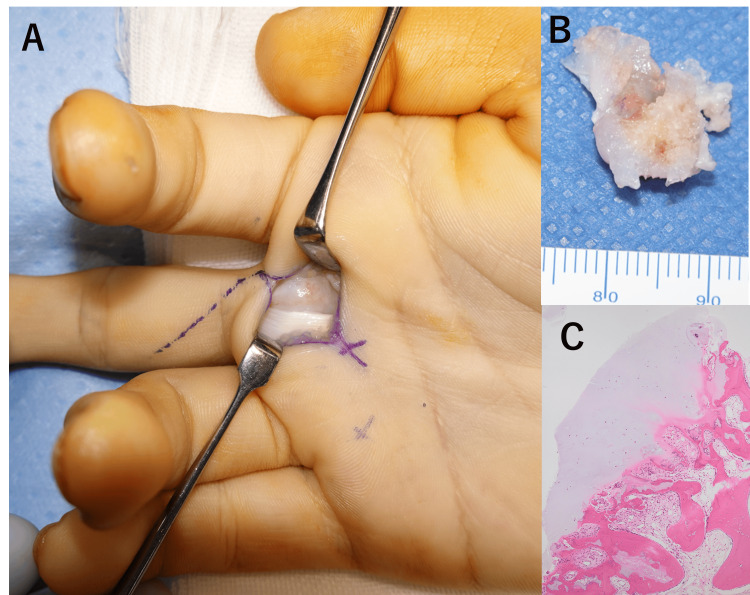 Figure 4
Peer Reviews
No public reviews on file for this paper yet. If you reviewed it on a platform where reviews are public (OpenReview, ICLR, NeurIPS, ICML), you can paste yours below so the community can read it here.
Videos
No videos yet. Explain this paper in a talk, walkthrough, or lecture? Add one.
Taxonomy
TopicsBone Tumor Diagnosis and Treatments · Musculoskeletal synovial abnormalities and treatments · Sarcoma Diagnosis and Treatment