Evaluation of Transcutaneous Non-Invasive Blood Gas Analysis for Monitoring Gas Exchange in Pediatric Cardiac Surgical Patients Post Extubation
Gaurav Pandey, Salman Pervaiz Butt, Arshad Ghori, Naveen G Singh

TL;DR
This study evaluates non-invasive transcutaneous blood gas monitoring in young children after heart surgery, finding it reliable for carbon dioxide but not oxygen levels.
Contribution
The study demonstrates that transcutaneous CO2 monitoring can reliably replace arterial measurements in post-cardiac surgery pediatric patients.
Findings
Transcutaneous CO2 (TcPCO2) strongly correlates with arterial CO2 (PaCO2) with an r-value of 0.95.
Transcutaneous O2 (TcPO2) shows moderate correlation with arterial O2 (PaO2) with an r-value of 0.8942.
Bland-Altman analysis indicates TcPCO2 is interchangeable with PaCO2 but TcPO2 has wider limits of agreement.
Abstract
Pediatric cardiac surgery patients need close post-extubation monitoring for ventilation. Non-invasive transcutaneous partial pressure of oxygen (TcPO2) and transcutaneous partial pressure of carbon dioxide (TcPCO2) offer continuous insights and in improving care. To investigate the correlation of transcutaneous blood gases (TcPO2, TcPCO2) with arterial blood gases i.e. arterial partial pressure of oxygen (PaO2) and arterial partial pressure of carbon dioxide (PaCO2). We conducted a study on 30 pediatric post-cardiac surgery patients (four months to three years old) who were extubated and exhibited stable hemodynamics (inotropic score ≤ 5), normal sinus rhythm, and no respiratory or heart failure signs. Continuous transcutaneous and intermittent arterial blood gas monitoring started one hour after extubation, with recordings every 30 minutes for four hours. A single observer conducted…
Genes, proteins, chemicals, diseases, species, mutations and cell lines named across the full text — each resolved to its canonical identifier and authoritative record.
Click any figure to enlarge with its caption.
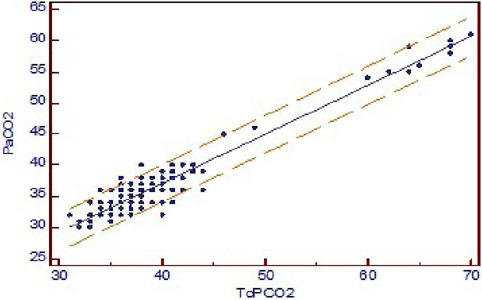 Figure 1
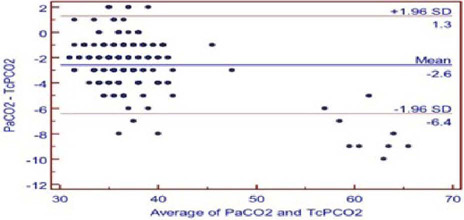 Figure 2
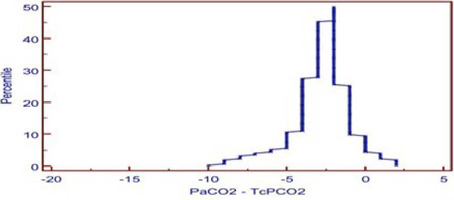 Figure 3
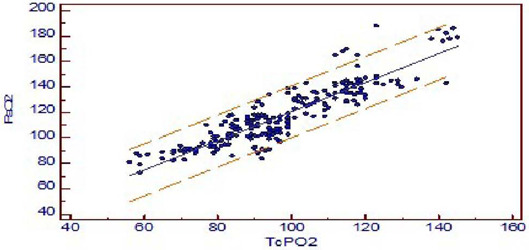 Figure 4
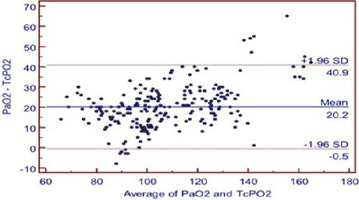 Figure 5
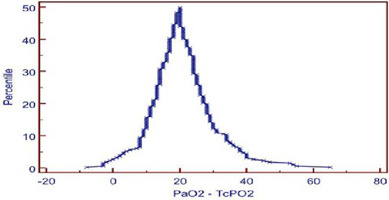 Figure 6
Peer Reviews
No public reviews on file for this paper yet. If you reviewed it on a platform where reviews are public (OpenReview, ICLR, NeurIPS, ICML), you can paste yours below so the community can read it here.
Videos
No videos yet. Explain this paper in a talk, walkthrough, or lecture? Add one.
Taxonomy
TopicsHemodynamic Monitoring and Therapy · Respiratory Support and Mechanisms · Cardiac Arrest and Resuscitation