Structure and properties of tubular structures based on the quaternary misfit layered compound Sm1−xYxS–TaS2
Simon Hettler, Mohammad Furqan, M. B. Sreedhara, Azat Khadiev, Reshef Tenne, Raul Arenal

TL;DR
Researchers synthesized and studied tubular structures of a quaternary misfit layered compound, revealing how alloying affects its structure and properties.
Contribution
The study introduces quaternary MLCs Sm1−xYxS–TaS2 and demonstrates their tunable structural properties through alloying.
Findings
Quaternary MLCs retain the structure of pristine SmS–TaS2 despite alloying.
Anisotropic lattice parameter changes up to 2.7% were observed.
A specific composition leads to a 3:5 ratio of lattice parameters, potentially enabling a commensurate superstructure.
Abstract
Misfit layered compounds (MLCs) are incommensurate super-lattices made up of two repeating subunits and are promising for different applications due to the possibility of a synergetic combination of the properties of the employed sublayers. A means of fine-tuning a specific MLC is to alloy one of the elements in the system. In this study, quaternary MLCs made of Sm1−xYxS–TaS2 were successfully synthesized and the resulting structures were characterized in detail, with a specific focus on tubular structures. Owing to the small difference between the ionic radii of Sm and Y, the structure of the quaternary MLCs follows the one of pristine SmS–TaS2, irrespective of the degree of alloying and with an anisotropic change of the lattice parameters up to a maximum of 2.7%. Nevertheless, microscopy, spectroscopy, and diffraction techniques allow us to reveal the impact of the composition on…
Genes, proteins, chemicals, diseases, species, mutations and cell lines named across the full text — each resolved to its canonical identifier and authoritative record.
Click any figure to enlarge with its caption.
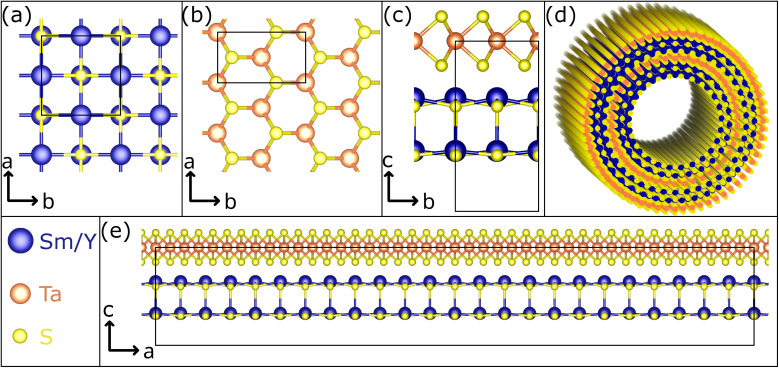 Figure 1
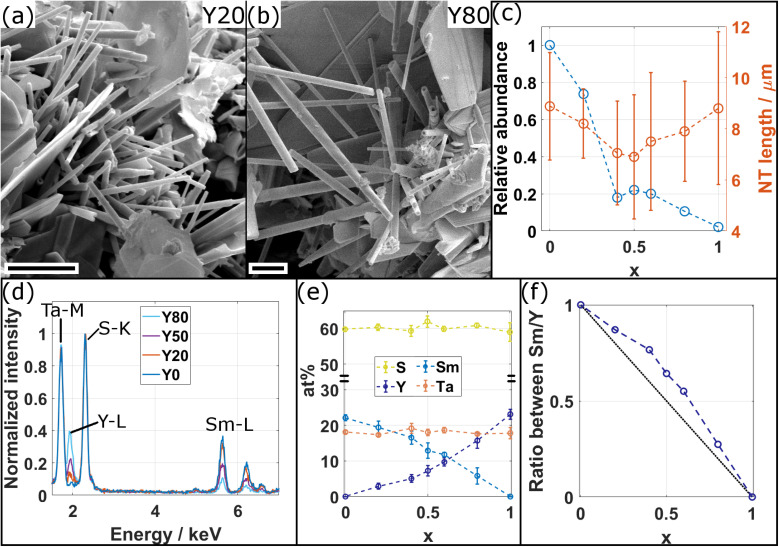 Figure 2
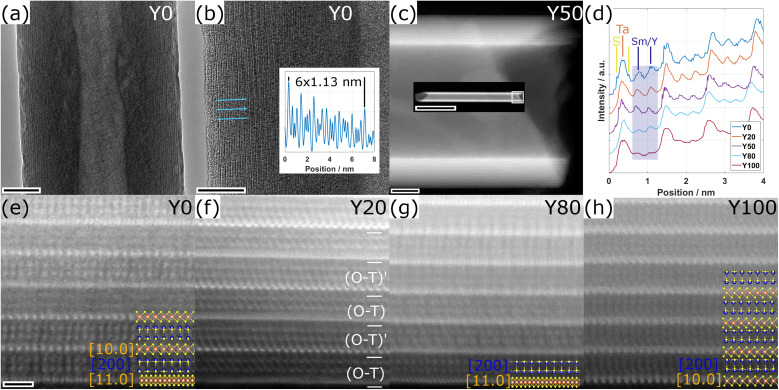 Figure 3
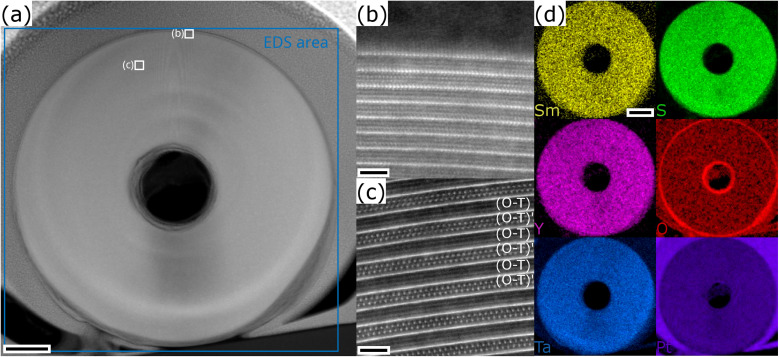 Figure 4
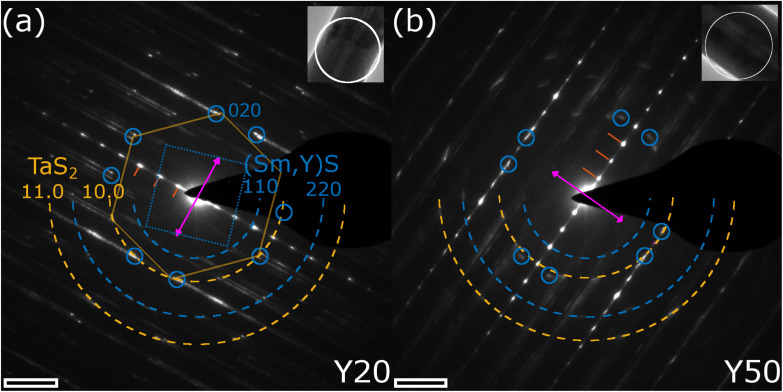 Figure 5
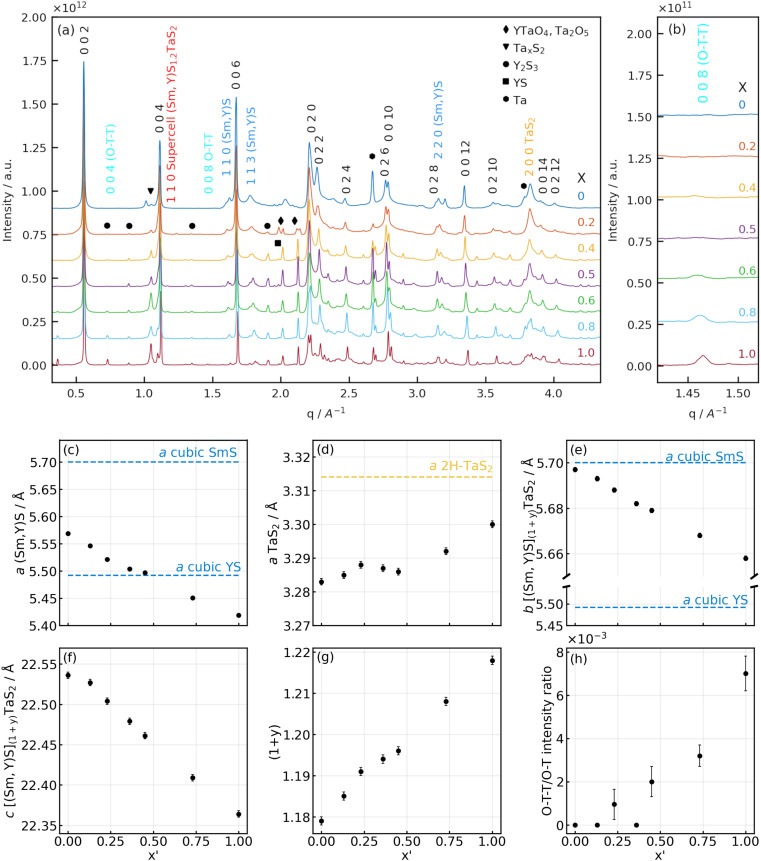 Figure 6
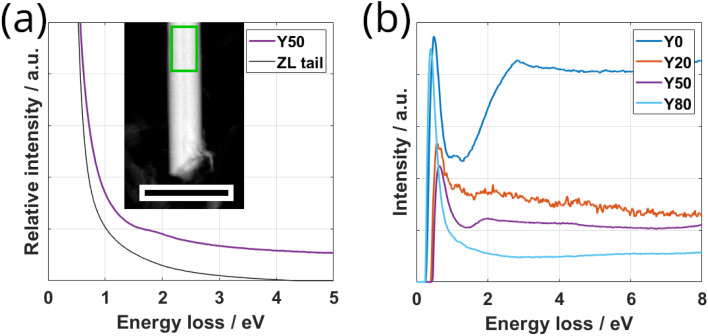 Figure 7
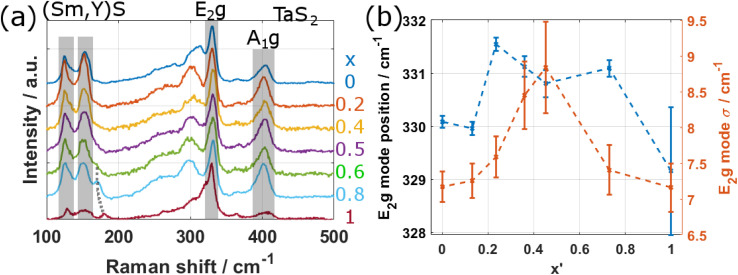 Figure 8
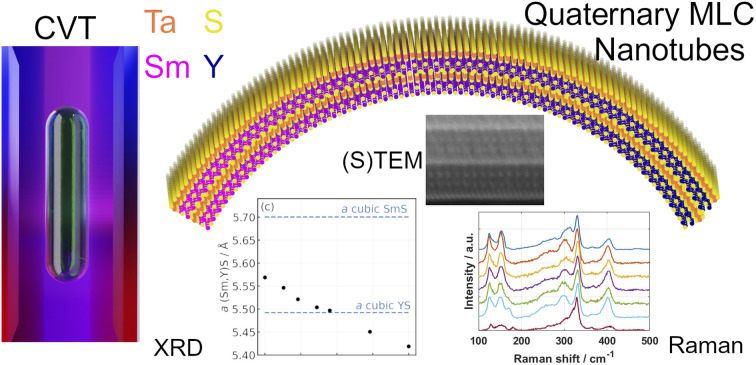 Figure 9
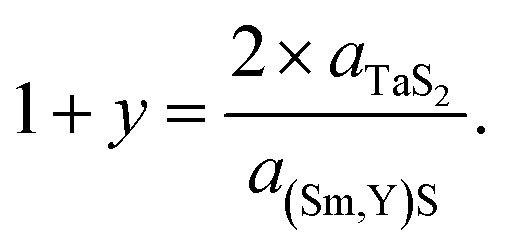 Figure 10
Peer Reviews
No public reviews on file for this paper yet. If you reviewed it on a platform where reviews are public (OpenReview, ICLR, NeurIPS, ICML), you can paste yours below so the community can read it here.
Videos
No videos yet. Explain this paper in a talk, walkthrough, or lecture? Add one.
Taxonomy
TopicsIron-based superconductors research · 2D Materials and Applications · Chalcogenide Semiconductor Thin Films