Construction and validation of a machine learning-based nomogram model for predicting pneumonia risk in patients with catatonia: a retrospective observational study
Yi-chao Wang, Qian He, Yue-jing Wu, Li Zhang, Sha Wu, Xiao-jia Fang, Shao-shen Jia, Fu-gang Luo

TL;DR
A machine learning model was developed to predict pneumonia risk in hospitalized catatonia patients based on pre-admission factors.
Contribution
A novel nomogram model using machine learning was created to predict pneumonia risk in catatonia patients based on pre-admission features.
Findings
The Gradient Boosting Machine model achieved the highest AUC of 0.954 for predicting pneumonia risk.
Five key variables (Age, Clozapine, Diaphoresis, Intake Refusal, and Waxy Flexibility) were identified as significant predictors.
The nomogram model showed good discrimination and calibration with an AUC of 0.803 in validation.
Abstract
Catatonia was often complicated by pneumonia, and the development of severe pneumonia after admission posed significant challenges to its treatment. This study aimed to develop a Nomogram Model based on pre-admission characteristics of patients with catatonia to predict the risk of pneumonia after admission. This retrospective observational study reviewed catatonia patients hospitalized at Hangzhou Seventh People’s Hospital from September 2019 to November 2024. Data included demographic characteristics, medical history, maintenance medications, and pre-admission clinical presentations. Patients were divided into catatonia with and without pneumonia groups. The LASSO Algorithm was used for feature selection, and seven machine learning models: Decision Tree(DT), Logistic Regression(LR), Naive Bayes(NB), Random Forest(RF), K Nearest Neighbors(KNN), Gradient Boosting Machine(GBM), Support…
Genes, proteins, chemicals, diseases, species, mutations and cell lines named across the full text — each resolved to its canonical identifier and authoritative record.
Click any figure to enlarge with its caption.
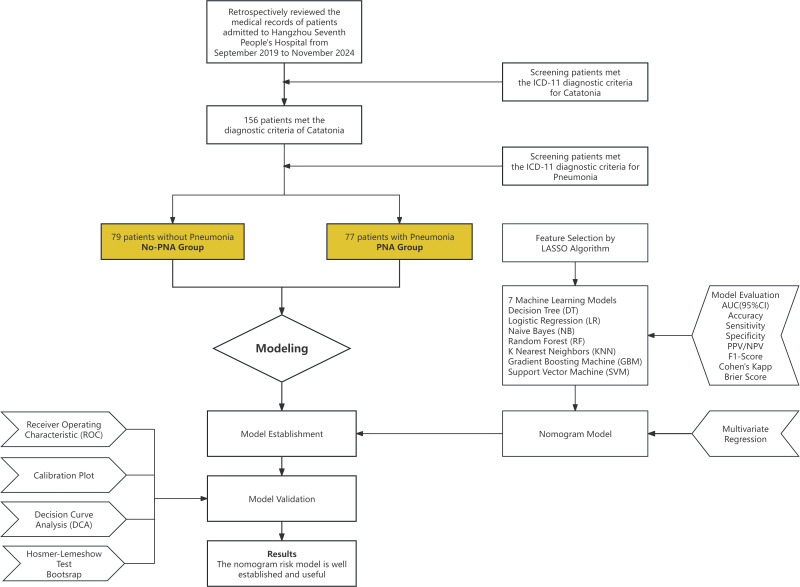 Figure 1
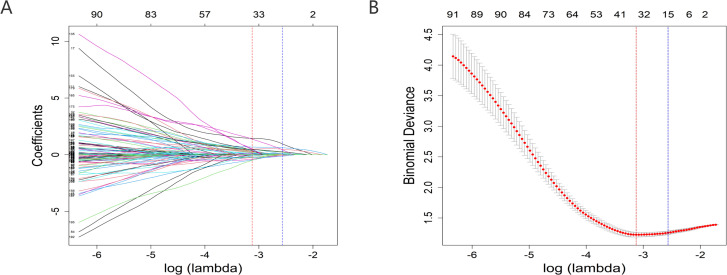 Figure 2
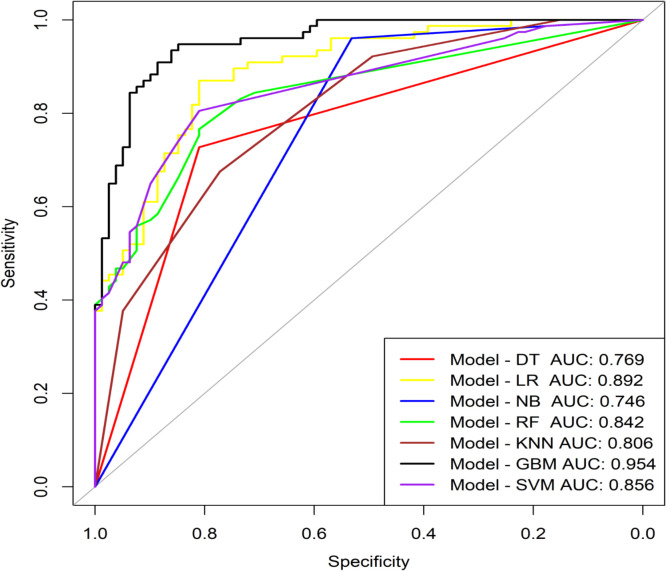 Figure 3
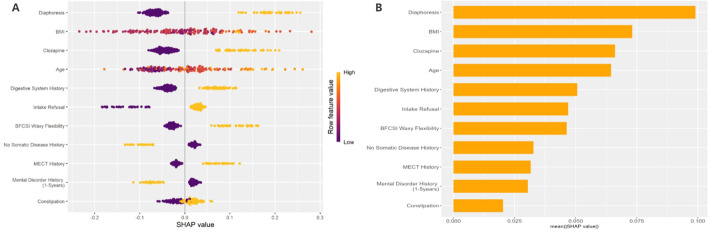 Figure 4
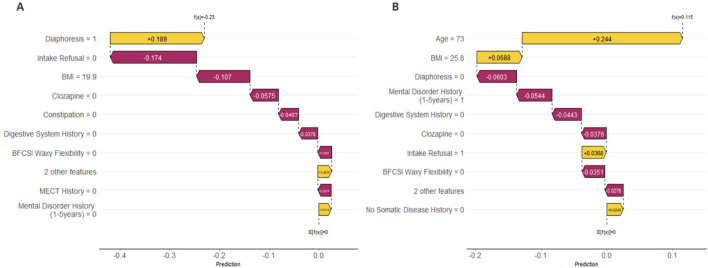 Figure 5
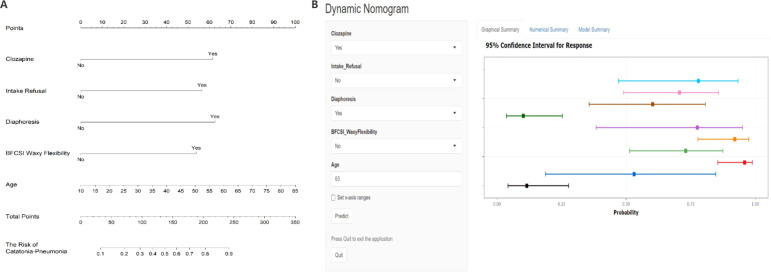 Figure 6
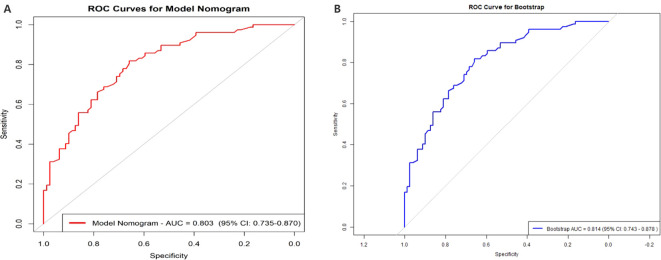 Figure 7
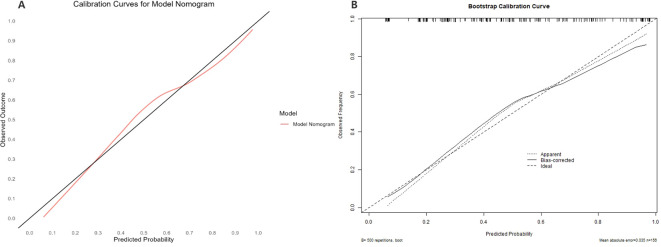 Figure 8
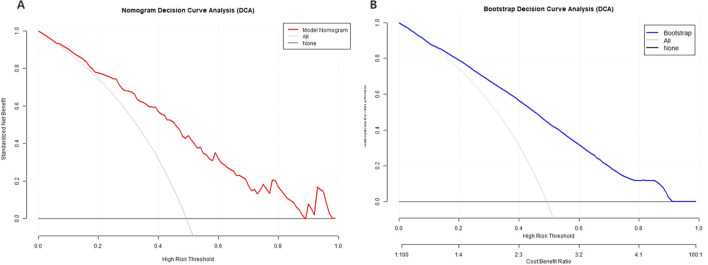 Figure 9
Peer Reviews
No public reviews on file for this paper yet. If you reviewed it on a platform where reviews are public (OpenReview, ICLR, NeurIPS, ICML), you can paste yours below so the community can read it here.
Videos
No videos yet. Explain this paper in a talk, walkthrough, or lecture? Add one.
Taxonomy
TopicsElectroconvulsive Therapy Studies · Bipolar Disorder and Treatment · Treatment of Major Depression